 City of Westlake Sign Application Form[/caption]
Almost all cities/villages require that a permit be applied for and approved before a sign is erected or modified. It is additional work, money and takes time. Is it really necessary? In a word, YES.
The sign OWNER is the party most likely to bear the brunt of the burden if a permit is not pulled and the city cracks down. The permit allows the OWNER to put up (or contract to put up) the specific sign described in the application. The penalty for not pulling a permit typically falls on the OWNER. Penalties vary from city to city and whether the sign is permissible under existing code. If the sign is permissible, many cities will require the owner to apply for and subsequently pull a permit, paying double the normal fees. If the sign is not permissible, many cities will require that the sign be removed. The author knows of at least one instance where the city forced the owner to remove the graphics from a permissible sign until the permit was procured.
Most, though not all, cities/villages allow the prospective sign owner to apply for and pull a sign permit. As the typical sign company charges extra for this service, some owners will spend the time necessary to do it themselves. Many, however, are willing to pay for the sign company to do this for them, as the sign company is generally well-versed in the procedure.
Most cities/villages require that a contractor be registered before doing any work in that entity. It is important not to confuse registration with permitting. If a contractor attempts to work in a city without being registered and is caught, the contractor is liable. (Note, however, that if the work is not complete, it will be delayed while the contractor and the city sort out the situation.) While it behooves the sign owner to be certain any contractor he or she hires is registered with the city, that does not negate pulling a permit.
All Kinds of Signs recently did some work for a very reputable company that, due to growth, moved to an existing facility in a nearby city. There was an existing monument sign with graphics removed on the property. A stone sign, it was practically built into the architecture. The company had minor repairs done (repairing where previous letters had been removed) and contracted with AKOS to put up new letters. They had a deadline to have the new sign in place and didn’t have time to pull a permit. They felt they had such a good relationship with the city that it wouldn’t be an issue. As they were adamant, AKS made certain to be registered in the city and completed the work. Sometimes it is possible to not pull a permit and have no repercussions, and this was one of those times. However, possibly feeling emboldened, the company had AKS install several post and panel wayfinding signs on the property. One, near a main street, caught the eye of a city employee. Thus began a crisis that would have been avoided had a permit been granted.
Should you, a prospective sign owner, make certain a permit is pulled if required by the city? Are you prepared to suffer the possible consequences? How well do you sleep at night?
City of Westlake Sign Application Form[/caption]
Almost all cities/villages require that a permit be applied for and approved before a sign is erected or modified. It is additional work, money and takes time. Is it really necessary? In a word, YES.
The sign OWNER is the party most likely to bear the brunt of the burden if a permit is not pulled and the city cracks down. The permit allows the OWNER to put up (or contract to put up) the specific sign described in the application. The penalty for not pulling a permit typically falls on the OWNER. Penalties vary from city to city and whether the sign is permissible under existing code. If the sign is permissible, many cities will require the owner to apply for and subsequently pull a permit, paying double the normal fees. If the sign is not permissible, many cities will require that the sign be removed. The author knows of at least one instance where the city forced the owner to remove the graphics from a permissible sign until the permit was procured.
Most, though not all, cities/villages allow the prospective sign owner to apply for and pull a sign permit. As the typical sign company charges extra for this service, some owners will spend the time necessary to do it themselves. Many, however, are willing to pay for the sign company to do this for them, as the sign company is generally well-versed in the procedure.
Most cities/villages require that a contractor be registered before doing any work in that entity. It is important not to confuse registration with permitting. If a contractor attempts to work in a city without being registered and is caught, the contractor is liable. (Note, however, that if the work is not complete, it will be delayed while the contractor and the city sort out the situation.) While it behooves the sign owner to be certain any contractor he or she hires is registered with the city, that does not negate pulling a permit.
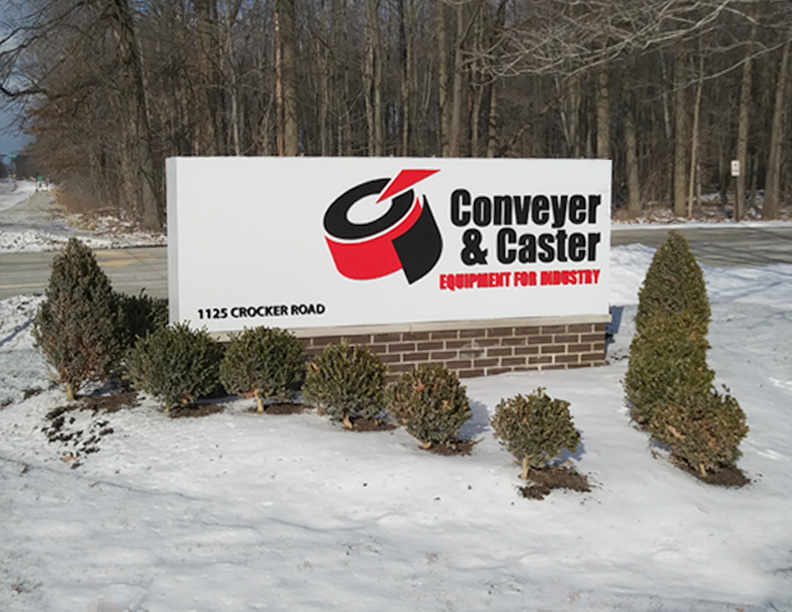
All Kinds of Signs recently did some work for a very reputable company that, due to growth, moved to an existing facility in a nearby city. There was an existing monument sign with graphics removed on the property. A stone sign, it was practically built into the architecture. The company had minor repairs done (repairing where previous letters had been removed) and contracted with AKOS to put up new letters. They had a deadline to have the new sign in place and didn’t have time to pull a permit. They felt they had such a good relationship with the city that it wouldn’t be an issue. As they were adamant, AKS made certain to be registered in the city and completed the work. Sometimes it is possible to not pull a permit and have no repercussions, and this was one of those times. However, possibly feeling emboldened, the company had AKS install several post and panel wayfinding signs on the property. One, near a main street, caught the eye of a city employee. Thus began a crisis that would have been avoided had a permit been granted.
Should you, a prospective sign owner, make certain a permit is pulled if required by the city? Are you prepared to suffer the possible consequences? How well do you sleep at night?
A Westlake, Ohio Sign Company’s Viewpoint - Sign Permits, Are They Really Necessary?
SYNOPSIS: [caption id="attachment_1310" align="alignleft" width="308"] City of Westlake Sign Application Form[/caption]
Almost all cities/villages require that a permit be applied for and approved before a sign is erected or modified. It is additional work,
BY: ,
[caption id="attachment_1310" align="alignleft" width="308"] City of Westlake Sign Application Form[/caption]
Almost all cities/villages require that a permit be applied for and approved before a sign is erected or modified. It is additional work, money and takes time. Is it really necessary? In a word, YES.
The sign OWNER is the party most likely to bear the brunt of the burden if a permit is not pulled and the city cracks down. The permit allows the OWNER to put up (or contract to put up) the specific sign described in the application. The penalty for not pulling a permit typically falls on the OWNER. Penalties vary from city to city and whether the sign is permissible under existing code. If the sign is permissible, many cities will require the owner to apply for and subsequently pull a permit, paying double the normal fees. If the sign is not permissible, many cities will require that the sign be removed. The author knows of at least one instance where the city forced the owner to remove the graphics from a permissible sign until the permit was procured.
Most, though not all, cities/villages allow the prospective sign owner to apply for and pull a sign permit. As the typical sign company charges extra for this service, some owners will spend the time necessary to do it themselves. Many, however, are willing to pay for the sign company to do this for them, as the sign company is generally well-versed in the procedure.
Most cities/villages require that a contractor be registered before doing any work in that entity. It is important not to confuse registration with permitting. If a contractor attempts to work in a city without being registered and is caught, the contractor is liable. (Note, however, that if the work is not complete, it will be delayed while the contractor and the city sort out the situation.) While it behooves the sign owner to be certain any contractor he or she hires is registered with the city, that does not negate pulling a permit.
All Kinds of Signs recently did some work for a very reputable company that, due to growth, moved to an existing facility in a nearby city. There was an existing monument sign with graphics removed on the property. A stone sign, it was practically built into the architecture. The company had minor repairs done (repairing where previous letters had been removed) and contracted with AKOS to put up new letters. They had a deadline to have the new sign in place and didn’t have time to pull a permit. They felt they had such a good relationship with the city that it wouldn’t be an issue. As they were adamant, AKS made certain to be registered in the city and completed the work. Sometimes it is possible to not pull a permit and have no repercussions, and this was one of those times. However, possibly feeling emboldened, the company had AKS install several post and panel wayfinding signs on the property. One, near a main street, caught the eye of a city employee. Thus began a crisis that would have been avoided had a permit been granted.
Should you, a prospective sign owner, make certain a permit is pulled if required by the city? Are you prepared to suffer the possible consequences? How well do you sleep at night?
City of Westlake Sign Application Form[/caption]
Almost all cities/villages require that a permit be applied for and approved before a sign is erected or modified. It is additional work, money and takes time. Is it really necessary? In a word, YES.
The sign OWNER is the party most likely to bear the brunt of the burden if a permit is not pulled and the city cracks down. The permit allows the OWNER to put up (or contract to put up) the specific sign described in the application. The penalty for not pulling a permit typically falls on the OWNER. Penalties vary from city to city and whether the sign is permissible under existing code. If the sign is permissible, many cities will require the owner to apply for and subsequently pull a permit, paying double the normal fees. If the sign is not permissible, many cities will require that the sign be removed. The author knows of at least one instance where the city forced the owner to remove the graphics from a permissible sign until the permit was procured.
Most, though not all, cities/villages allow the prospective sign owner to apply for and pull a sign permit. As the typical sign company charges extra for this service, some owners will spend the time necessary to do it themselves. Many, however, are willing to pay for the sign company to do this for them, as the sign company is generally well-versed in the procedure.
Most cities/villages require that a contractor be registered before doing any work in that entity. It is important not to confuse registration with permitting. If a contractor attempts to work in a city without being registered and is caught, the contractor is liable. (Note, however, that if the work is not complete, it will be delayed while the contractor and the city sort out the situation.) While it behooves the sign owner to be certain any contractor he or she hires is registered with the city, that does not negate pulling a permit.
All Kinds of Signs recently did some work for a very reputable company that, due to growth, moved to an existing facility in a nearby city. There was an existing monument sign with graphics removed on the property. A stone sign, it was practically built into the architecture. The company had minor repairs done (repairing where previous letters had been removed) and contracted with AKOS to put up new letters. They had a deadline to have the new sign in place and didn’t have time to pull a permit. They felt they had such a good relationship with the city that it wouldn’t be an issue. As they were adamant, AKS made certain to be registered in the city and completed the work. Sometimes it is possible to not pull a permit and have no repercussions, and this was one of those times. However, possibly feeling emboldened, the company had AKS install several post and panel wayfinding signs on the property. One, near a main street, caught the eye of a city employee. Thus began a crisis that would have been avoided had a permit been granted.
Should you, a prospective sign owner, make certain a permit is pulled if required by the city? Are you prepared to suffer the possible consequences? How well do you sleep at night?