Your Audi Q5 knocks once crossing the driveway lip, and the freeway drive home is silent. That split already narrows the list. You've set the tire pressures and had the wheels balanced, and neither one changed the knock. A knock like that usually comes from an arm taking up its slack as the load reverses over the lip. Danville pavement works these joints hard, and at Driven Auto Care of San Ramon we load each joint by hand. You'll leave knowing which joint had the play.
The Knock Arrives at Driveway Speed
A knock at low speed over small bumps, repeating under light braking, most often means free play in a worn bushing or a ball joint. A sway bar link, a strut mount, a spring seat or loose hardware can make a similar sound. You can't sort those apart from the seat. When the sound comes from the back on turns, or one corner squeaks under load, we check a different set of joints. The same clunk can trace to a different joint from one Q5 to the next. We replace the joint that has the play.
The Rubber Joint That Does Two Jobs
Every wheel on the Q5 hangs from a set of arms. Each arm attaches through a joint. Most of those joints are rubber bushings, a rubber sleeve bonded between two metal sleeves. That rubber does two jobs at once, holding the wheel in position while absorbing the small road vibration that would otherwise reach you.
Heat and Load Wear the Rubber Out
Rubber ages under heat and load as well as miles, so it cracks, tears at its bond to the metal, and eventually collapses. On this family of Audis the large bushing at the front upper control arm is the most common one to wear out. That wear shows up as these vehicles get miles on them, sooner on rough roads.
You Hear the Slack When the Load Reverses
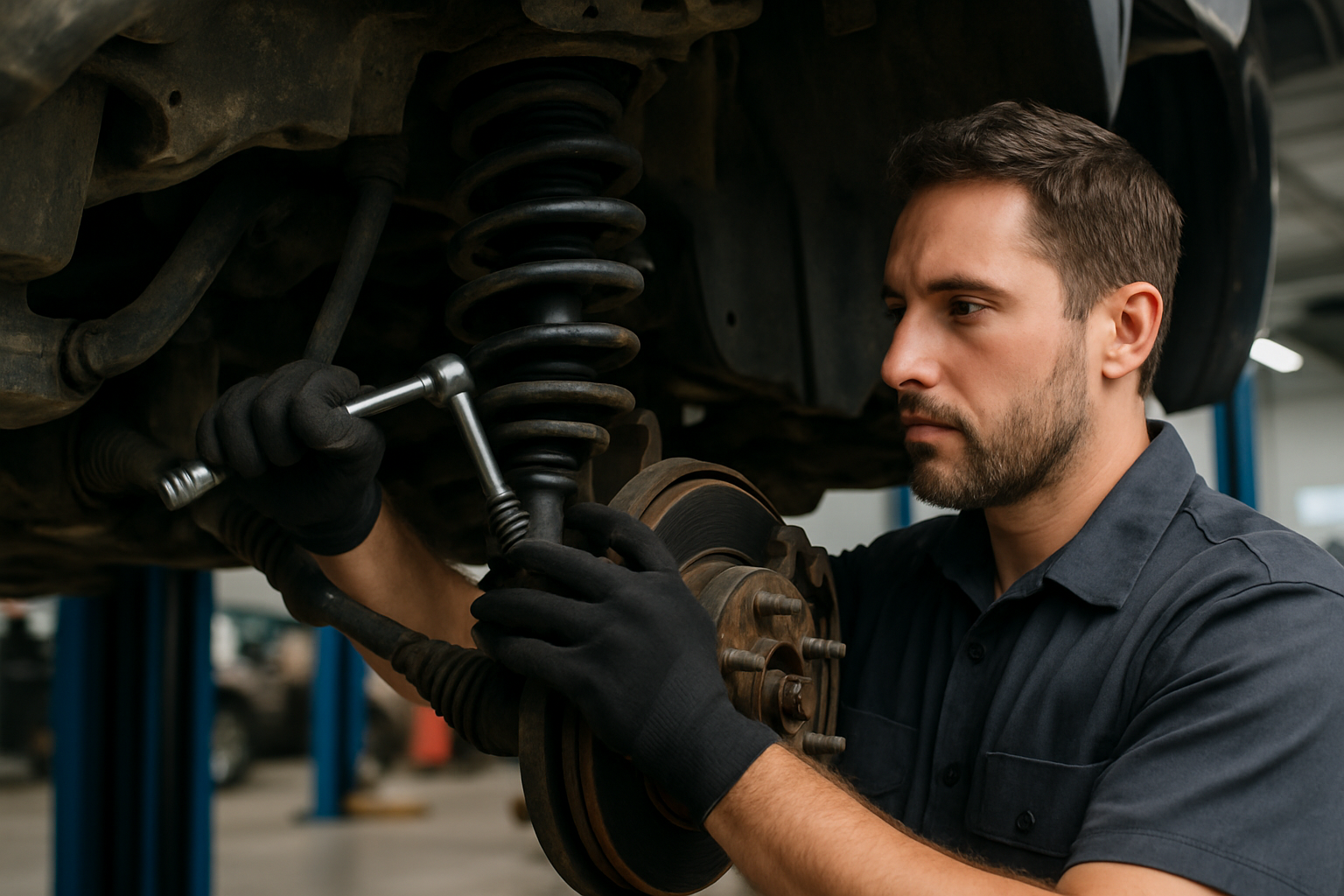
Once the rubber loses its bond, the arm carries a small amount of free play. Cross a driveway lip and the load through that arm reverses, the slack takes up, and you hear one knock. At a steady cruise the car stays quiet. Corner by corner, we lever each joint under load and watch for movement. A worn bushing can look perfect sitting still; under load the movement is obvious. We read the rubber for cracking and separation from its metal sleeves. A collapsing bushing also leaves a dust ring where the rubber has been moving.
Free Play Shows Up in the Steering Too
The loose steering comes from the same slack, because a joint with free play can't hold the wheel's position under load. You make more small corrections to hold a lane. It's also why an alignment set on the rack drifts once the car goes back on the road. The same shift wears an inner tire shoulder. You bought this car for how solid it felt, and that feel is recoverable. Free play grows, and the movement loads the parts either side of it. The struts and shocks get checked too.
The Part Is Only Half the Repair
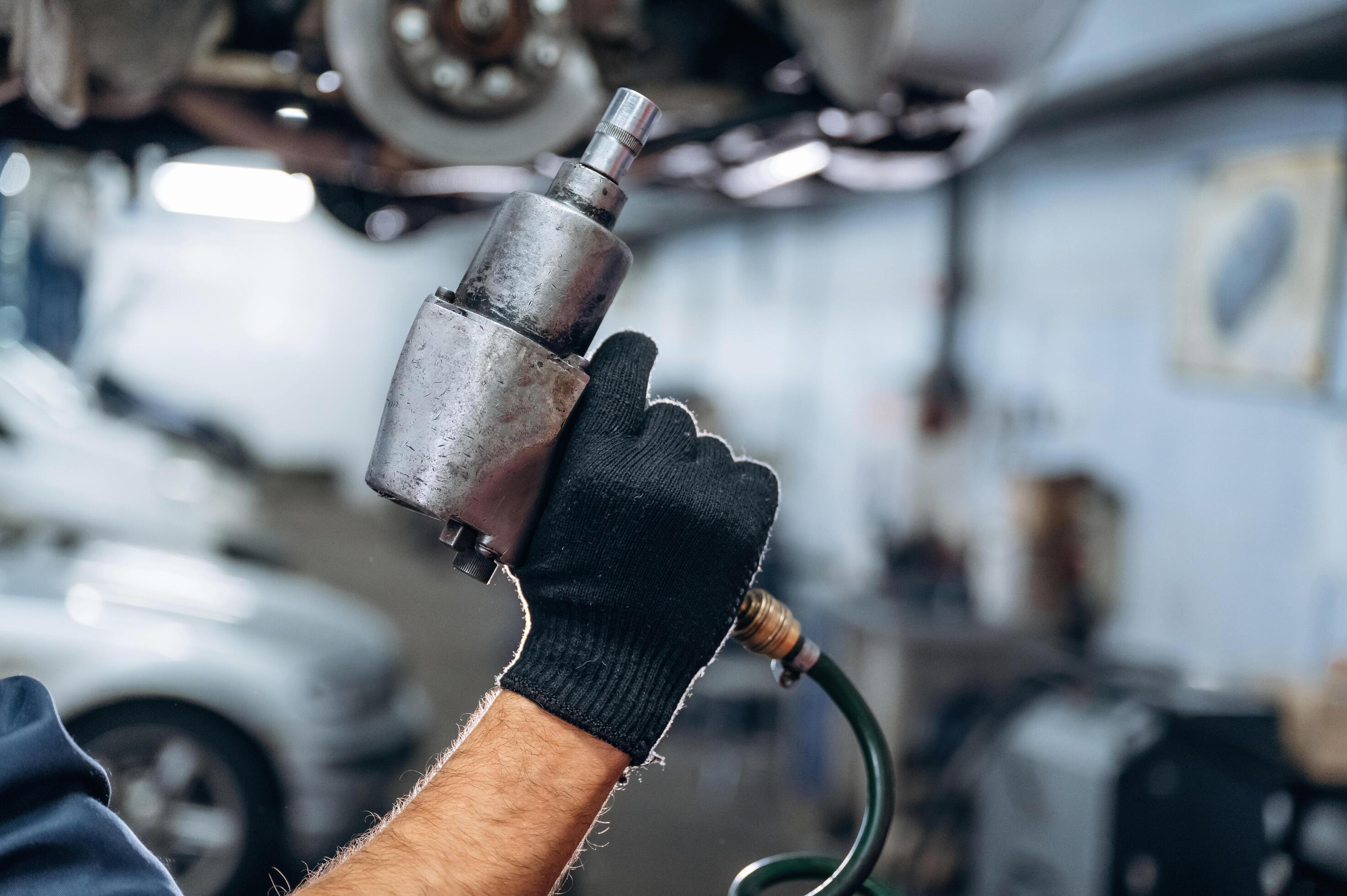
The new part going on is the halfway point of the job. A new bushing is bonded at both sleeves, so its rubber holds whatever angle it was clamped at. Tighten the fasteners while the suspension hangs on the lift, and that bushing stays twisted for the rest of its life. The twist wears it out early. We tighten the suspension fasteners with the car at its normal ride height. Replacing a control arm moves the wheel's position, so the alignment is part of the same job. Most repairs carry a 3-year, 36,000-mile warranty.
Your Usual Drive Is the Test Route
Where it knocks is worth more to this job than any word for the sound. We write that down when you reach Driven Auto Care of San Ramon at (925) 830-4701, then drive the same lip at the speed you cross it. Back on the lift, we work through the corners until the joint with play moves. The alignment gets measured once the new part is on. You cross that lip without a sound and hold a lane without thinking about it.