You keep topping off the coolant, but the driveway under the Explorer stays dry. A level that drops with nothing on the ground means the leak is hiding, not that it's gone. That puzzle is what brings Danville Explorer owners to our San Ramon shop, and the first question we answer is whether the coolant is leaving the system outside or inside the engine. Those two paths need completely different tests, so that split comes before anyone names a part.
Puddle or No Puddle Sets the Whole Diagnosis
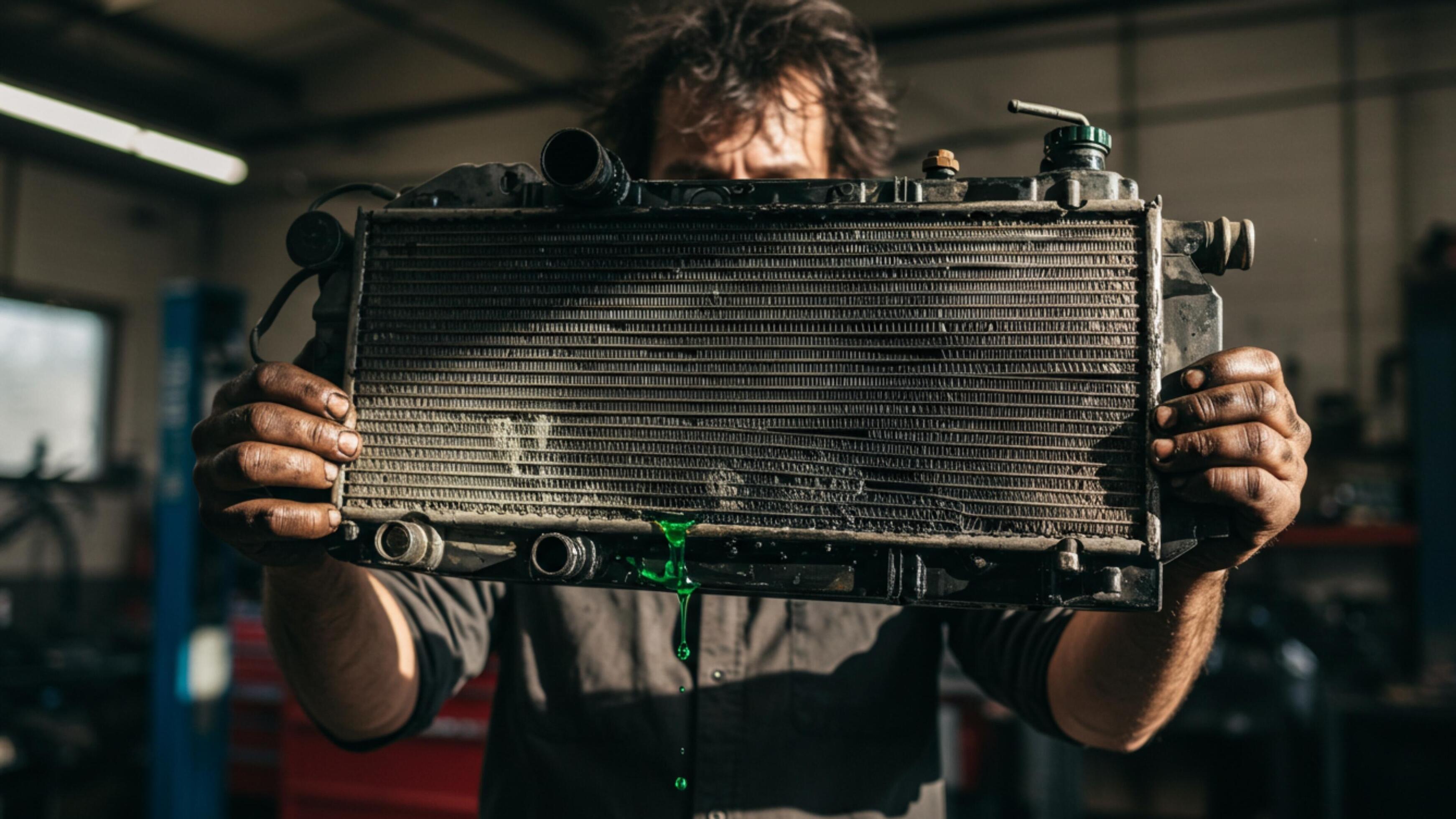
An external leak leaves evidence you can find: a puddle under the front of the truck, a dropping level, and a wet path you can trace. The usual sources are the radiator, the upper and lower hoses, the thermostat housing, the water-pump weep, the degas reservoir, or the heater core. An internal leak leaves none of that, because the coolant goes into the oil or the cylinders and never reaches the ground. A cooling-system pressure test settles it here, so we pressurize the cold system and watch for a drop. That forces a slow external leak to show itself, and when nothing shows outside while the level keeps falling, the diagnosis moves inside the engine.
The Explorer's Hidden Water Pump Inside the Engine
On 2011 to 2019 V6 Explorers the water pump sits inside the engine, behind the timing cover, driven by the timing chain. Most drivers picture the bolt-on pump up front and never look here. When the internal pump's seal wears, coolant can migrate straight past it into the crankcase, which is why a milky dipstick belongs early in the diagnosis. Pull the dipstick or the oil-fill cap, and oil that looks like a chocolate milkshake means coolant has crossed into the oil, where it makes a poor lubricant that wears the bearings and cams. That is why low coolant, a dry driveway, and milky oil together are the signs to stop driving now, before a pump job becomes an engine. This is the 3.5L and 3.7L V6 layout, so it doesn't belong to a 2020 or newer Explorer, which moved to a different platform.
When Coolant Goes Up Into the Cylinders
On the other internal path, coolant reaches a cylinder, and it usually starts at a failed head gasket or a crack in the head or the block. Coolant then enters the combustion chamber and burns with the fuel, so the signs are white, sweet-smelling exhaust, a misfire, and a level that keeps dropping with no puddle. A breached gasket or a cracked casting opens that route between a coolant passage and a cylinder, and combustion pressure can also push exhaust gas back into the coolant. We confirm it with a combustion-gas test at the degas bottle alongside a misfire scan, so the cylinder path is settled before any part of the engine comes apart. Catching it early is what keeps a gasket or a cracked head from turning into a replaced engine.
Telling the Oil Path From the Cylinder Path
Once a leak is internal, it comes down to one question: is the coolant in the oil, or in the cylinders? Milky, emulsified oil on the dipstick points to the oil path, the internal pump or a gasket. White exhaust smoke with a misfire points to the cylinder path, coolant reaching combustion. We run the oil check, a combustion-gas test at the degas bottle, and a misfire scan together, so the answer is settled before any part of the engine comes apart. That answer sets the repair direction from there.
Drive It or Stop Now
A coolant leak can be manageable or urgent, and a few tells sort one from the other. A small external leak, with the level holding after a top-off and no overheating, is the manageable kind, so book a diagnosis and we'll trace it with a pressure test and UV dye. Milky oil, any sign of overheating, or white smoke with a misfire is the urgent kind, and that's the point to stop driving, because coolant in the oil wears the bearings and cams and intrusion into the cylinders can take out the engine. The one pattern never to ignore is coolant that disappears with no puddle, because it's going somewhere inside.
Find Where the Coolant Is Going Before It Becomes an Engine
Bring the Explorer to our San Ramon shop and we'll pressure-test the cooling system and run a combustion-gas check before we start a coolant repair, so call (925) 830-4701 to book it. Coolant that keeps disappearing with a dry driveway is following a hidden path, outside the engine or in, and the pressure, oil, and combustion-gas tests separate the two.