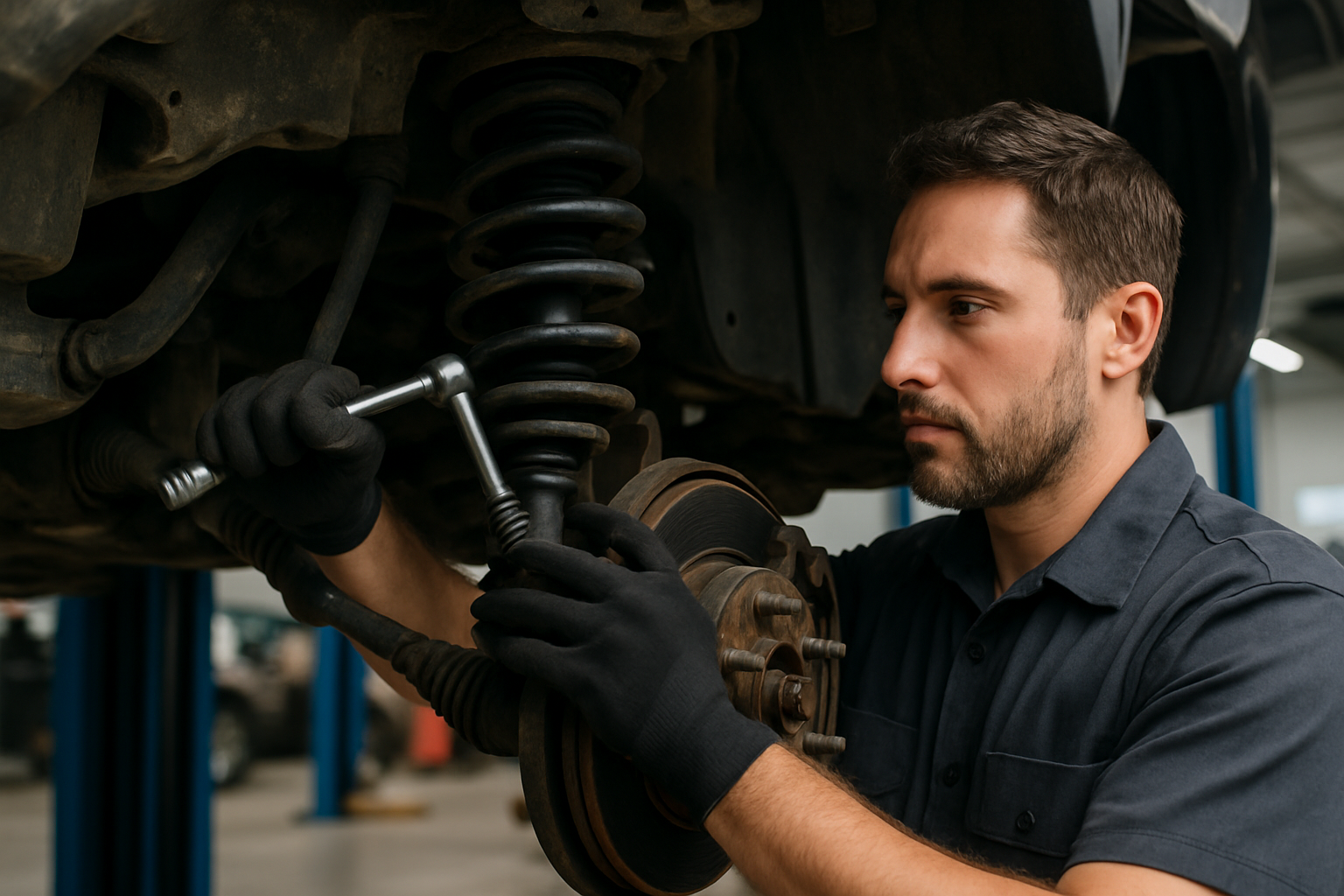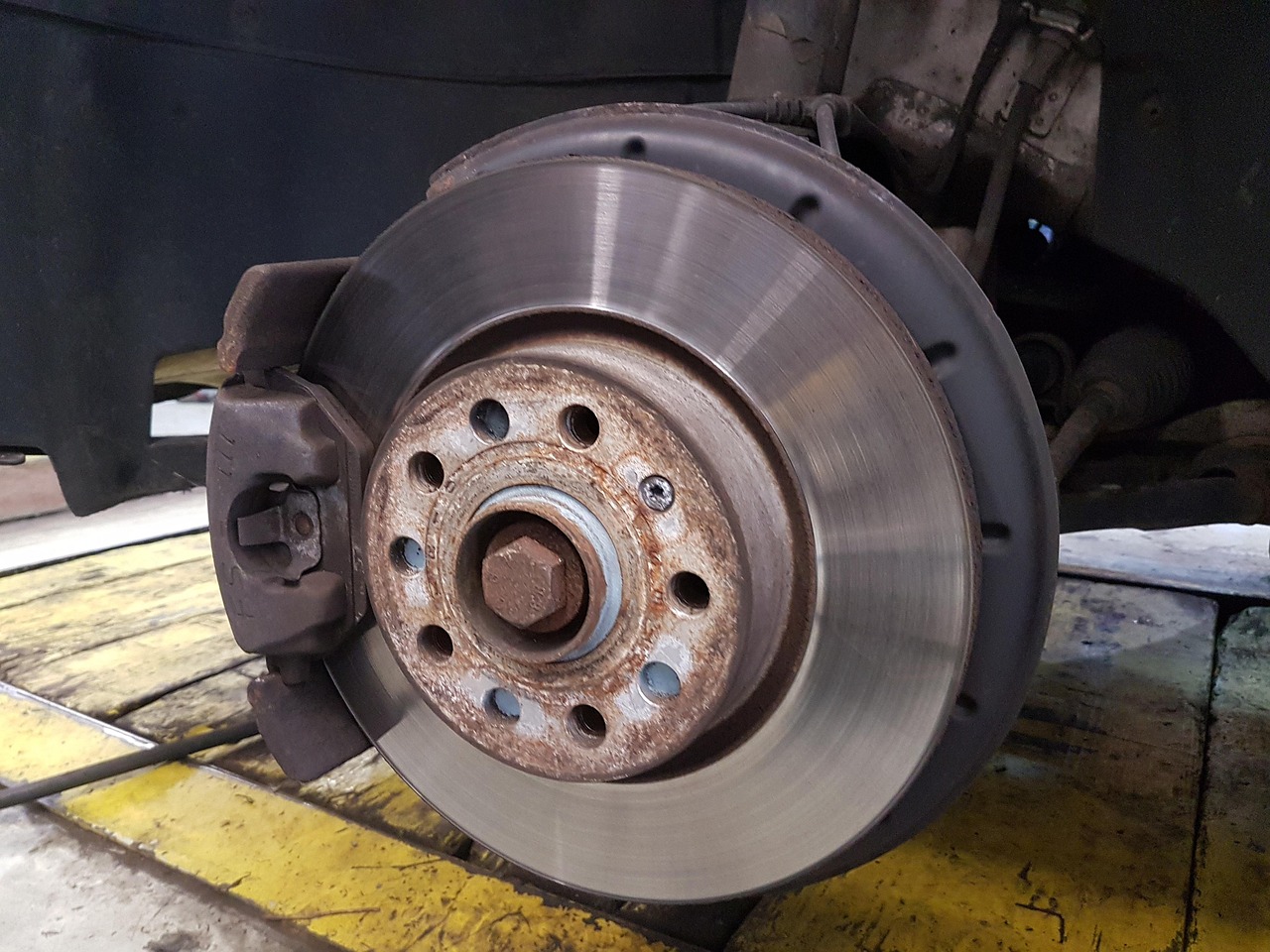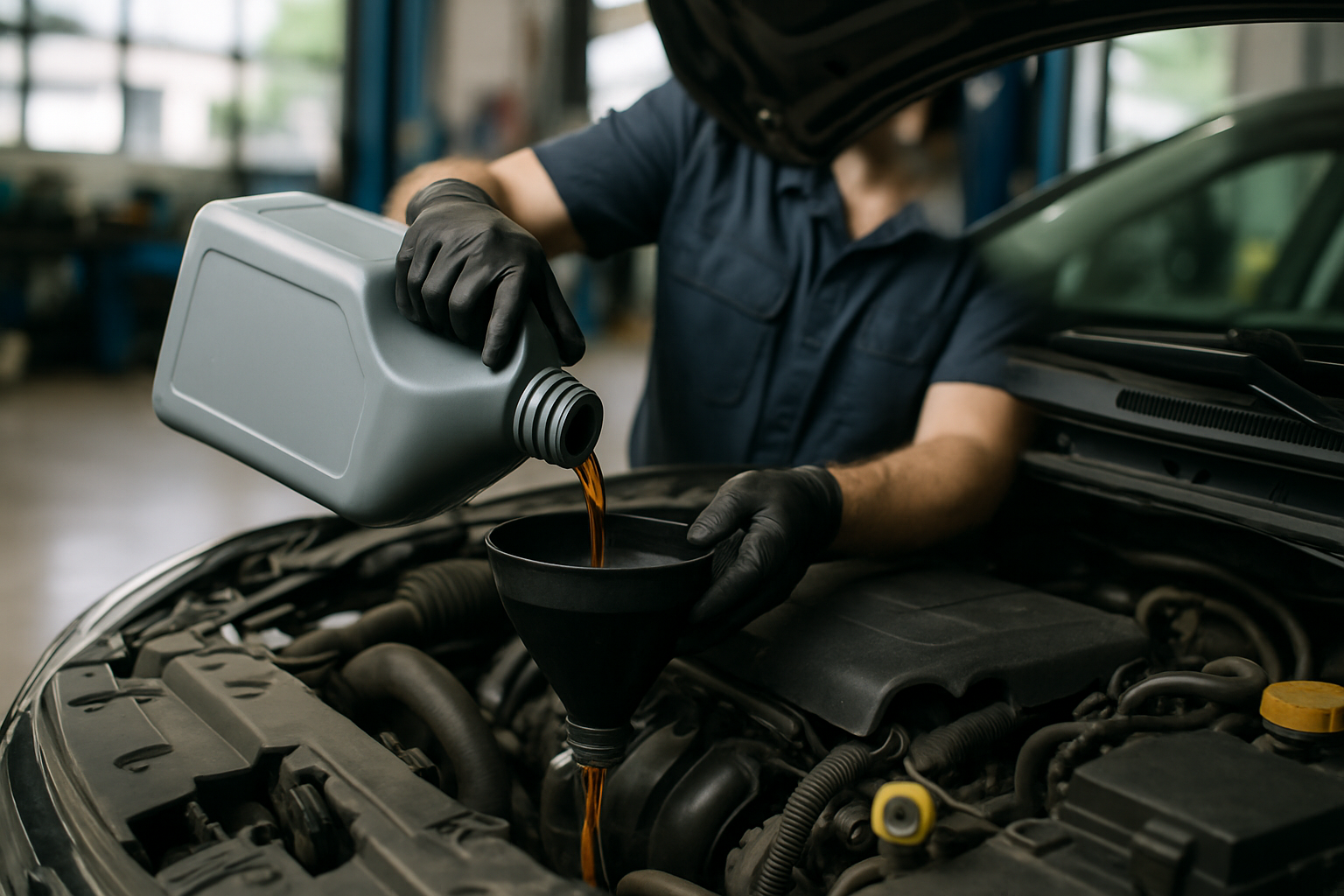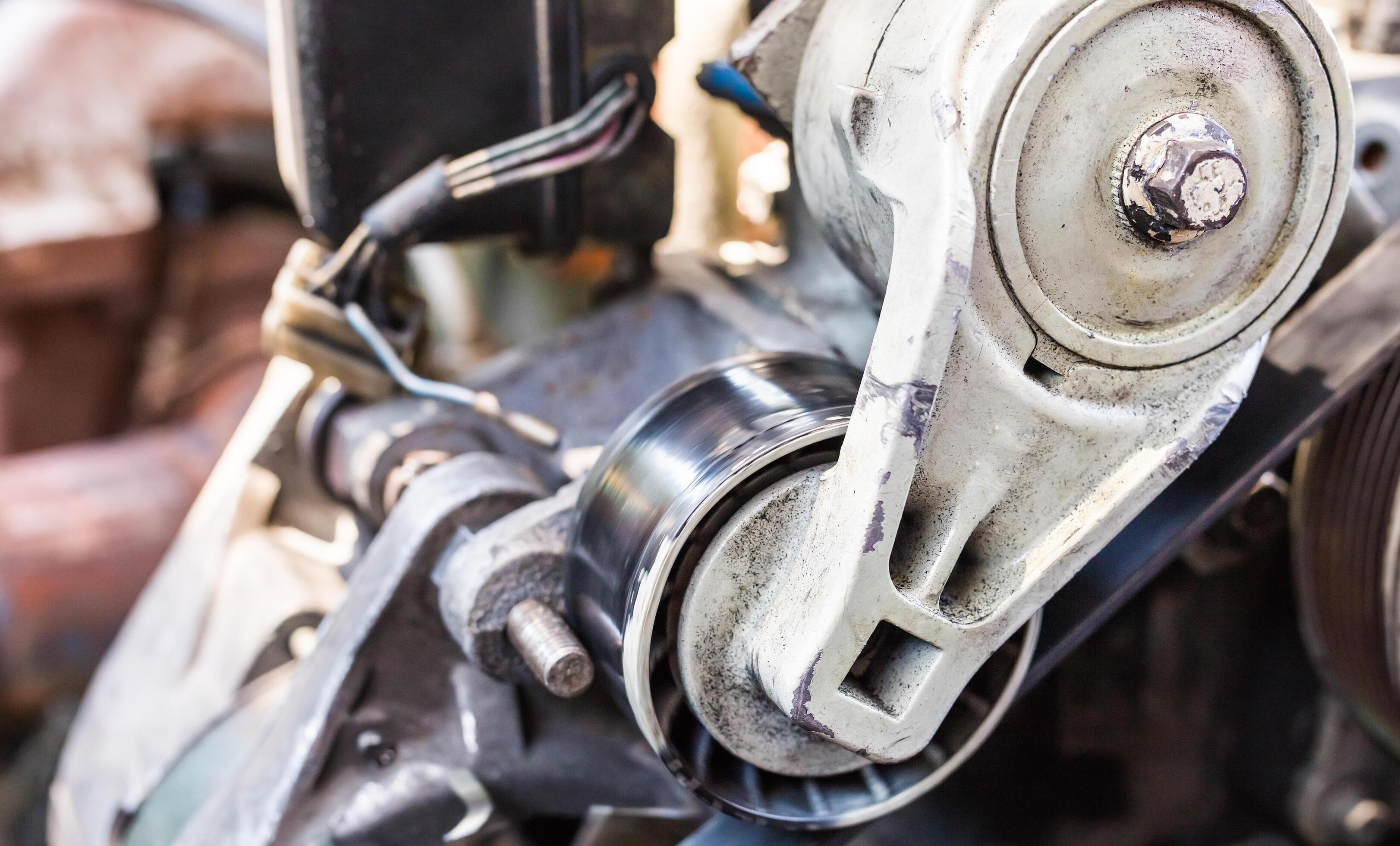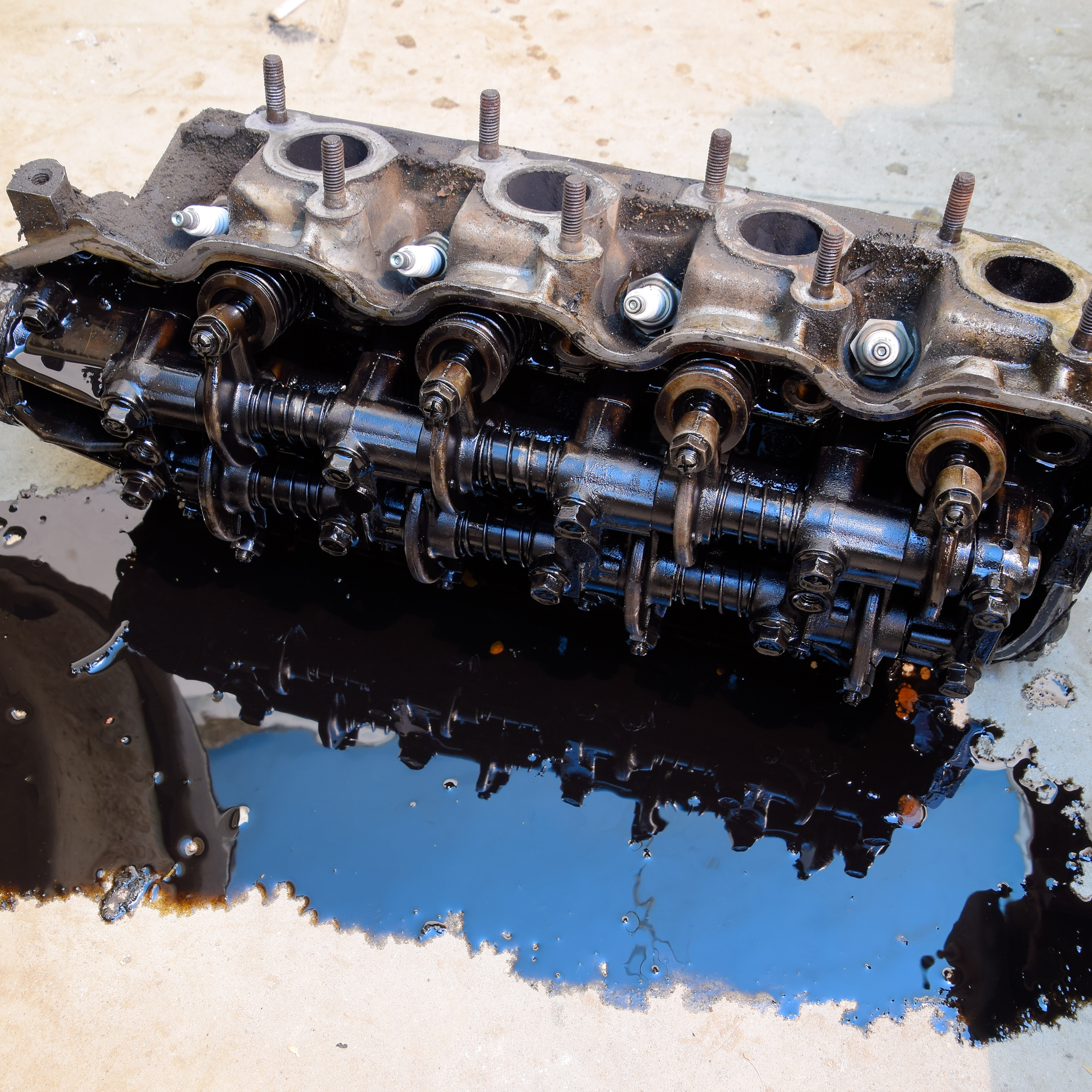
If your Lincoln smells like burning oil at idle or in traffic, the leak has already begun. The valve cover gaskets on Lincoln’s 3.7L and 5.4L engines are known to harden over time, especially after years of heat cycling. That slow seep eventually finds its way into spark plug tubes and onto coil boots, which were never designed to handle direct oil exposure. Once the oil makes contact, coils begin to short internally, leading to misfires, weak acceleration, and flashing check engine lights. At Precision Auto Care in San Leandro, we replace worn gaskets completely, clean the ignition bay, and verify that no lingering residue can cause further damage.
Filter Housing Leaks Disguise Themselves as Oil Pan Problems
One of the most misdiagnosed Lincoln oil leaks begins at the oil filter adapter gasket, not the oil pan. Positioned at the engine block’s base, this gasket often cracks from heat and pressure, allowing oil to travel downward where it coats the pan and subframe. Most drivers never see the true source, and many shops replace the oil pan gasket without fixing the actual problem. At our San Leandro shop, we pressure clean the underside, apply dye-tracing, and identify the correct failure point so the repair solves the leak the first time. Fixing the right gasket matters more than fixing the wrong one twice.
Coil Failures Are Almost Always Linked to Oil Exposure or Heat Stress
If your Lincoln has developed a misfire or a rough idle, the coils may already be compromised by oil or overheating. Most V6 and V8 Lincoln engines do not fail one coil at a time—once oil saturates one, the others begin to deteriorate rapidly. Swapping a single bad coil is often a short-term fix that leads to repeat breakdowns weeks later. At Precision Auto Care, we evaluate all six or eight coils side by side, check for spark consistency, and test for oil tracking or insulation breakdown. If more than one shows signs of stress, we recommend replacing the entire set to eliminate return visits and restore full engine performance.
Weak Cooling Systems Speed Up Gasket Failure and Oil Breakdown
Lincoln cooling systems are known to leak at water pump housings, plastic crossover tubes, and aging thermostats. When pressure drops and the engine runs hotter than designed, oil thins out and begins seeping past weak seals much faster. The added heat not only breaks down the gasket material but also accelerates the oxidation of the oil itself, making leaks worse and damaging internal components. In San Lorenzo’s traffic-heavy routes and idle-prone driving, these conditions come together more often than most drivers realize. Our shop pressure tests the cooling system under load and inspects every joint for early signs of failure before that added heat turns a small leak into an engine-wide mess.
Throttle Hesitation May Be Caused by a Sensor, Not the Transmission
Many Lincoln owners assume transmission problems are to blame for slow response or surging during acceleration. In truth, we often find the throttle body or its sensor is sticking, misreporting, or lagging under low-speed pressure. This electronic failure leads to inconsistent airflow and late throttle response, which can feel like delayed shifting even though the transmission is working fine. At Precision Auto Care in San Leandro, we road test throttle response under real load, log pedal-to-plate readings, and isolate where airflow control is breaking down. Identifying this early prevents misdiagnosis and restores acceleration without replacing a single transmission component.
AC Blowout on One Side Is Usually the Actuator, Not the Compressor
Split cabin airflow, where one side of your Lincoln blasts cold while the other stays hot, often points to a failed blend door actuator. These small motors control HVAC flap movement and frequently fail without warning or triggering codes, leaving drivers chasing a nonexistent AC system problem. Many shops recommend unnecessary component replacement when a $100 actuator behind the dash is the real issue. At our San Leandro facility, we run actuator calibration tests using factory-level software, isolate the faulty unit, and verify movement across all vents before recommending disassembly. Restoring temperature control should not require guesswork or unnecessary expense.
Electrical Glitches Trace Back to Ground Corrosion More Often Than Module Failure
Power window glitches, radio resets, camera dropout, and strange warning lights are often blamed on control modules. In many Lincoln platforms, however, the root cause lies in corroded or loose ground points tucked beneath carpets or hidden along frame rails. When resistance builds up, modules receive unstable voltage, triggering phantom errors and unexpected shutdowns. Our technicians at Precision Auto Care test ground paths under actual amperage, reseat connections properly, and apply dielectric sealant to prevent future decay. Replacing a module that lost clean voltage does nothing; reestablishing the ground it depends on fixes the failure for good.
Oil Leaks Are the First Failure You’ll See, but Rarely the Last
Once a Lincoln begins leaking oil, the longer the problem is ignored, the more systems it affects. Oil contacts coils, corrodes wiring, soaks mounts, and burns on the manifold, creating new symptoms every month. What starts as a small drip usually leads to multiple repairs if left unresolved. At Precision Auto Care in San Leandro, we identify oil leaks early and map their path through the engine bay so we can stop the damage before it spreads. Call (510) 351-8211 today and ask for a full engine inspection tailored for your Lincoln in San Lorenzo; catching the first leak may be the only chance to stop the next five.