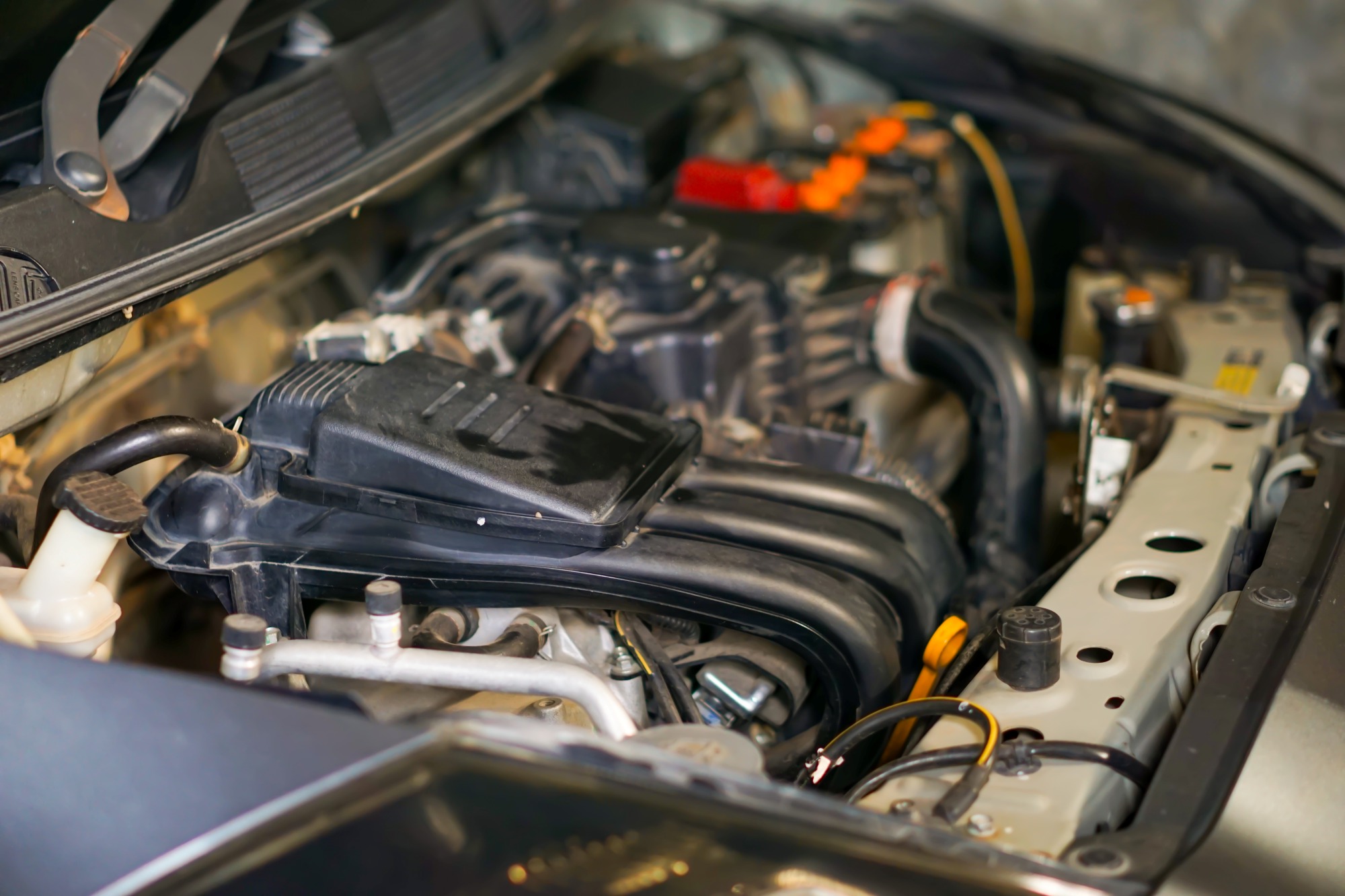
 Most cooling system failures don’t start with an obvious leak or dashboard warning—they begin with subtle signs that drivers often overlook. You may smell coolant near the hood, notice the heater blowing cold air, or see the temperature gauge rise briefly in traffic. These symptoms may disappear just as quickly as they appear, which leads many Castro Valley drivers to ignore them until it’s too late. At Precision Auto Care in San Leandro, we diagnose and replace cooling components before that minor fluctuation becomes a blown head gasket or seized engine. Once damage spreads beyond the radiator or thermostat, repair costs multiply fast, and the engine rarely recovers its full performance.
Why Radiators Fail Silently in Aging Toyotas
Toyota Camrys and Corollas built between 2005 and 2013 frequently develop hairline cracks in the plastic side tanks of their radiators, especially near the upper hose inlet. These fractures rarely leak visibly because the coolant evaporates on contact with hot surfaces, making it nearly impossible to spot without pressure testing. In Castro Valley’s hilly terrain and summer heat, engines face increased thermal stress that exposes even the smallest weaknesses in the cooling system. If left undetected, internal boiling and air pockets begin forming inside the cylinder head, which accelerates warping of aluminum components. At our San Leandro shop, we catch these radiator failures early with load-specific diagnostics that simulate real driving conditions instead of idle tests alone.
Thermostats Can Stick Closed Without Triggering Any Warning Lights
From 2012 to 2017, Ford introduced electronically controlled thermostats in several models, including the Escape and Focus, which often fail without warning. These actuators may open partially or not at all, limiting coolant flow during long climbs or heavy stop-and-go traffic across Castro Valley. The heater output drops, the temperature climbs unpredictably, and drivers assume it’s a sensor glitch or a coolant top-off issue. In truth, the thermostat is stuck, and the engine is slowly overheating every time the load increases. We test thermostat response using real-time ECU data combined with infrared monitoring to confirm flow loss before the engine sustains internal pressure damage.
Water Pump Failures Don’t Always Leak—Until the Block Overheats
Subaru models such as the Outback and Forester from 2010 to 2016 often experience internal water pump bearing wear that restricts coolant circulation without causing obvious leaks. As the impeller slows and wobbles, the coolant stops moving evenly across all cylinders, especially those farthest from the pump. We’ve measured temperature differentials of over 35 degrees between banks during simulated Castro Valley freeway climbs, even with no visible pump failure symptoms. Once the coolant stops moving efficiently, the aluminum block retains heat unevenly and starts distorting near the valve seats. At Precision Auto Care, we combine flow testing with under-load RPM analysis to isolate these early-stage failures before engine integrity is compromised.
Reservoir and Cap Failures Are the Most Commonly Ignored Issues
Many high-mileage Honda Civics and Accords built between 2006 and 2012 suffer from cracked coolant reservoirs and weak radiator caps that can no longer hold pressure. These components seem minor, but when pressure drops, the boiling point of coolant lowers, which allows vapor lock to develop in tight engine spaces. In Castro Valley, where daily temperature shifts create ideal conditions for pressure imbalance, these failures are especially common. The system may appear full and sealed while the engine is silently losing temperature stability and internal coolant volume. Our San Leandro team pressure tests caps and reservoir seams to detect these invisible leaks and restore proper system pressurization before a catastrophic pressure drop.
Our Testing Goes Beyond the Basics Most Shops Offer
At Precision Auto Care in San Leandro, we run targeted cooling diagnostics using thermal mapping, cap pressure retention checks, block-level temperature variation scans, and post-drive expansion behavior testing. Most shops stop after checking coolant levels and hoses, but we simulate Castro Valley driving conditions to reveal how your system reacts when stressed. This approach allows us to catch pressure drops, partial thermostat engagement, and water pump cavitation that only occur under real-world loads. We tailor every test to the specific vehicle make, model year, and known component vulnerabilities. Our goal is not just to identify what’s broken, but to prevent the failures no one else sees coming.
Prevent the Breakdown Before It Costs Thousands
If you’ve smelled coolant recently, seen even one quick spike in your temperature gauge, or heard unusual fan noise after shutdown, your cooling system may already be at risk. Overheating doesn’t begin with steam—it starts with pressure loss, sensor confusion, and internal heat imbalance. Call Precision Auto Care in San Leandro at (510) 351-8211 today to schedule a cooling system diagnostic designed for Castro Valley conditions. We’ll find the failure before it finds your engine.