 The first ride in your brand new Ford Edge was no doubt a smooth and memorable cruising experience, but over time, driving your Ford Edge has not been as pleasurable as you remember it. This drop in smoothness is most likely because of a faulty suspension system in your vehicle, causing you to feel all the bumps and gallops in the road. But you don’t need to worry for much longer, because this article will provide you with all you need to know about Ford Edge suspension repair services offered by our Auto repair shop.
The Ford Edge and Suspension Problems
The Ford Edge was one of the first midsize SUVs in North America marketed and produced by the Ford Motor Company. It was introduced in 2007 and has since had numerous modifications and design changes, leading up to the third generation, which is the latest and most recent version as of 2023.
Even with the advanced engineering and complex systems, owners of the Ford Edge vehicle have experienced multiple problems with the vehicle, particularly with the suspension system. Several complaints have been made about weird noises coming from the underbelly of the vehicle while driving, bumpy rides on bad roads, and difficulty with steering the vehicle properly.
Causes of Suspension Problems
While it is quite normal for a vehicle to develop problems after years of usage, the suspension problems in the Ford Edge are caused by a number of factors, such as the owner’s driving habits or the road conditions the vehicle is driving on. These problems could have also been caused by an earlier repair by under experienced technicians or sub-quality replacement components.
Repair Services for The Ford Edge Suspension System
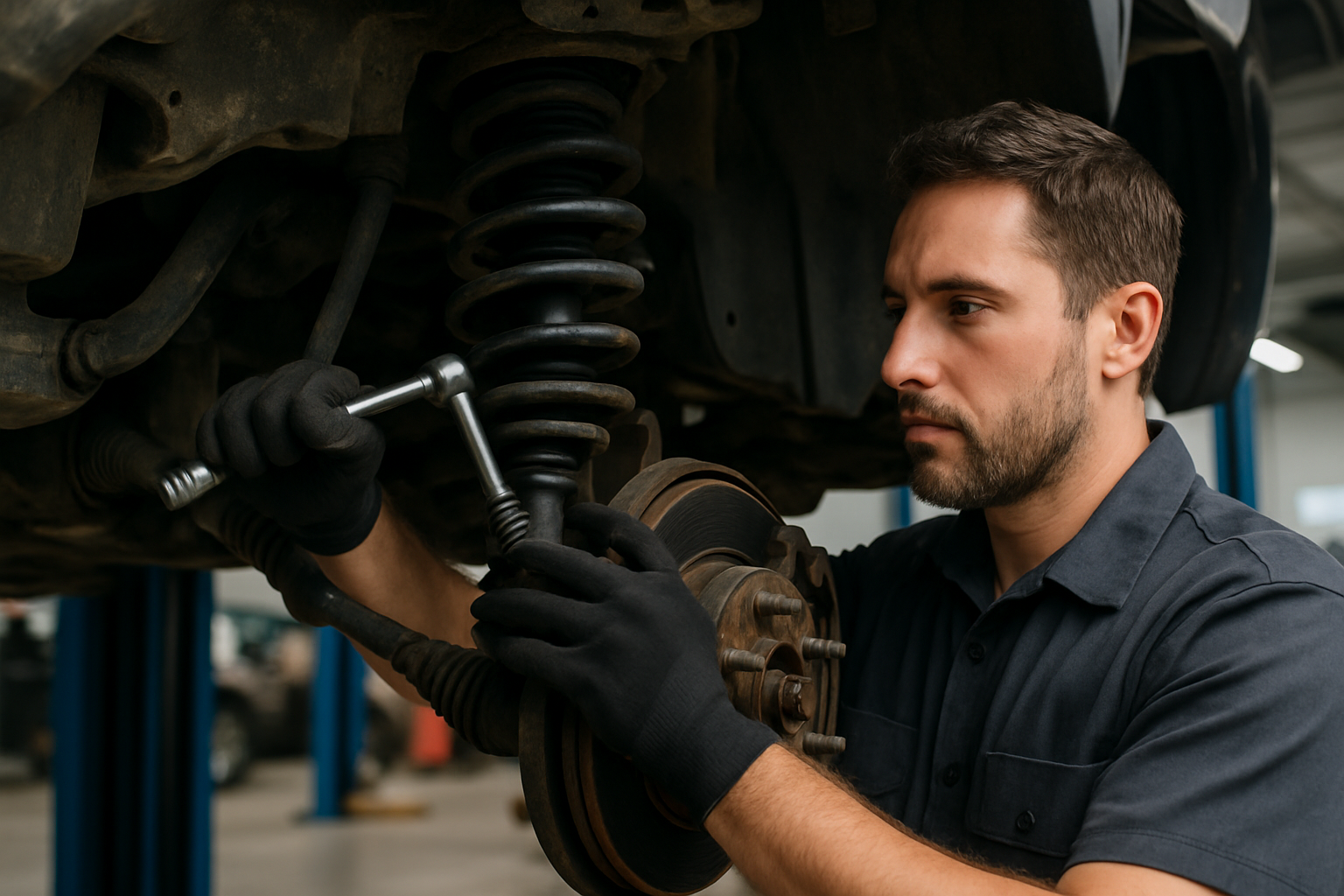
Luckily for Ford Edge owners, auto repair shops provide numerous services specifically for addressing problems in the vehicle’s suspension systems. So if you notice any problems with your vehicle, taking it to a reliable auto repair shop close to you is strongly advised. The first step is to carry out a proper inspection which will determine the root cause of the problem. This gives the technicians some insight on how to go about the repair procedure.
With suspension systems, the components where the problem originates will need to be totally replaced. Here are some common components of a suspension system which will need replacement:
- Shocks and struts: These are responsible for absorbing vibrations and providing smooth rides.
- Springs: Springs help in supporting vehicle weight and any other load being carried.
- Control Arms: The control arms connect other suspension components to the underbelly of the vehicle.
- Bushings: Rubber bushings provide cushioning and allow smooth movement between suspension parts.
- Sway Bar Links: These connect the control arms or struts to the sway bars, which help stabilize the vehicle during cornering.
Each component has varying lifespans and usages; shocks and struts, for example, will need to be replaced after about 50,000 to 100,000 miles of usage. The benefit of having these repairs done at an auto repair shop is getting access to skilled technicians capable of carrying out these replacements. You are also guaranteed to get high-quality replacement components and services, which might even come with a warranty.