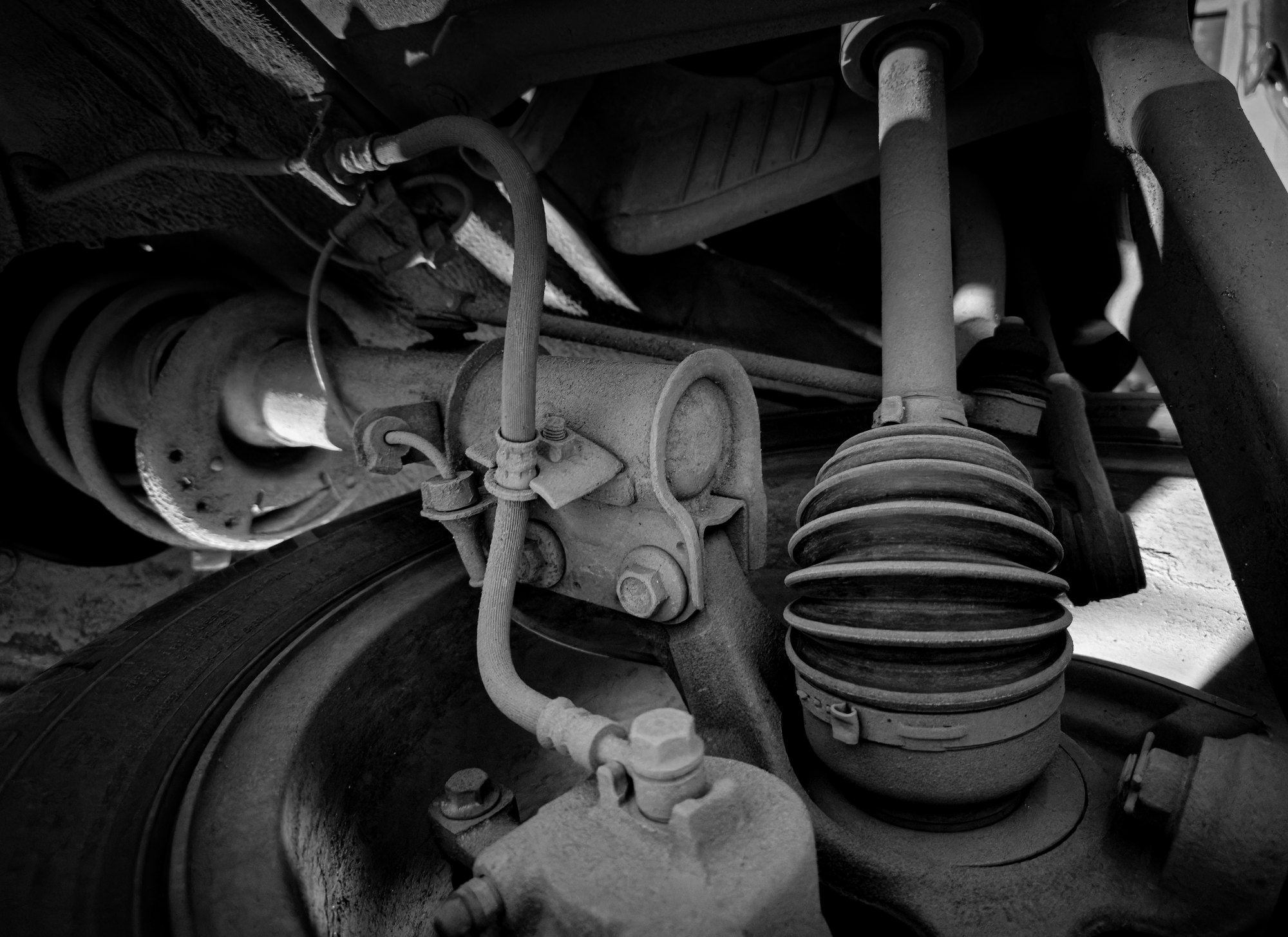
A Mercedes-Benz C300 should feel controlled over bumps and predictable through corners. When suspension bushings wear, drivers may hear clunks, feel movement during braking, or notice the car wandering. Yet a loose front end does not automatically mean worn bushings. Ball joints, struts, steering links, and tires may produce similar symptoms.
At Driven Auto Care of San Jose, CA, we help Santa Clara drivers trace the source of suspension complaints. Our Mercedes-Benz service information identifies front thrust arm bushing wear as a concern on some C-Class vehicles. We provide suspension diagnosis, repairs, and wheel alignment services, with recommendations based on inspection findings.
What Suspension Bushings Actually Do
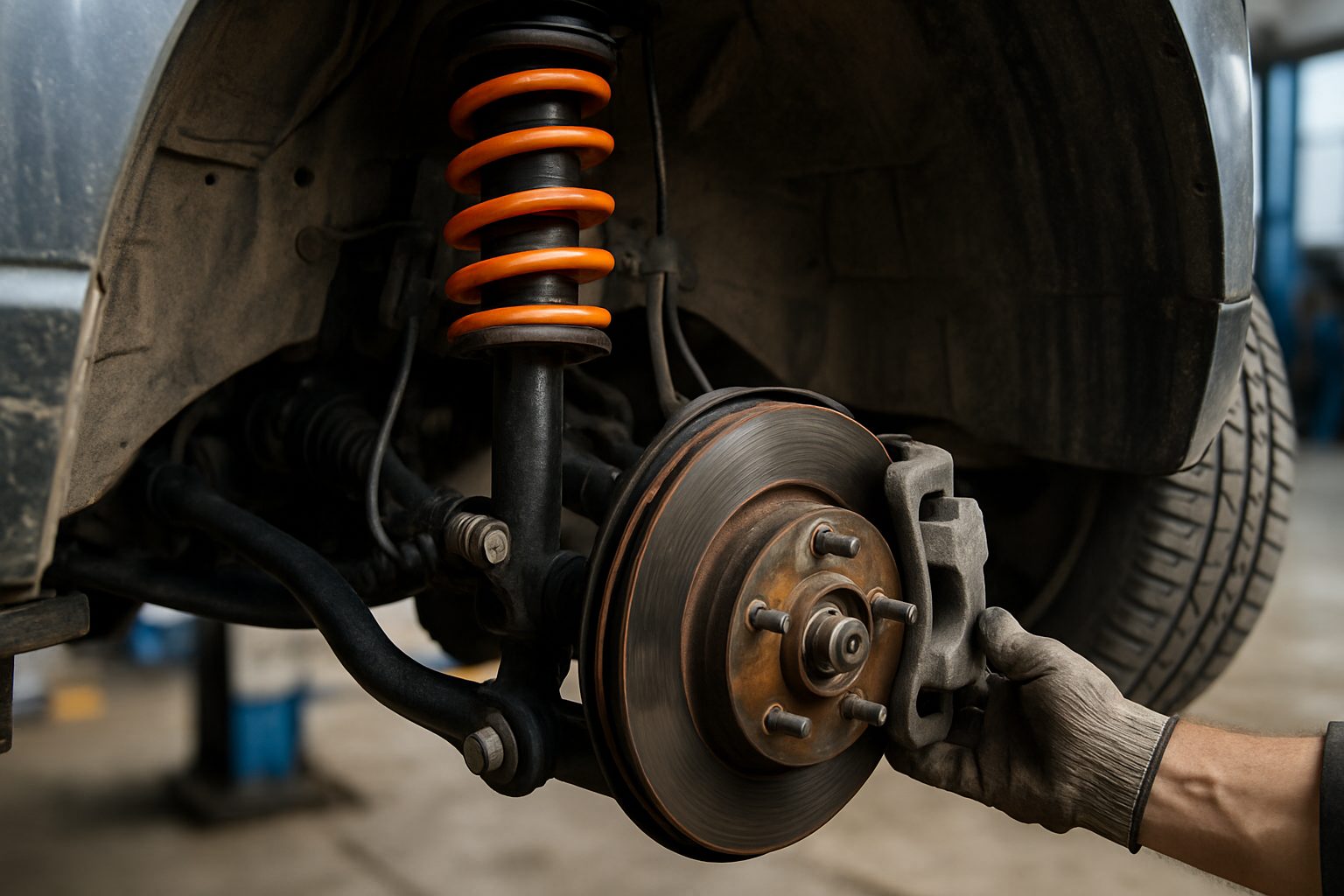
Rubber or elastomer bushings connect suspension arms to mounting points while allowing controlled movement. They absorb vibration and help maintain wheel position as the car accelerates, brakes, and crosses uneven pavement. With age, repeated movement, and exposure to road conditions, material may crack, separate, or lose stiffness.
Depending on year, drivetrain, and suspension package, the C300 uses different control arms and bushings. Mercedes-Benz parts listings for the 2024 C300, for example, distinguish configurations and show control-arm assemblies with bushings and ball joints. Correct identification matters before ordering parts.
Notice Changes in Steering and Braking
Worn bushings may produce a dull knock over driveway entrances or uneven pavement. You might feel the steering shift slightly while braking, notice a pull, or see uneven wear on the front tires. Excessive movement may alter wheel alignment while the suspension is loaded.
However, these symptoms overlap with damaged tires, weak struts, loose steering components, and worn ball joints. A sound or vibration provides a clue, not a final diagnosis.
Not Every C300 Creak Comes From Bushings
Mercedes-Benz issued technical guidance for certain 2015-2018 C300 vehicles concerning creaks or squeaks near the front suspension strut. The reported noise could arise from strut-related components rather than the control arm. This illustrates why replacing bushings based on a noise alone may be unnecessary.
We ask when the sound occurs, including when turning, low-speed braking, or crossing bumps, and road-test the vehicle when safe. We then inspect the affected suspension rather than guessing from the sound.
How We Inspect the Front Suspension
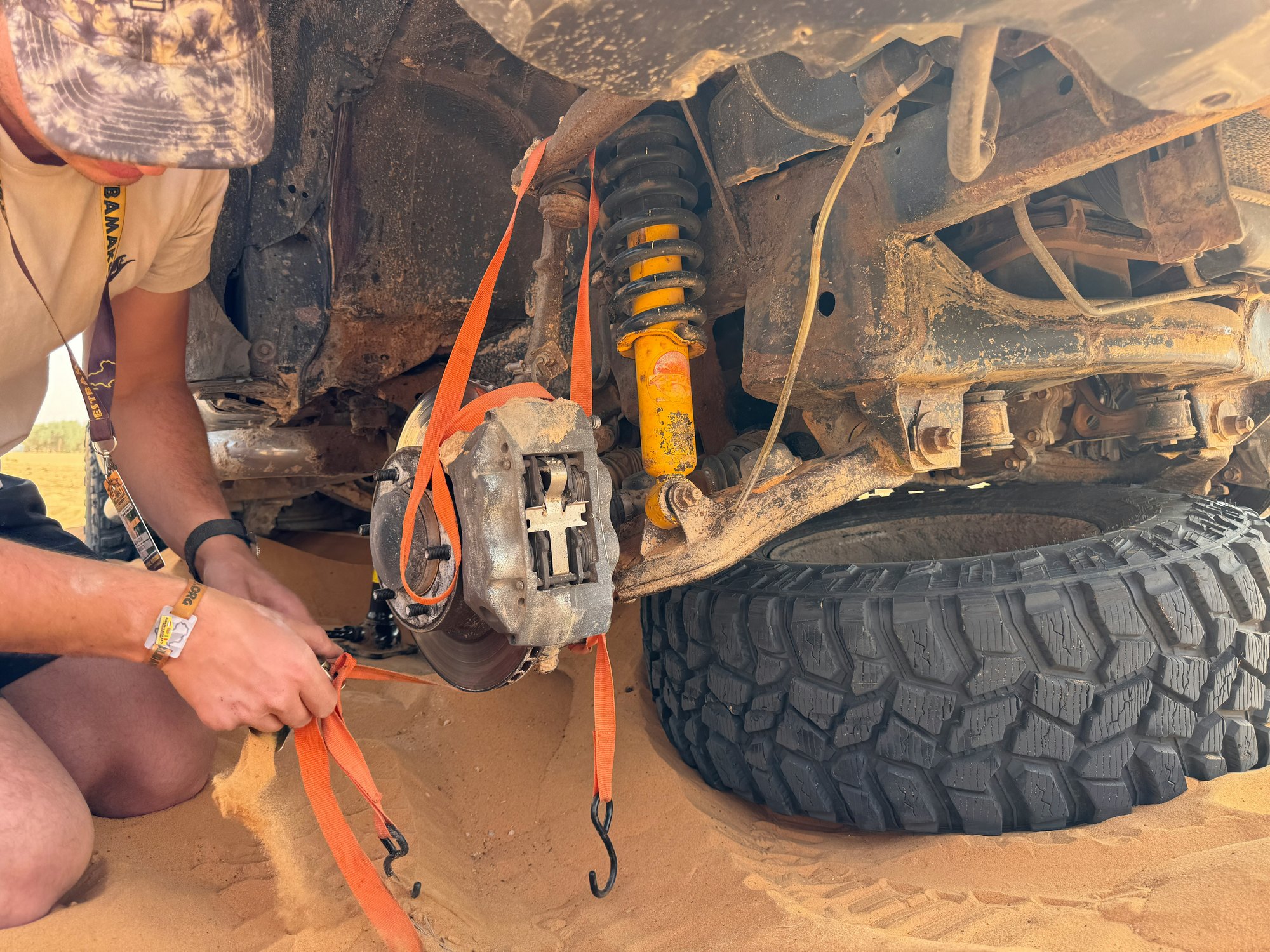
We look for cracked rubber, separation, excess arm movement, loose fasteners, and damaged ball-joint boots. We also inspect sway bar links, struts, tie rods, and tire wear. A controlled suspension check may reveal movement under load that a glance might miss.
If the complaint follows a pothole strike or curb impact, we check for bent parts or alignment changes. We explain which component has failed and whether nearby parts also need attention.
Repair the Fault and Recheck Alignment
Depending on the C300 configuration, repair may involve replacing a bushing or the complete control-arm assembly. We select parts for the exact model and suspension, follow proper fastening procedures, and check adjoining joints.
After repair, wheel alignment may be necessary to restore steering geometry and protect the tires. We also verify the original noise or handling complaint has improved.
Schedule Mercedes-Benz C300 Suspension Service
If your C300 clunks, pulls, or wears its front tires unevenly near Santa Clara, contact Driven Auto Care of San Jose, CA. If steering becomes unstable or a wheel appears displaced, avoid driving and arrange assistance. We will inspect the suspension, explain the findings, and recommend the appropriate repair.