An Acura TLX should feel stable, responsive, and predictable on Santa Clara roads. When the steering wheel sits off-center, the vehicle pulls, or the tires show uneven wear, rotation and alignment service deserve attention. These services support tire life and handling, but they solve different problems. At Driven Auto Care of San Jose, CA, we inspect the tires, wheels, steering, and suspension before recommending either service.
When Your TLX Needs a Tire Rotation
Tire rotation moves each tire to a different wheel position so wear develops more evenly. Acura lists tire rotation as Maintenance Minder subcode 1, while its A1 and B1 accelerated service packages pair rotation with tire inspection and pressure adjustment. Following the vehicle’s displayed maintenance reminders helps keep service matched to actual use.
Common clues include faster wear on one axle, feathered tread, increasing road noise, or a difference in tread depth between tires. Rotation may help slow future uneven wear, but it will not repair damage already present. Directional tires, different front and rear tire sizes, or special wheel setups may also require a specific rotation pattern.
Signs Wheel Alignment Needs Attention
Alignment measures and adjusts suspension angles controlling how the wheels meet the road. Warning signs include pulling left or right, a crooked steering wheel while traveling straight, irregular tire wear, or steering requiring constant correction. A pothole strike, curb impact, tire replacement, or suspension repair may also justify an alignment check.
An alignment problem does not always cause obvious vibration. Vibration may instead involve tire imbalance, wheel damage, a worn bearing, or another rotating component. Measuring alignment angles and inspecting the vehicle helps us avoid treating the wrong issue.
Rotation and Alignment Are Not Interchangeable
Rotation changes tire positions. Alignment changes wheel angles. Rotating tires will not correct pulling caused by improper toe or camber, while alignment will not erase wear already created by missed rotations, low pressure, or damaged suspension parts.
This distinction matters because many drivers request one service while the symptoms point toward the other. We compare tread patterns, pressure, steering-wheel position, and road behavior before deciding what the TLX needs.
Suspension Wear May Affect Alignment
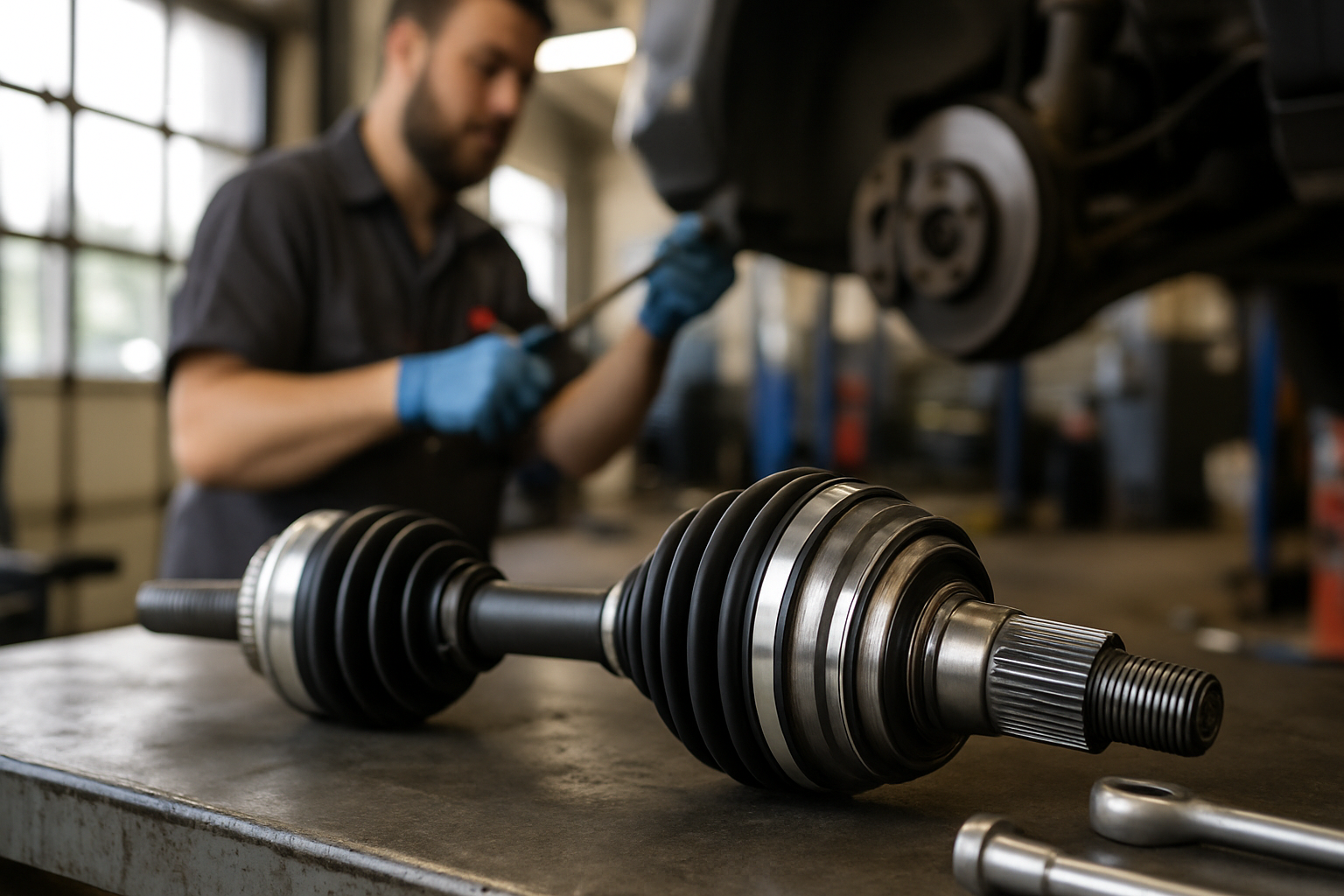
A lasting alignment requires tight steering and suspension parts. Worn tie-rod ends, control-arm bushings, ball joints, wheel bearings, shocks, or struts may allow a wheel to move after adjustments are made. Acura’s TLX maintenance guidance includes inspections of tie-rod ends, steering components, suspension parts, and driveshaft boots during applicable maintenance service.
If we find looseness, cracked bushings, leaking dampers, or damaged mounting points, we explain why repair should come before final alignment. Adjusting around worn parts may produce acceptable readings in the shop but poor results once the vehicle returns to the road.
What Our Tire and Alignment Service Includes
We begin with tire pressure, tread depth, wear patterns, wheel condition, and a road-test review when appropriate. Next, we inspect steering and suspension components for play or damage. Alignment equipment then measures wheel angles against the correct vehicle specifications.
After rotation or alignment, we verify lug-nut torque, tire pressure, steering-wheel position, and tracking. Driven Auto Care of San Jose, CA, lists tire rotation, wheel alignment, tire balancing, tire repair, tire replacement, and TPMS sensor replacement among its tire and alignment services.
Schedule Acura TLX Tire and Alignment Service
If your Acura TLX pulls, wears tires unevenly, or no longer tracks straight near Santa Clara, schedule an inspection. We will identify whether rotation, alignment, suspension repair, or another tire service will restore dependable handling and protect your investment.