A Volkswagen Passat with an EGR problem may develop a check engine light, rough idle, hesitation, reduced power, or increased exhaust smoke. Carbon buildup is one possible cause, especially on diesel applications, but cleaning is not always the correct repair. Electrical faults, sensor problems, EGR cooler restrictions, airflow issues, or a failed valve may create similar symptoms.
At Driven Auto Care of San Jose, CA, we help Sunnyvale drivers diagnose Volkswagen engine and emissions concerns from our San Jose shop. Our service menu includes engine diagnosis, engine repair, computer diagnostics, sensor replacement, fuel system cleaning, exhaust repair, and emissions failure diagnostics. We identify the engine and fault before deciding whether cleaning, adjustment, or component replacement makes sense.
Understand What the EGR System Does
The exhaust gas recirculation system routes a controlled amount of exhaust back into the intake stream to help reduce combustion temperatures and nitrogen oxide emissions. Volkswagen Passat systems vary by model year and engine, so the repair approach for a gasoline model may differ from a 2.0-liter TDI diesel.
Volkswagen’s 2014 Passat service specifications include EGR-related diagnostic codes such as P0401 for insufficient flow and P0402 for excessive flow on applicable configurations. A fault code points toward a system problem, but it does not prove the valve itself needs replacement.
Carbon Buildup May Restrict Flow
Diesel exhaust contains soot, and deposits may collect in EGR passages, filters, or related components over time. Volkswagen issued technical guidance for certain TDI models regarding P0401 and possible particulate filter soot accumulation. The guidance notes that high soot loads before regeneration may contribute to restrictions in the EGR filter.
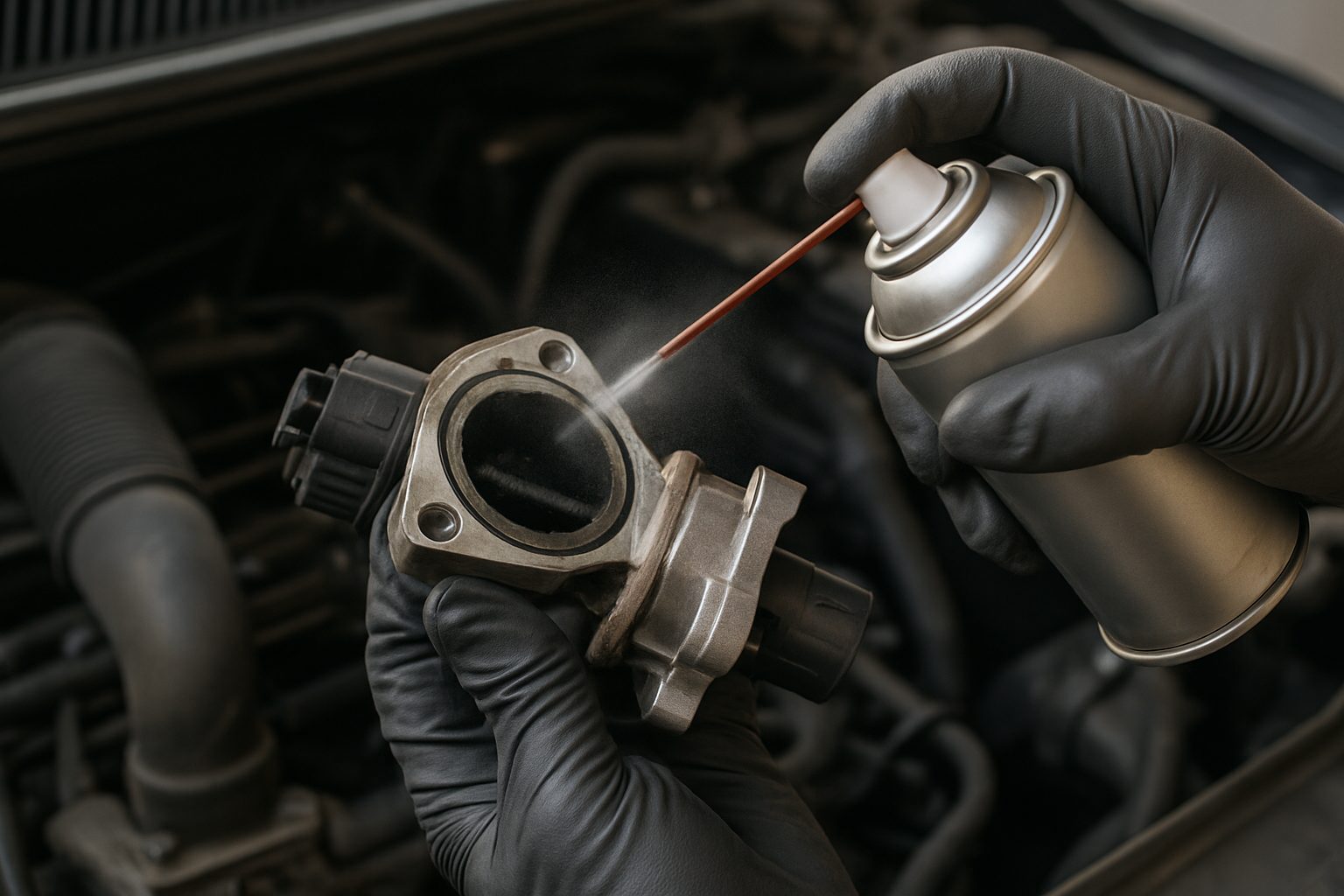
If deposits are limited to a serviceable valve or passage, careful cleaning may restore movement or flow. However, cleaning will not repair a burned-out actuator, damaged wiring, a failed position sensor, a leaking cooler, or a defective valve mechanism.
Check the Entire Air and Emissions System
An EGR code may appear alongside problems elsewhere in the intake or exhaust system. We begin with a scan for stored and pending faults, then review operating data and inspect relevant wiring, connectors, hoses, and airflow components.
Volkswagen also published technical guidance on EGR system performance after mass airflow sensor replacement, including a required basic-setting reset on certain models. This is one reason we avoid treating every EGR warning as a dirty-valve problem.
Know When Cleaning Is Not Enough
Cleaning makes sense only when testing supports a deposit-related restriction, and the component remains mechanically and electrically sound. If the valve does not respond to commands, the position feedback is incorrect, or the internal electronics fail, replacement may be the better repair option.
We also consider EGR cooler condition and exhaust restrictions on diesel models. Replacing or cleaning one part while another restriction remains may cause the warning light to return.
Do Not Ignore a Check Engine Light
A Passat may continue running with an EGR fault, but drivability and emissions performance may worsen. Rough running, hesitation, repeated warning lights, or reduced-power behavior deserve prompt diagnosis. If the engine runs poorly enough to make driving in traffic unsafe, arrange service instead of pushing the vehicle farther.
Schedule Volkswagen Passat Engine Service
If your Volkswagen Passat shows an EGR code, check engine light, rough idle, or reduced power near Sunnyvale, contact Driven Auto Care of San Jose, CA. We will test the system, explain whether cleaning is appropriate, and recommend repair based on the confirmed cause.