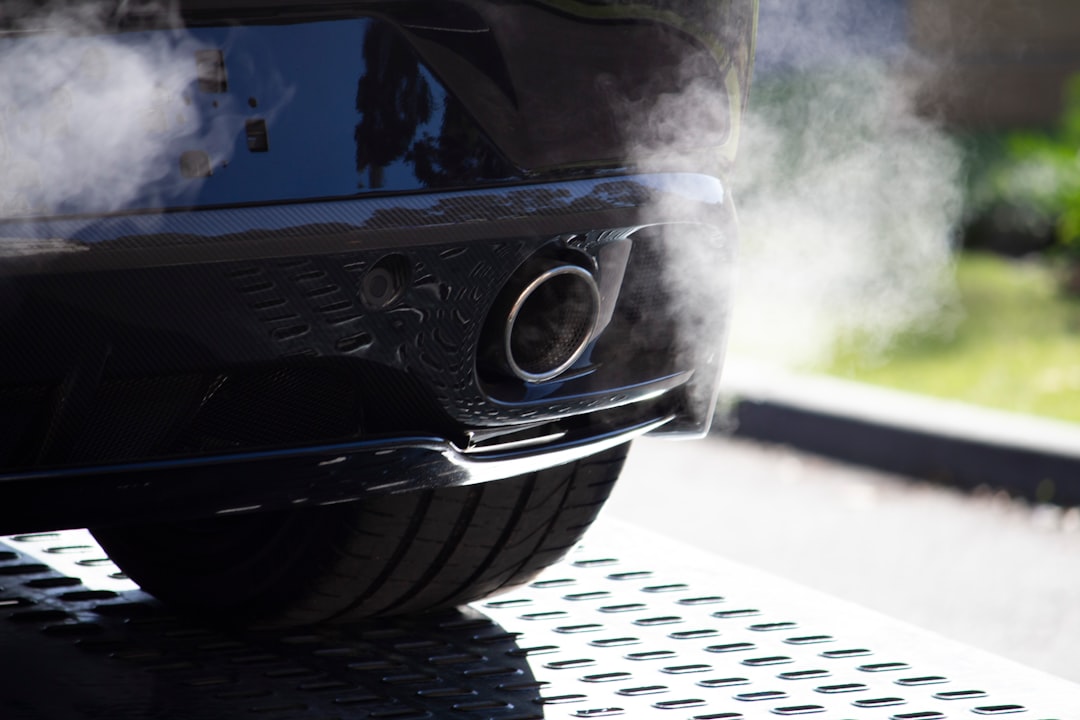
The Cherokee sits cold at the curb on a gray Willow Glen morning, and before you've backed down the driveway the exhaust note jumps from a quiet hum to a hollow, raspy bark that rattles off the houses. Pull onto the street and warm it up, and the racket fades to a dull thrum that almost sounds normal. That cold-loud, warm-quiet pattern fools people into chasing a cracked manifold or a snapped stud, and on the 2018 KL Cherokee it aims them at the wrong part. Owners bring this one to Driven Auto Care of San Jose all the time from across Willow Glen, and the noise itself tells us where to look. We work out of San Jose, CA, and the symptom does half the diagnosis before we touch the hood.
Why the Manifold Is the Wrong Suspect
The 2018 Cherokee shipped with the 2.4L Tigershark MultiAir four or the 3.2L Pentastar V6, and neither one carries a bolt-on cast-iron exhaust manifold. The four-cylinder casts its manifold into the cylinder head, and the V6 builds its into a manifold-with-converter unit on each bank. Nothing there can split along a runner or shear a stud the way the old iron castings on earlier Jeeps did. What both engines run instead is a braided stainless flex section that soaks up vibration and thermal growth, one on the 2.4L and two on the 3.2L feeding the Y-pipe. When that braid corrodes through and cracks, the rasp shows up at cold idle and the open seam broadcasts it down the block.
What's Rotting the Flex Pipe
The braided sleeve grabs water and holds it, and on this Cherokee one drip does most of the damage. Air-conditioning condensate runs straight down onto the flex section during warm-weather driving, and it keeps the braid soaked through each stop-and-go crawl while humid Bay Area air finishes the job. That steady wetting is why we watch this leak land between 55,000 and 80,000 miles on local cars instead of well past 100k. When we pull the Cherokee onto the lift, we go straight to the braiding and read it for rust scale and soot.
Cold Loud, Warm Quiet, and the V6 Catch
A pre-converter leak roars loudest at cold idle because the contracted metal holds the corroded seam at its widest. Heat the exhaust up, the stainless expands, the gap pinches shut, and the rasp drops to a low grumble, which pins the source upstream at the manifold or flex pipe and clears the muffler. Once in a while it's the manifold-to-downpipe flange or its gasket weeping at the sealing face under that same physics. On the V6 we check both flex sections and both downpipe joints, because fixing one and leaving the second cracking sends the Cherokee right back with the same rasp.
Where the Rasp Lives
Bring the Cherokee to us cold, before it's had its morning warm-up, and we open with a cold-start listen under the hood, ears at the flex sections while the rasp peaks. From there we read the braiding for rust scale and soot, then run a smoke or soap test across each joint in the pre-converter run. On the V6 we map both flex points and both downpipe flanges before we'll call the leak located. That metallic rasp on Willow Glen mornings has one specific source, and we track it down. Call us at (408) 295-3786, and we'll walk you through what we found before we say a word about the repair.