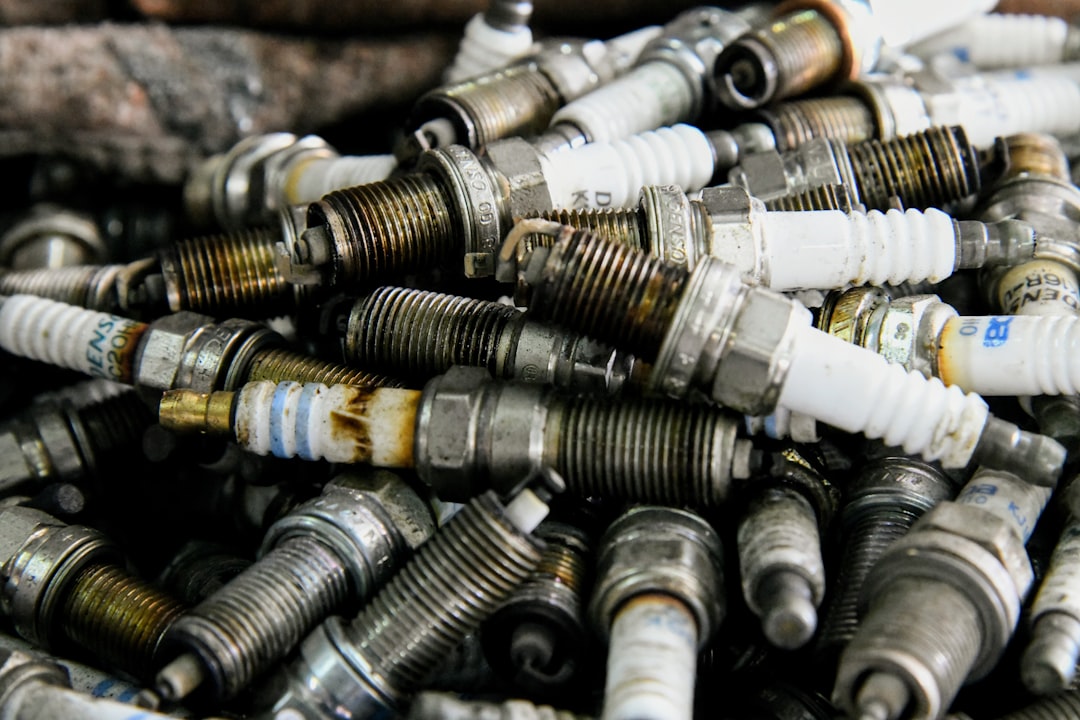
Before a socket ever touches the plug on a cold 2.7L or 3.5L EcoBoost, we pull the coil off that cylinder, pick up the air nozzle, and blow the well clean. Grit sitting at the base of that well falls straight into the combustion chamber the moment the plug breaks loose. We do this work at our San Jose shop, Driven Auto Care of San Jose, for F-150 owners coming in from Santa Clara, and on these engines the setup before removal matters more than people expect. Steel plugs that sit too long in an aluminum head fuse to the threads, and a routine job turns into a thread repair.
The Interval That Matches Your Driving
Ford publishes a plug interval near 100,000 miles for normal service and around 60,000 miles for severe service, which covers towing, extended idling, heat, and dust. Drive El Camino Real or the 101 corridor through Santa Clara in stop-and-go on a regular basis, and your truck already lives in severe-service territory, because the engine never holds the temperature that burns combustion byproducts off the electrode cleanly. The 100,000-mile number is real, but it's written for steady highway miles in a mild climate, and that's not the Bay Area. On a 2016 F-150, that distinction decides whether you pull at 60,000 or wait.
What the EcoBoost Adds to the Equation
The turbocharged 2.7L and 3.5L EcoBoost engines stress plugs harder than the non-turbo engines do, because boost pressure and turbo heat work the electrode and the gap on every combustion event. Many shops change these plugs at 40,000 to 60,000 miles and confirm the call when the gap has already worn open. Worn plugs on an EcoBoost show up as P030X misfire codes, a rough idle at startup, a stumble when the turbo spools under load, and fuel economy that drifts down and stays there. Wait too long on these turbo engines and the electrode erodes wide enough that the coil drives a hotter, harder spark to bridge it, which is the heat that bakes the plug into the head.
Steel Threads in an Aluminum Head
Steel plugs threaded into aluminum heads can seize when heat and galvanic effects work the contact across too many miles. We pull them on a cold engine, because aluminum loses clamping strength at temperature and a warm head gives up its threads more easily than a cold one. If a plug binds on the way out, we back it off an eighth of a turn, soak the base with penetrant, and work it in small increments rather than force it. These engines seat a coil directly over each plug, and after years of heat the boot bonds to the porcelain insulator, so we twist each one free rather than yank it straight up. When a cylinder has been misfiring, we move its coil to a known-good position and watch whether the fault follows the coil or stays with the plug.
How a Plug Comes Out Clean
If your 2016 F-150 is past 60,000 miles and sees regular Santa Clara stop-and-go traffic, the severe-service clock already applies, and it's worth knowing where you stand before the plugs seize in place. Call Driven Auto Care of San Jose at (408) 295-3786, and we'll confirm which engine is in the truck, check your mileage and history against both intervals, and tell you what the cold-engine pull involves for your F-150.