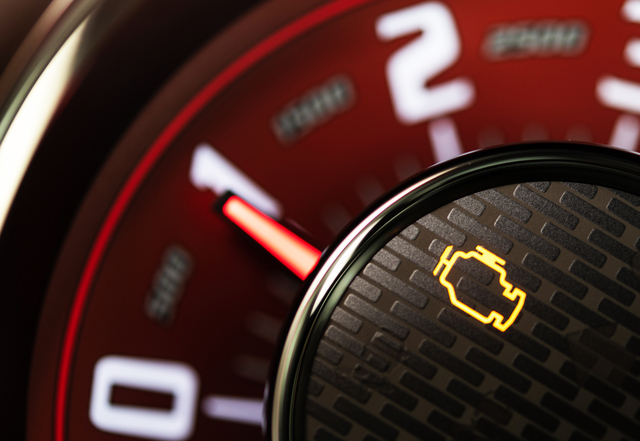
 The owner has been driving with the check engine light on for two weeks, hoping it would clear itself. It hasn't gone away on its own at all. We get this Toyota up on the lift at Driven Auto Care of San Jose, plug a scan tool into the OBD-II port under the driver's dash, and the screen tells us something specific within thirty seconds. The screen reads P0011, which means the intake camshaft position timing is over-advanced. The light by itself never could have told us that, and the stored code is what gave us the answer.
Why The Code Matters More Than The Light
A check engine light means the engine control unit logged a sensor reading outside its expected window and stored a corresponding fault code. Two Toyotas with identical dashboards can carry completely different problems underneath the hood. The light gets you to the shop, and the code gets us into the right system to begin testing. Anyone who quotes a repair before reading your code is selling you parts instead of doing real diagnostic work.
The Toyota Patterns We See Across San Jose
The 2002 through 2008 Camry and 2001 through 2008 RAV4 with the 2AZ-FE 2.4L engine love to throw VVT-i oil control valve codes when oil intervals get stretched and varnish clogs the OCV screen inside. Camry and Corolla owners pull up with evaporative emissions codes traced to a tired purge valve or a gas-cap seal that won't hold pressure during the EVAP self-test. Gen 2 Prius drivers from 2004 through 2009 see P0420 as the original catalytic converter ages past its efficiency threshold.
The Difference Between A Steady Light And A Flashing One
A steady check engine light means your Toyota has a stored fault that needs attention this week, and you can drive it normally to your appointment with us. A flashing check engine light means you have an active misfire dumping unburned fuel into your exhaust system, and that raw fuel will cook your catalytic converter from the inside within minutes of continued driving. If yours is flashing, ease off the freeway when it's safe and call us before you go any further.
Bring The Car In And We'll Show You What We See
You don't have to take our word for any of this when you can see it for yourself. Bring your Toyota to Driven Auto Care of San Jose at (408) 295-3786, and we'll pull the code in front of you, show you the freeze-frame data captured the moment the fault triggered, and walk you through the test we'll run to confirm the cause before we quote a single part. Your Toyota is trying to tell you something specific, and we'll be the ones to translate it for you in plain language.
The owner has been driving with the check engine light on for two weeks, hoping it would clear itself. It hasn't gone away on its own at all. We get this Toyota up on the lift at Driven Auto Care of San Jose, plug a scan tool into the OBD-II port under the driver's dash, and the screen tells us something specific within thirty seconds. The screen reads P0011, which means the intake camshaft position timing is over-advanced. The light by itself never could have told us that, and the stored code is what gave us the answer.
Why The Code Matters More Than The Light
A check engine light means the engine control unit logged a sensor reading outside its expected window and stored a corresponding fault code. Two Toyotas with identical dashboards can carry completely different problems underneath the hood. The light gets you to the shop, and the code gets us into the right system to begin testing. Anyone who quotes a repair before reading your code is selling you parts instead of doing real diagnostic work.
The Toyota Patterns We See Across San Jose
The 2002 through 2008 Camry and 2001 through 2008 RAV4 with the 2AZ-FE 2.4L engine love to throw VVT-i oil control valve codes when oil intervals get stretched and varnish clogs the OCV screen inside. Camry and Corolla owners pull up with evaporative emissions codes traced to a tired purge valve or a gas-cap seal that won't hold pressure during the EVAP self-test. Gen 2 Prius drivers from 2004 through 2009 see P0420 as the original catalytic converter ages past its efficiency threshold.
The Difference Between A Steady Light And A Flashing One
A steady check engine light means your Toyota has a stored fault that needs attention this week, and you can drive it normally to your appointment with us. A flashing check engine light means you have an active misfire dumping unburned fuel into your exhaust system, and that raw fuel will cook your catalytic converter from the inside within minutes of continued driving. If yours is flashing, ease off the freeway when it's safe and call us before you go any further.
Bring The Car In And We'll Show You What We See
You don't have to take our word for any of this when you can see it for yourself. Bring your Toyota to Driven Auto Care of San Jose at (408) 295-3786, and we'll pull the code in front of you, show you the freeze-frame data captured the moment the fault triggered, and walk you through the test we'll run to confirm the cause before we quote a single part. Your Toyota is trying to tell you something specific, and we'll be the ones to translate it for you in plain language.
San Jose, CA - What Does A Check Engine Light Mean For Toyota Drivers?
SYNOPSIS: Driven Auto Care explains how Toyota check engine lights work, from stored fault codes to diagnostic testing that confirms the right repair. Learn about the patterns seen across San Jose.
Inside The Bay When Your Toyota's Light Comes On
BY: Arun Coumar, Driven Auto Care of San Jose, CA
The owner has been driving with the check engine light on for two weeks, hoping it would clear itself. It hasn't gone away on its own at all. We get this Toyota up on the lift at Driven Auto Care of San Jose, plug a scan tool into the OBD-II port under the driver's dash, and the screen tells us something specific within thirty seconds. The screen reads P0011, which means the intake camshaft position timing is over-advanced. The light by itself never could have told us that, and the stored code is what gave us the answer.
Why The Code Matters More Than The Light
A check engine light means the engine control unit logged a sensor reading outside its expected window and stored a corresponding fault code. Two Toyotas with identical dashboards can carry completely different problems underneath the hood. The light gets you to the shop, and the code gets us into the right system to begin testing. Anyone who quotes a repair before reading your code is selling you parts instead of doing real diagnostic work.
The Toyota Patterns We See Across San Jose
The 2002 through 2008 Camry and 2001 through 2008 RAV4 with the 2AZ-FE 2.4L engine love to throw VVT-i oil control valve codes when oil intervals get stretched and varnish clogs the OCV screen inside. Camry and Corolla owners pull up with evaporative emissions codes traced to a tired purge valve or a gas-cap seal that won't hold pressure during the EVAP self-test. Gen 2 Prius drivers from 2004 through 2009 see P0420 as the original catalytic converter ages past its efficiency threshold.
The Difference Between A Steady Light And A Flashing One
A steady check engine light means your Toyota has a stored fault that needs attention this week, and you can drive it normally to your appointment with us. A flashing check engine light means you have an active misfire dumping unburned fuel into your exhaust system, and that raw fuel will cook your catalytic converter from the inside within minutes of continued driving. If yours is flashing, ease off the freeway when it's safe and call us before you go any further.
Bring The Car In And We'll Show You What We See
You don't have to take our word for any of this when you can see it for yourself. Bring your Toyota to Driven Auto Care of San Jose at (408) 295-3786, and we'll pull the code in front of you, show you the freeze-frame data captured the moment the fault triggered, and walk you through the test we'll run to confirm the cause before we quote a single part. Your Toyota is trying to tell you something specific, and we'll be the ones to translate it for you in plain language.