 A loaded tandem-axle trailer backs onto the hitch of a RAM 1500, and the rear squats a couple of inches while the nose lifts. The front shocks and the coil springs take that geometry change and hold it across every mile of the run. Driven Auto Care of San Jose sees Silicon Valley RAM owners bring in their trucks for the same complaint after a season of heavy use, and the answer starts with understanding what the front end does when the load gets real.
Quick Clarification On The Word "Strut"
The topic calls it a strut repair because most owners call the front damping unit a strut, and shops hear it that way every day. The RAM 1500 DS (2009–2018) runs a short/long arm independent front suspension, which means the coil spring and the shock absorber are separate components bolted into separate mounts. A proper tow-mile inspection covers both the shock and the spring, because each one does part of the job the other can't.
Why Shocks Fade Faster On Tow-Heavy Trucks
Monotube and twin-tube shocks damp suspension motion by forcing oil past calibrated valves inside the body of the shock. Every compression and rebound cycle heats that oil, and heavy tow cycles pile compression-rebound events on top of each other faster than the shock can shed heat. The oil thins, the valving loses its damping authority, and the truck starts bouncing when it should settle. Owners pulling toward Tahoe or working jobsites across Silicon Valley land here tens of thousands of miles earlier than commuter trucks of the same age, because the tow cycles compress the wear timeline.
The Four Symptoms Tow Owners Mention First
RAM owners call us with the same four complaints in the same order. The nose dives farther than it used to during hard braking, especially when coming down from the Altamont Pass with weight behind the truck. The front end bounces twice after an expansion joint on 101 when one recovery should be enough. Headlights wander up and down across oncoming traffic on night drives home. The steering wheel develops a subtle shimmy over rough pavement because every road input transmits through a suspension that can't damp it.
Air Suspension Trims Have Their Own Wear Pattern
If your RAM 1500 came with the optional four-corner air suspension, the failure list adds two more items. The air compressor runs constantly to maintain ride height as the air bags age, and the compressor itself eventually burns out from the duty cycle. Height sensor linkages develop play or drift their signal, which triggers ride-height warnings on the dash and uneven corner settings in the morning after the truck sits overnight. Both components show up on our inspection sheet whenever we see an air-equipped RAM come through the bay.
Here's The Insider Beat Most Shops Miss
A worn shock pumps extra motion into every suspension component connected to the same wheel, which means tired shocks accelerate tie rod end wear, ball joint wear, and control arm bushing wear on an accelerated timeline. Replacing the shocks on their own after years of tow miles leaves the other worn components fighting the new damping authority, and the whole front end wears out as a group. Address the shocks along with the tie rods and joints, and the front end stops chasing its own problems.
Call Us And We'll Check The Whole Front End At Once
Driven Auto Care of San Jose is at (408) 295-3786 for Silicon Valley RAM owners who need a proper tow-miles front-end inspection. We check the shocks, the coil springs (or air bags and compressor), the tie rod ends, the upper and lower ball joints, the control arm bushings, and the sway bar end links as one connected system. Tow trucks wear as a group, and they deserve to get fixed as a group so the next trailer run feels as planted as the first one did.
A loaded tandem-axle trailer backs onto the hitch of a RAM 1500, and the rear squats a couple of inches while the nose lifts. The front shocks and the coil springs take that geometry change and hold it across every mile of the run. Driven Auto Care of San Jose sees Silicon Valley RAM owners bring in their trucks for the same complaint after a season of heavy use, and the answer starts with understanding what the front end does when the load gets real.
Quick Clarification On The Word "Strut"
The topic calls it a strut repair because most owners call the front damping unit a strut, and shops hear it that way every day. The RAM 1500 DS (2009–2018) runs a short/long arm independent front suspension, which means the coil spring and the shock absorber are separate components bolted into separate mounts. A proper tow-mile inspection covers both the shock and the spring, because each one does part of the job the other can't.
Why Shocks Fade Faster On Tow-Heavy Trucks
Monotube and twin-tube shocks damp suspension motion by forcing oil past calibrated valves inside the body of the shock. Every compression and rebound cycle heats that oil, and heavy tow cycles pile compression-rebound events on top of each other faster than the shock can shed heat. The oil thins, the valving loses its damping authority, and the truck starts bouncing when it should settle. Owners pulling toward Tahoe or working jobsites across Silicon Valley land here tens of thousands of miles earlier than commuter trucks of the same age, because the tow cycles compress the wear timeline.
The Four Symptoms Tow Owners Mention First
RAM owners call us with the same four complaints in the same order. The nose dives farther than it used to during hard braking, especially when coming down from the Altamont Pass with weight behind the truck. The front end bounces twice after an expansion joint on 101 when one recovery should be enough. Headlights wander up and down across oncoming traffic on night drives home. The steering wheel develops a subtle shimmy over rough pavement because every road input transmits through a suspension that can't damp it.
Air Suspension Trims Have Their Own Wear Pattern
If your RAM 1500 came with the optional four-corner air suspension, the failure list adds two more items. The air compressor runs constantly to maintain ride height as the air bags age, and the compressor itself eventually burns out from the duty cycle. Height sensor linkages develop play or drift their signal, which triggers ride-height warnings on the dash and uneven corner settings in the morning after the truck sits overnight. Both components show up on our inspection sheet whenever we see an air-equipped RAM come through the bay.
Here's The Insider Beat Most Shops Miss
A worn shock pumps extra motion into every suspension component connected to the same wheel, which means tired shocks accelerate tie rod end wear, ball joint wear, and control arm bushing wear on an accelerated timeline. Replacing the shocks on their own after years of tow miles leaves the other worn components fighting the new damping authority, and the whole front end wears out as a group. Address the shocks along with the tie rods and joints, and the front end stops chasing its own problems.
Call Us And We'll Check The Whole Front End At Once
Driven Auto Care of San Jose is at (408) 295-3786 for Silicon Valley RAM owners who need a proper tow-miles front-end inspection. We check the shocks, the coil springs (or air bags and compressor), the tie rod ends, the upper and lower ball joints, the control arm bushings, and the sway bar end links as one connected system. Tow trucks wear as a group, and they deserve to get fixed as a group so the next trailer run feels as planted as the first one did.
Silicon Valley, CA - Why Do RAM Trucks Need Strut Repairs After Heavy Use?
SYNOPSIS: Driven Auto Care explains how towing impacts RAM 1500 suspension, why shocks fade early, and what components should be inspected together. There are four symptoms most owners notice first.
Do You Know What Tow Miles Do To A RAM Front End?
BY: Arun Coumar, Driven Auto Care of San Jose, CA
A loaded tandem-axle trailer backs onto the hitch of a RAM 1500, and the rear squats a couple of inches while the nose lifts. The front shocks and the coil springs take that geometry change and hold it across every mile of the run. Driven Auto Care of San Jose sees Silicon Valley RAM owners bring in their trucks for the same complaint after a season of heavy use, and the answer starts with understanding what the front end does when the load gets real.
Quick Clarification On The Word "Strut"
The topic calls it a strut repair because most owners call the front damping unit a strut, and shops hear it that way every day. The RAM 1500 DS (2009–2018) runs a short/long arm independent front suspension, which means the coil spring and the shock absorber are separate components bolted into separate mounts. A proper tow-mile inspection covers both the shock and the spring, because each one does part of the job the other can't.
Why Shocks Fade Faster On Tow-Heavy Trucks
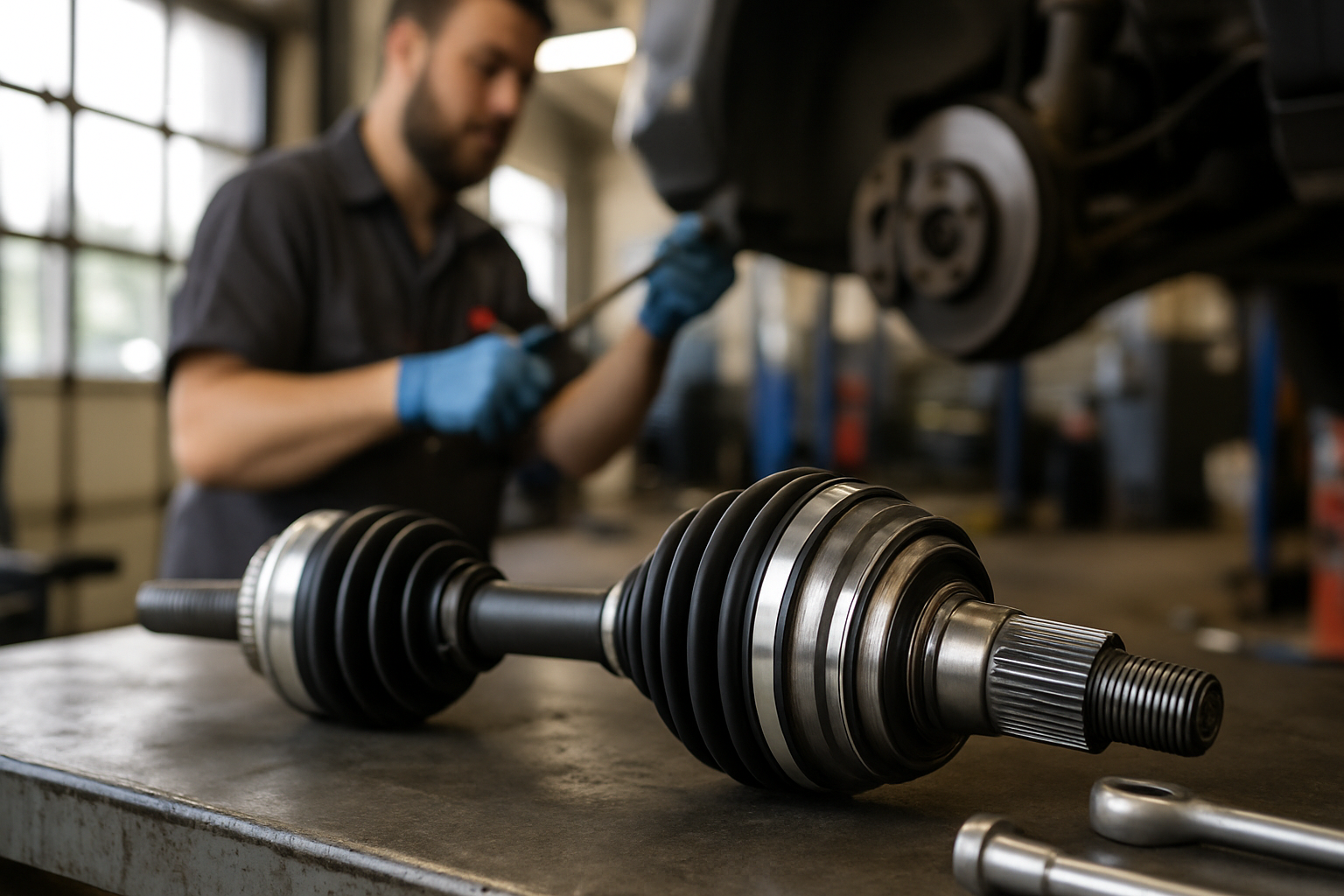
Monotube and twin-tube shocks damp suspension motion by forcing oil past calibrated valves inside the body of the shock. Every compression and rebound cycle heats that oil, and heavy tow cycles pile compression-rebound events on top of each other faster than the shock can shed heat. The oil thins, the valving loses its damping authority, and the truck starts bouncing when it should settle. Owners pulling toward Tahoe or working jobsites across Silicon Valley land here tens of thousands of miles earlier than commuter trucks of the same age, because the tow cycles compress the wear timeline.
The Four Symptoms Tow Owners Mention First
RAM owners call us with the same four complaints in the same order. The nose dives farther than it used to during hard braking, especially when coming down from the Altamont Pass with weight behind the truck. The front end bounces twice after an expansion joint on 101 when one recovery should be enough. Headlights wander up and down across oncoming traffic on night drives home. The steering wheel develops a subtle shimmy over rough pavement because every road input transmits through a suspension that can't damp it.
Air Suspension Trims Have Their Own Wear Pattern
If your RAM 1500 came with the optional four-corner air suspension, the failure list adds two more items. The air compressor runs constantly to maintain ride height as the air bags age, and the compressor itself eventually burns out from the duty cycle. Height sensor linkages develop play or drift their signal, which triggers ride-height warnings on the dash and uneven corner settings in the morning after the truck sits overnight. Both components show up on our inspection sheet whenever we see an air-equipped RAM come through the bay.
Here's The Insider Beat Most Shops Miss
A worn shock pumps extra motion into every suspension component connected to the same wheel, which means tired shocks accelerate tie rod end wear, ball joint wear, and control arm bushing wear on an accelerated timeline. Replacing the shocks on their own after years of tow miles leaves the other worn components fighting the new damping authority, and the whole front end wears out as a group. Address the shocks along with the tie rods and joints, and the front end stops chasing its own problems.
Call Us And We'll Check The Whole Front End At Once
Driven Auto Care of San Jose is at (408) 295-3786 for Silicon Valley RAM owners who need a proper tow-miles front-end inspection. We check the shocks, the coil springs (or air bags and compressor), the tie rod ends, the upper and lower ball joints, the control arm bushings, and the sway bar end links as one connected system. Tow trucks wear as a group, and they deserve to get fixed as a group so the next trailer run feels as planted as the first one did.