 Honda builds engines with tight clearances, aluminum heads, and a cooling system calibrated to keep combustion temperatures inside a narrow efficiency window. That precision is what gave the J-series V6 and the R-series four-cylinder their reputations for longevity, and it's also the reason a small coolant loss hurts Honda performance harder than the same leak would hurt a looser engine. Driven Auto Care of San Jose works on these platforms every week at our San Jose shop, and the performance story behind a coolant leak is one owners rarely hear until something gets expensive.
The Mechanism: Air Pockets, Hot Spots, And The ECU's Response
A slow leak drops the coolant level a few ounces at a time, and every ounce gone is an ounce of space for air to fill. Trapped air forms pockets against the highest points of the cooling passages, and those pockets stop transferring heat from the aluminum head the way the engineers designed the flow path to work. Localized hot spots form inside the combustion chambers even while the dashboard gauge reads normal, and the knock sensor detects the resulting abnormal combustion under load. The ECU responds by pulling ignition timing to protect the engine, which cuts power output, drops fuel economy, and turns a responsive Honda into one that feels tired climbing an on-ramp.
The Honda Leak Sources We Find Most Across San Jose
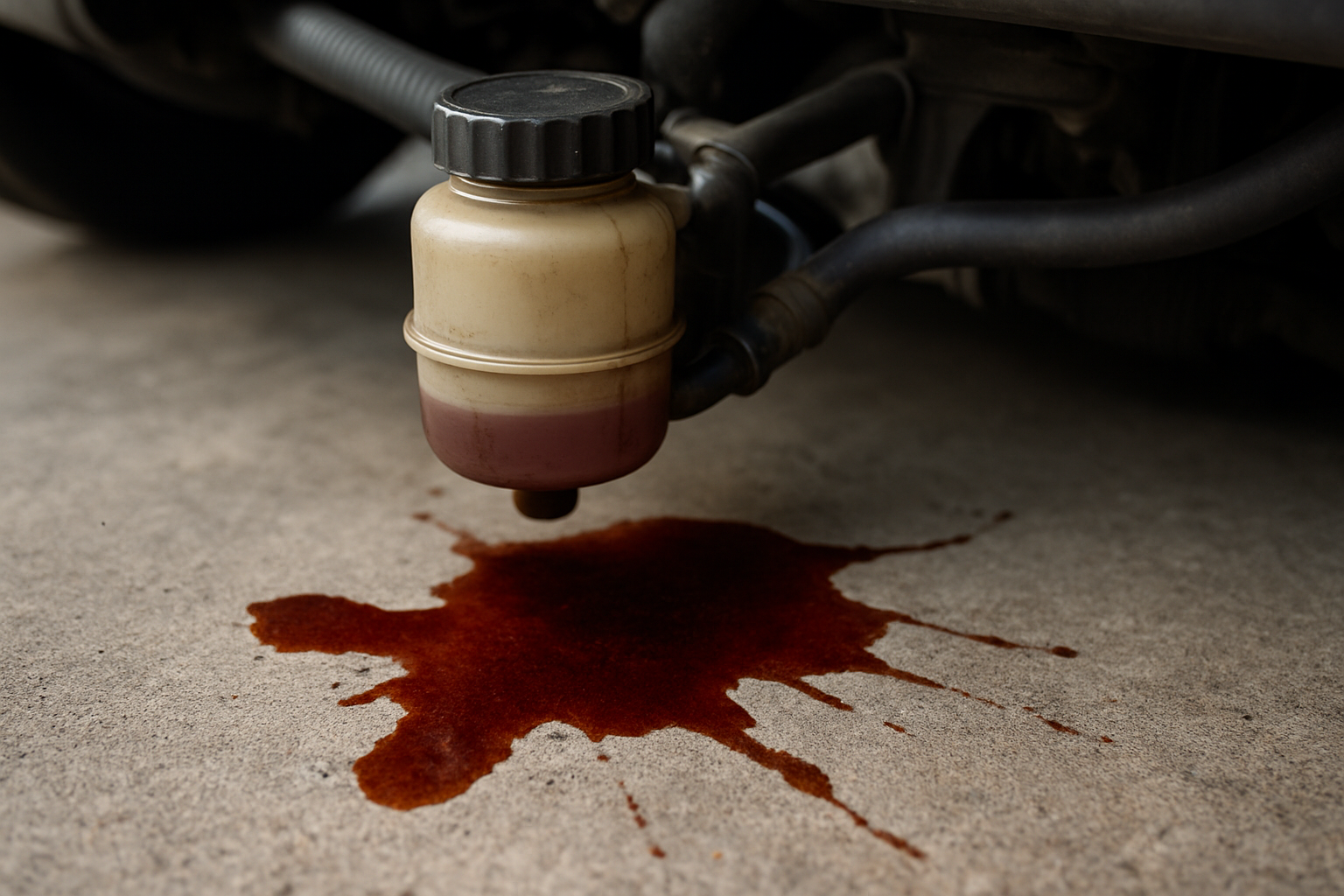
The J35 V6 in 2005–2012 Odyssey, Pilot, and Accord V6 shows its most frequent leak at the thermostat housing O-ring, where the plastic housing meets the timing chain cover and the O-ring hardens with age. Radiator end tanks on these Hondas are plastic crimped to an aluminum core, and the crimp seam cracks from a decade of pressure cycling across hot and cold soaks in the Bay Area climate. The R18A 1.8L in 2006–2011 Civic adds a weeping coolant bleeder bolt to the list, where the sealing washer dries out and lets coolant escape under system pressure. Each of these leaks drops the level a little, and each of them feeds the same performance-robbing cascade inside the engine.
The Insider Beat: Honda Burp Procedure Is Where Other Shops Fail
Refilling a Honda cooling system after any service that opens it up requires Honda's specific burp procedure, which uses a funnel installed in the radiator neck and a careful warm-up cycle to let trapped air rise and escape. Shops that skip the procedure leave residual air in the block, and the customer drives away with a repair invoice and the same underlying performance problem the car had when it came in. The burp matters as much as the part replacement, and a proper Honda cooling service always includes both steps together.
The Three-Step Cooling Service Your Honda Deserves
We'll pressure-test the cooling system cold to find the leak source under system pressure. Then we'll inspect the thermostat housing O-ring, the radiator end tanks, the water pump weep hole, and the hoses for hardening or swelling. After the repair, we'll refill the system using Honda's funnel burp procedure and verify temperature stability on a road test before you get the keys back. Call Driven Auto Care of San Jose at (408) 295-3786 and book a cooling system diagnostic this week so your Honda goes back to feeling like a Honda.
Honda builds engines with tight clearances, aluminum heads, and a cooling system calibrated to keep combustion temperatures inside a narrow efficiency window. That precision is what gave the J-series V6 and the R-series four-cylinder their reputations for longevity, and it's also the reason a small coolant loss hurts Honda performance harder than the same leak would hurt a looser engine. Driven Auto Care of San Jose works on these platforms every week at our San Jose shop, and the performance story behind a coolant leak is one owners rarely hear until something gets expensive.
The Mechanism: Air Pockets, Hot Spots, And The ECU's Response
A slow leak drops the coolant level a few ounces at a time, and every ounce gone is an ounce of space for air to fill. Trapped air forms pockets against the highest points of the cooling passages, and those pockets stop transferring heat from the aluminum head the way the engineers designed the flow path to work. Localized hot spots form inside the combustion chambers even while the dashboard gauge reads normal, and the knock sensor detects the resulting abnormal combustion under load. The ECU responds by pulling ignition timing to protect the engine, which cuts power output, drops fuel economy, and turns a responsive Honda into one that feels tired climbing an on-ramp.
The Honda Leak Sources We Find Most Across San Jose
The J35 V6 in 2005–2012 Odyssey, Pilot, and Accord V6 shows its most frequent leak at the thermostat housing O-ring, where the plastic housing meets the timing chain cover and the O-ring hardens with age. Radiator end tanks on these Hondas are plastic crimped to an aluminum core, and the crimp seam cracks from a decade of pressure cycling across hot and cold soaks in the Bay Area climate. The R18A 1.8L in 2006–2011 Civic adds a weeping coolant bleeder bolt to the list, where the sealing washer dries out and lets coolant escape under system pressure. Each of these leaks drops the level a little, and each of them feeds the same performance-robbing cascade inside the engine.
The Insider Beat: Honda Burp Procedure Is Where Other Shops Fail
Refilling a Honda cooling system after any service that opens it up requires Honda's specific burp procedure, which uses a funnel installed in the radiator neck and a careful warm-up cycle to let trapped air rise and escape. Shops that skip the procedure leave residual air in the block, and the customer drives away with a repair invoice and the same underlying performance problem the car had when it came in. The burp matters as much as the part replacement, and a proper Honda cooling service always includes both steps together.
The Three-Step Cooling Service Your Honda Deserves
We'll pressure-test the cooling system cold to find the leak source under system pressure. Then we'll inspect the thermostat housing O-ring, the radiator end tanks, the water pump weep hole, and the hoses for hardening or swelling. After the repair, we'll refill the system using Honda's funnel burp procedure and verify temperature stability on a road test before you get the keys back. Call Driven Auto Care of San Jose at (408) 295-3786 and book a cooling system diagnostic this week so your Honda goes back to feeling like a Honda.
San Jose, CA - How Can A Coolant Leak Hurt Honda Engine Performance Badly?
SYNOPSIS: Driven Auto Care explains how slow coolant leaks, including the most common ones, affect Honda engines and how early diagnosis helps San Jose drivers prevent performance loss and critical damage.
Small Coolant Losses Hit Honda Performance Harder
BY: Arun Coumar, Driven Auto Care of San Jose, CA
Honda builds engines with tight clearances, aluminum heads, and a cooling system calibrated to keep combustion temperatures inside a narrow efficiency window. That precision is what gave the J-series V6 and the R-series four-cylinder their reputations for longevity, and it's also the reason a small coolant loss hurts Honda performance harder than the same leak would hurt a looser engine. Driven Auto Care of San Jose works on these platforms every week at our San Jose shop, and the performance story behind a coolant leak is one owners rarely hear until something gets expensive.
The Mechanism: Air Pockets, Hot Spots, And The ECU's Response
A slow leak drops the coolant level a few ounces at a time, and every ounce gone is an ounce of space for air to fill. Trapped air forms pockets against the highest points of the cooling passages, and those pockets stop transferring heat from the aluminum head the way the engineers designed the flow path to work. Localized hot spots form inside the combustion chambers even while the dashboard gauge reads normal, and the knock sensor detects the resulting abnormal combustion under load. The ECU responds by pulling ignition timing to protect the engine, which cuts power output, drops fuel economy, and turns a responsive Honda into one that feels tired climbing an on-ramp.
The Honda Leak Sources We Find Most Across San Jose
The J35 V6 in 2005–2012 Odyssey, Pilot, and Accord V6 shows its most frequent leak at the thermostat housing O-ring, where the plastic housing meets the timing chain cover and the O-ring hardens with age. Radiator end tanks on these Hondas are plastic crimped to an aluminum core, and the crimp seam cracks from a decade of pressure cycling across hot and cold soaks in the Bay Area climate. The R18A 1.8L in 2006–2011 Civic adds a weeping coolant bleeder bolt to the list, where the sealing washer dries out and lets coolant escape under system pressure. Each of these leaks drops the level a little, and each of them feeds the same performance-robbing cascade inside the engine.
The Insider Beat: Honda Burp Procedure Is Where Other Shops Fail
Refilling a Honda cooling system after any service that opens it up requires Honda's specific burp procedure, which uses a funnel installed in the radiator neck and a careful warm-up cycle to let trapped air rise and escape. Shops that skip the procedure leave residual air in the block, and the customer drives away with a repair invoice and the same underlying performance problem the car had when it came in. The burp matters as much as the part replacement, and a proper Honda cooling service always includes both steps together.
The Three-Step Cooling Service Your Honda Deserves
We'll pressure-test the cooling system cold to find the leak source under system pressure. Then we'll inspect the thermostat housing O-ring, the radiator end tanks, the water pump weep hole, and the hoses for hardening or swelling. After the repair, we'll refill the system using Honda's funnel burp procedure and verify temperature stability on a road test before you get the keys back. Call Driven Auto Care of San Jose at (408) 295-3786 and book a cooling system diagnostic this week so your Honda goes back to feeling like a Honda.