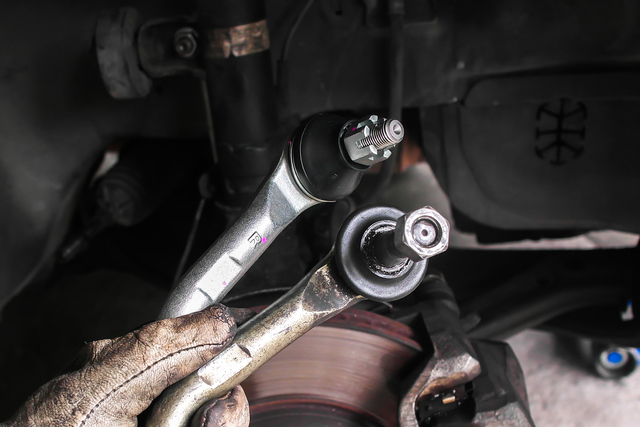
 What Control Arms Do On Chevrolet Vehicles
Control arms connect the steering knuckle area to the frame or subframe by guiding the wheel through its motion and help keep alignment angles steady. Most control arms use bushings and a ball joint. Bushings let the arm move in a controlled way while absorbing road vibration. The ball joint lets the wheel pivot for steering without unwanted play.
When these parts stay tight, the vehicle tracks straight and feels predictable.
Signs Control Arms Are Worn
Drivers in Santa Clara often notice the feel before they see anything obvious.
- Clunk or knock over bumps or driveway ramps
- Wandering or a need to correct steering at speed
- Vibration or shake during braking
- Uneven tire wear, often inner edge wear or feathering
- Steering that feels loose or delayed on turns
- Tire noise that grows as speed increases
Why Control Arms Wear Out
Road impact plays a big role. Potholes, curb taps, and repeated speed bumps stress bushings and ball joints. Heat and time also age rubber bushings. Once the rubber cracks or separates, the arm can shift more than it should. Ball joints wear from constant motion, and once play starts, it usually grows.
Driving with poor alignment can speed up wear. So can worn shocks or struts that let the suspension bounce more than normal. That extra movement adds stress to the joints.
How We Check The Problem
We start with a road test to feel what you feel. Then we inspect the front end on the lift. We check for play at the wheel and at the ball joint. We inspect bushings for cracks, separation, and excess movement. We also look at tire wear patterns and measure tread depth across the tire.
If needed, we check alignment readings and look for toe changes that can point to bushing movement. We also inspect related parts, since control arm wear often shows up with worn links or tie rod ends.
What The Repair Usually Includes
Most control arm repairs involve replacing the worn arm assembly, since the bushing or ball joint may not be serviceable alone. In many cases, replacing parts on both sides of the axle makes sense, since wear tends to be similar side to side.
A typical repair plan includes:
- Replace the worn control arm or arms
- Install new hardware when required
- Inspect related steering and suspension parts
- Perform an alignment after the work
Catch It Before It Eats Another Set Of Tires
If your Chevy feels loose or clunks over bumps on Santa Clara roads, give Driven Auto Care of San Jose, CA a call. We’ll check the front end, show you what’s worn, and get you back to a smooth, steady drive.