A sweet coolant smell is easy to brush off at first. Many Ford owners notice it after parking, then smell it again at a stoplight with the fan on. Some only notice it after a hill or a longer drive. That smell usually means coolant is leaking and heating up. Coolant belongs inside a sealed system. When it leaks, the engine can run hotter than it should, and a small problem can turn into an overheating.
Why The Coolant Smell Shows Up When You Drive Or Park
Cooling systems build pressure as the engine warms up. A small crack or a weak clamp may leak only under pressure. While you drive, airflow can push the smell away, so you notice it most in traffic or right after you park. Heat soak after shutdown can also make coolant residue steam off hot parts, which makes the smell stronger for a few minutes.
Ford Coolant Leak Sources We Check First
Ford leak points vary by model and engine, but the failure pattern is familiar. We start with the areas that leak most, then trace the highest wet point.
Some leak sources include:
- Radiator seams and plastic end tanks
- Upper and lower radiator hoses and clamp joints
- Thermostat housing and gasket surfaces
- Water pump seep at the weep hole or gasket area
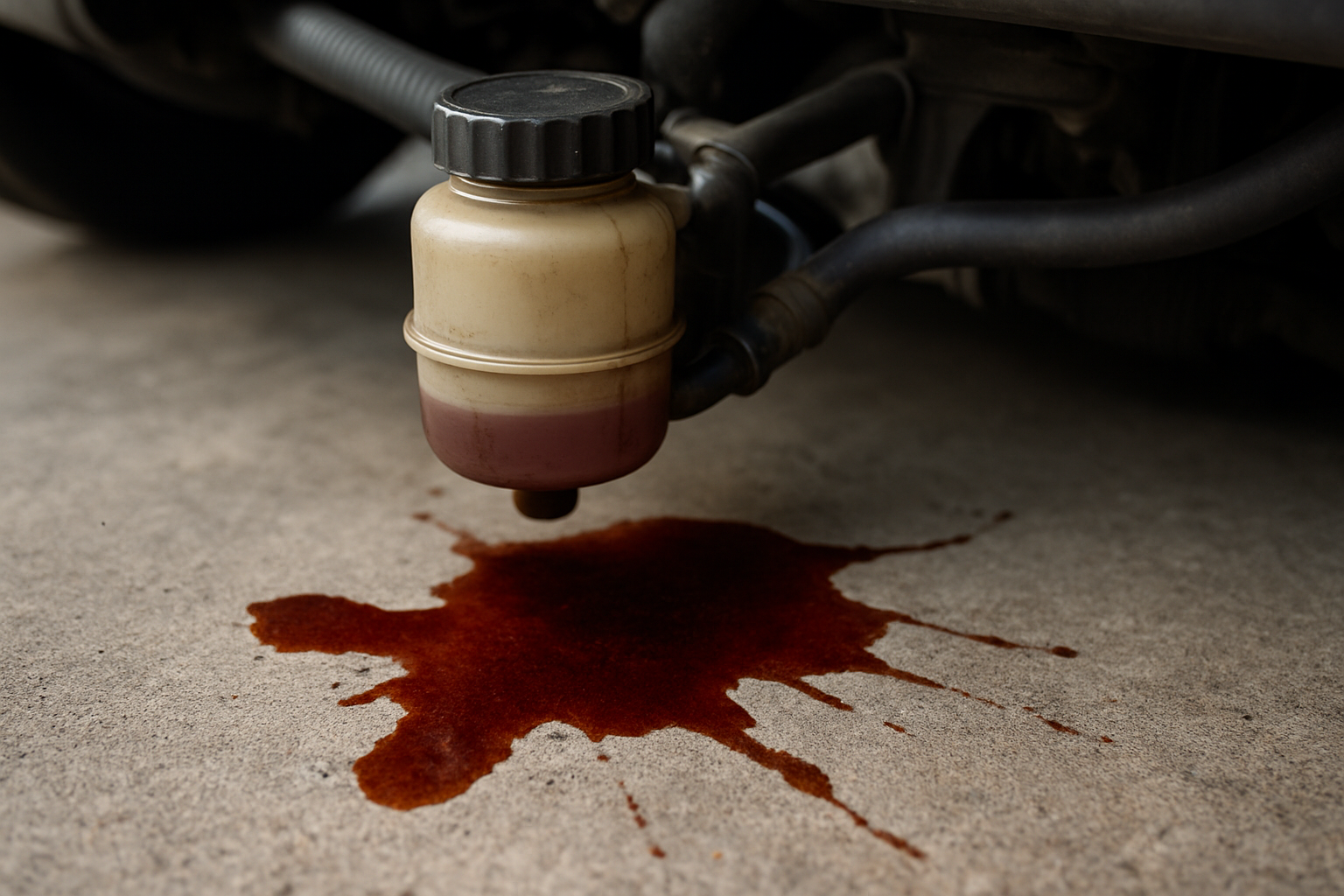
- Coolant reservoir cracks and cap seal problems
- Heater hoses near the firewall
- Coolant fittings and crossover pipes on some engines
A drip on the driveway does not always match the leak source. Coolant can run along covers and drip from a lower edge.
Early Signs That Usually Show Up With The Smell
The smell is one clue. These signs often follow.
- Coolant level drops in the reservoir
- White or colored crust near hose joints or seams
- Heater output changes, cooler at idle
- The temperature gauge creeps above normal on the hills
- Steam or a light haze from the hood area
If the temperature rises fast or you see steam, shut the engine off and stop driving.
Why Overheating Is The Risk You Want To Avoid
Coolant loss leads to higher engine temperature. High temperature can warp parts, damage head gaskets, and stress sensors and wiring. Even what seems like one small overheating event can turn a basic leak into a major repair. That is why a coolant smell matters, even if the Ford still drives “fine” right now.
How Driven Auto Care of San Jose, CA, Confirms The Leak
We start by checking the coolant level and inspecting the engine bay and underside for wet trails and dried residue. Then we pressure test the cooling system. Pressure testing helps reveal slow leaks that only show under normal operating pressure. If the leak is stubborn, we can add UV dye and trace the exact path with a UV light. We also confirm fan operation and thermostat behavior, since cooling problems can stack.
What Repairs Usually Involve
- Replace leaking hoses and clamps
- Reseal thermostat housing or replace thermostat when needed
- Replace a leaking water pump
- Replace a radiator that leaks at the seams
- Replace a cracked reservoir or cap that will not hold pressure
After repair, we refill with the correct coolant, bleed air out, and road test to confirm stable temperature.
Get Expert Ford Coolant Leak Service Today
If your Ford smells like coolant, schedule an inspection with Driven Auto Care of San Jose, CA. We will find the leak source, explain the risk, and fix the problem before overheating leads to engine damage.