 Somebody replaced your AC compressor six months ago, and now it's dead again. The shop that did the work blames bad luck or a defective part. Neither explanation holds up. Compressors fail for reasons, and those reasons don't disappear when you bolt on a new unit. The original cause stays in the system, waiting to destroy the replacement.
Low Refrigerant Starves the Compressor of Oil
Refrigerant carries oil through the AC system to lubricate the compressor's internal bearings and seals. When refrigerant leaks out slowly over months, oil circulation drops before you notice any change in cooling performance. The compressor runs dry, generates metal debris, and seizes. A new compressor installed into a system with the same leak will follow the same path. We pressure test the system and use UV dye to locate leaks before any compressor replacement. The dye circulates with the refrigerant and glows under ultraviolet light at the leak point, whether that's a corroded condenser tube, a cracked hose fitting, or a failing seal at the compressor shaft.
Condenser Damage Happens From the Front
The condenser sits behind your grille, exposed to everything the road throws at it. Rocks, road debris, and even insects clog the fins and puncture the thin aluminum tubes that carry high-pressure refrigerant. A punctured condenser leaks refrigerant gradually, and most owners don't notice until the system stops cooling entirely. We inspect the condenser condition during every AC diagnosis because external damage is invisible from the driver's seat. Bent fins restrict airflow and raise head pressure even without a leak, forcing the compressor to work harder and shortening its life.
Expansion Valve Blockage Changes Everything Downstream
The expansion valve or orifice tube meters refrigerant flow into the evaporator, creating the pressure drop that produces cold air. Debris from a failed compressor travels through the system and lodges in that metering device. A blocked valve starves the evaporator and causes icing at the outlet, which you notice as intermittent cooling that works for ten minutes and then blows warm. Installing a new compressor without flushing the system and replacing the metering device guarantees another failure. Contamination doesn't flush itself out.
Blend Door Actuators Confuse the Diagnosis
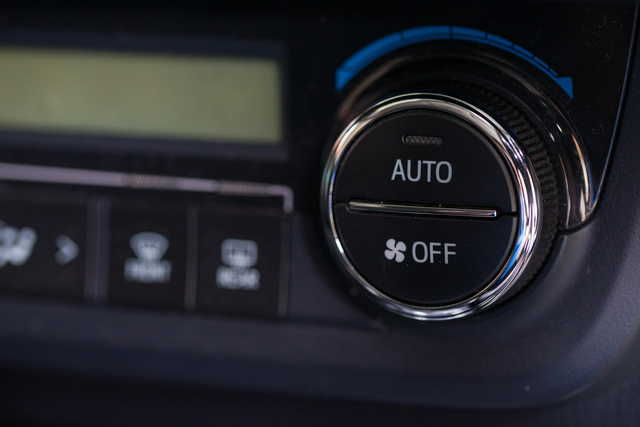
Warm air from the vents doesn't always mean the AC has failed. The blend door controls how much air passes through the heater core versus the evaporator, and a small electric motor positions that door based on your temperature setting. When the actuator motor fails, the door defaults to one position. You might have a perfectly functional AC system blowing cold air into a heater core before it reaches the cabin. We check the actuator function with the scan tool before condemning refrigerant components. A clicking noise behind the dashboard during temperature changes often signals an actuator that's stripped its gears internally.
Blower Motor Draw Reveals Hidden Problems
The blower motor pushes air through the evaporator and into the cabin. A motor that draws excessive amperage is working against resistance from a clogged cabin filter, debris in the housing, or worn bearings inside the motor itself. High amperage means the motor runs hot, and heat shortens motor life. We measure blower current during diagnosis because a weak airflow complaint might trace to the motor, the filter, or restrictions in the ductwork rather than the refrigerant system.
AC Systems Fail as Systems
Every component connects to every other component through refrigerant, oil, and airflow. Driven Auto Care in San Jose serves Silicon Valley drivers who've been burned by shops that replace parts without diagnosing causes. Call (408) 295-3786 when your AC blows warm, and we'll trace the failure back to its origin before recommending a repair you'll have to pay for twice.
Somebody replaced your AC compressor six months ago, and now it's dead again. The shop that did the work blames bad luck or a defective part. Neither explanation holds up. Compressors fail for reasons, and those reasons don't disappear when you bolt on a new unit. The original cause stays in the system, waiting to destroy the replacement.
Low Refrigerant Starves the Compressor of Oil
Refrigerant carries oil through the AC system to lubricate the compressor's internal bearings and seals. When refrigerant leaks out slowly over months, oil circulation drops before you notice any change in cooling performance. The compressor runs dry, generates metal debris, and seizes. A new compressor installed into a system with the same leak will follow the same path. We pressure test the system and use UV dye to locate leaks before any compressor replacement. The dye circulates with the refrigerant and glows under ultraviolet light at the leak point, whether that's a corroded condenser tube, a cracked hose fitting, or a failing seal at the compressor shaft.
Condenser Damage Happens From the Front
The condenser sits behind your grille, exposed to everything the road throws at it. Rocks, road debris, and even insects clog the fins and puncture the thin aluminum tubes that carry high-pressure refrigerant. A punctured condenser leaks refrigerant gradually, and most owners don't notice until the system stops cooling entirely. We inspect the condenser condition during every AC diagnosis because external damage is invisible from the driver's seat. Bent fins restrict airflow and raise head pressure even without a leak, forcing the compressor to work harder and shortening its life.
Expansion Valve Blockage Changes Everything Downstream
The expansion valve or orifice tube meters refrigerant flow into the evaporator, creating the pressure drop that produces cold air. Debris from a failed compressor travels through the system and lodges in that metering device. A blocked valve starves the evaporator and causes icing at the outlet, which you notice as intermittent cooling that works for ten minutes and then blows warm. Installing a new compressor without flushing the system and replacing the metering device guarantees another failure. Contamination doesn't flush itself out.
Blend Door Actuators Confuse the Diagnosis
Warm air from the vents doesn't always mean the AC has failed. The blend door controls how much air passes through the heater core versus the evaporator, and a small electric motor positions that door based on your temperature setting. When the actuator motor fails, the door defaults to one position. You might have a perfectly functional AC system blowing cold air into a heater core before it reaches the cabin. We check the actuator function with the scan tool before condemning refrigerant components. A clicking noise behind the dashboard during temperature changes often signals an actuator that's stripped its gears internally.
Blower Motor Draw Reveals Hidden Problems
The blower motor pushes air through the evaporator and into the cabin. A motor that draws excessive amperage is working against resistance from a clogged cabin filter, debris in the housing, or worn bearings inside the motor itself. High amperage means the motor runs hot, and heat shortens motor life. We measure blower current during diagnosis because a weak airflow complaint might trace to the motor, the filter, or restrictions in the ductwork rather than the refrigerant system.
AC Systems Fail as Systems
Every component connects to every other component through refrigerant, oil, and airflow. Driven Auto Care in San Jose serves Silicon Valley drivers who've been burned by shops that replace parts without diagnosing causes. Call (408) 295-3786 when your AC blows warm, and we'll trace the failure back to its origin before recommending a repair you'll have to pay for twice.
Silicon Valley, CA - Car AC Repair Shop Restoring Cooling in Extreme Heat
SYNOPSIS: Driven Auto Care of San Jose, CA serves Silicon Valley with AC system diagnostics that identify upstream failures before replacing compressors, using pressure testing and UV dye detection.
In Silicon Valley, Restoring AC for Extreme Heat
BY: Arun Coumar, Driven Auto Care of San Jose, CA
Somebody replaced your AC compressor six months ago, and now it's dead again. The shop that did the work blames bad luck or a defective part. Neither explanation holds up. Compressors fail for reasons, and those reasons don't disappear when you bolt on a new unit. The original cause stays in the system, waiting to destroy the replacement.
Low Refrigerant Starves the Compressor of Oil
Refrigerant carries oil through the AC system to lubricate the compressor's internal bearings and seals. When refrigerant leaks out slowly over months, oil circulation drops before you notice any change in cooling performance. The compressor runs dry, generates metal debris, and seizes. A new compressor installed into a system with the same leak will follow the same path. We pressure test the system and use UV dye to locate leaks before any compressor replacement. The dye circulates with the refrigerant and glows under ultraviolet light at the leak point, whether that's a corroded condenser tube, a cracked hose fitting, or a failing seal at the compressor shaft.
Condenser Damage Happens From the Front
The condenser sits behind your grille, exposed to everything the road throws at it. Rocks, road debris, and even insects clog the fins and puncture the thin aluminum tubes that carry high-pressure refrigerant. A punctured condenser leaks refrigerant gradually, and most owners don't notice until the system stops cooling entirely. We inspect the condenser condition during every AC diagnosis because external damage is invisible from the driver's seat. Bent fins restrict airflow and raise head pressure even without a leak, forcing the compressor to work harder and shortening its life.
Expansion Valve Blockage Changes Everything Downstream
The expansion valve or orifice tube meters refrigerant flow into the evaporator, creating the pressure drop that produces cold air. Debris from a failed compressor travels through the system and lodges in that metering device. A blocked valve starves the evaporator and causes icing at the outlet, which you notice as intermittent cooling that works for ten minutes and then blows warm. Installing a new compressor without flushing the system and replacing the metering device guarantees another failure. Contamination doesn't flush itself out.
Blend Door Actuators Confuse the Diagnosis
Warm air from the vents doesn't always mean the AC has failed. The blend door controls how much air passes through the heater core versus the evaporator, and a small electric motor positions that door based on your temperature setting. When the actuator motor fails, the door defaults to one position. You might have a perfectly functional AC system blowing cold air into a heater core before it reaches the cabin. We check the actuator function with the scan tool before condemning refrigerant components. A clicking noise behind the dashboard during temperature changes often signals an actuator that's stripped its gears internally.
Blower Motor Draw Reveals Hidden Problems
The blower motor pushes air through the evaporator and into the cabin. A motor that draws excessive amperage is working against resistance from a clogged cabin filter, debris in the housing, or worn bearings inside the motor itself. High amperage means the motor runs hot, and heat shortens motor life. We measure blower current during diagnosis because a weak airflow complaint might trace to the motor, the filter, or restrictions in the ductwork rather than the refrigerant system.
AC Systems Fail as Systems
Every component connects to every other component through refrigerant, oil, and airflow. Driven Auto Care in San Jose serves Silicon Valley drivers who've been burned by shops that replace parts without diagnosing causes. Call (408) 295-3786 when your AC blows warm, and we'll trace the failure back to its origin before recommending a repair you'll have to pay for twice.