 You swing your feet to the floor in the morning, and the first few steps send a sharp stab through your heel. The pain eases as the foot warms up, then it returns after you've been sitting a while. If those minutes sound familiar, the plantar fascia along the sole of your foot is involved. From my Castro Valley practice, I work with Hayward clients who know that morning stab well.
What The Plantar Fascia Is
The plantar fascia is a thick band of connective tissue running from your heel to the base of your toes. It supports the arch and absorbs load every time your foot meets the ground. Hours off your feet let it stiffen, which is why the first steps after rest hurt the most. The tissue tightened overnight and now has to stretch suddenly.
The Calf Connection People Miss
Here's the part most people don't expect. Your gastrocnemius and soleus, the two muscles of your calf, feed down into the Achilles tendon at your heel. The Achilles and the plantar fascia share that heel anchor, so a locked calf keeps a constant pull on the fascia even while you rest. The heel is where you feel it, and the calf is often where the trouble is sourced. Treat the foot alone and that upstream pull stays loaded.
How I Approach The Work
This shapes how a session goes. I spend slow, deliberate time through the calf, with attention to the soleus underneath that's easy to neglect, and lighter, careful work on the small muscles of the foot itself. The better question isn't how hard to press the heel. It's how much tension I can ease out of the calf that's been tugging on it.
The Pressure Mistake Worth Avoiding
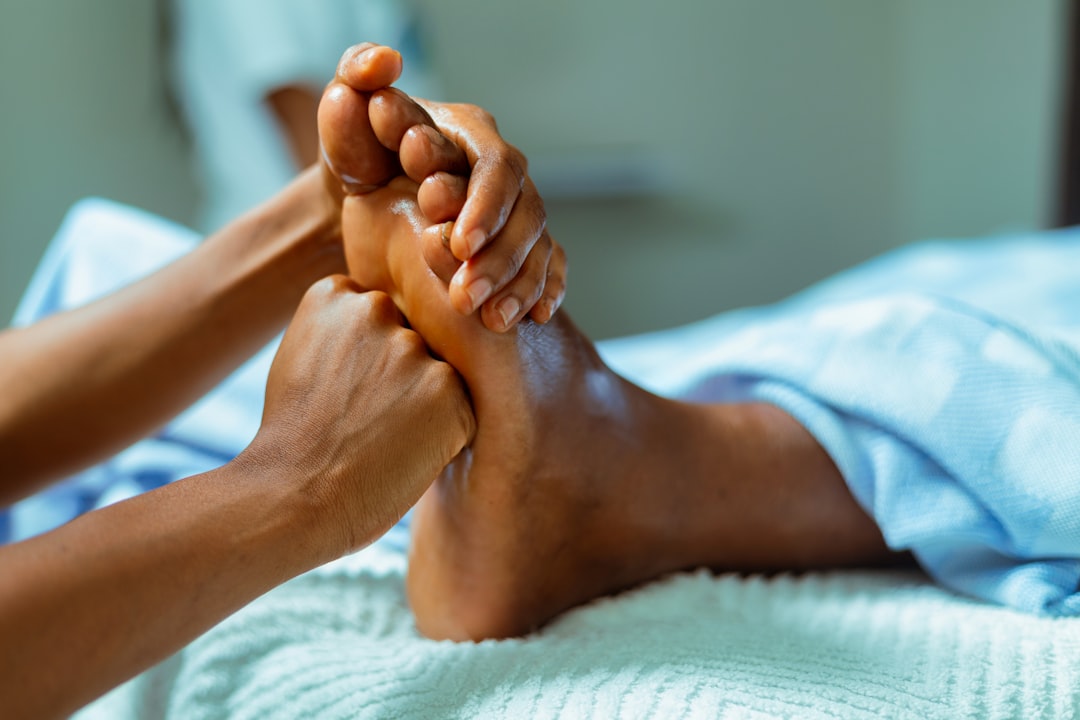
Here's where I'll caution you honestly. An irritated plantar fascia can flare under aggressive direct pressure, so digging hard into the sorest spot often makes it angrier. I usually work the calf firmly and the heel gently in the same session, since the instinct to attack the painful point is the instinct to resist. During a flare-up week, even calf-focused deep work may be too much, and lighter work is the right call.
What A Realistic Timeline Looks Like
Deep tissue work eases the pull, and your habits between sessions decide whether it stays eased. Calf stretching, supportive footwear, and gradual loading all carry the result forward. Most people notice steady improvement across consistent sessions, and massage works alongside a podiatrist when your care needs require it. You stay in control of pressure throughout, and I'll check in often.
Let's Trace Your Heel Pain To Its Source
If morning heel pain has been setting the tone for your day, the answer may sit higher than the spot that hurts. Look back through this article if the calf connection was news to you; then call me at (510) 409-8598. I'll talk through what your foot has been doing and plan a session that follows the pain upstream.
You swing your feet to the floor in the morning, and the first few steps send a sharp stab through your heel. The pain eases as the foot warms up, then it returns after you've been sitting a while. If those minutes sound familiar, the plantar fascia along the sole of your foot is involved. From my Castro Valley practice, I work with Hayward clients who know that morning stab well.
What The Plantar Fascia Is
The plantar fascia is a thick band of connective tissue running from your heel to the base of your toes. It supports the arch and absorbs load every time your foot meets the ground. Hours off your feet let it stiffen, which is why the first steps after rest hurt the most. The tissue tightened overnight and now has to stretch suddenly.
The Calf Connection People Miss
Here's the part most people don't expect. Your gastrocnemius and soleus, the two muscles of your calf, feed down into the Achilles tendon at your heel. The Achilles and the plantar fascia share that heel anchor, so a locked calf keeps a constant pull on the fascia even while you rest. The heel is where you feel it, and the calf is often where the trouble is sourced. Treat the foot alone and that upstream pull stays loaded.
How I Approach The Work
This shapes how a session goes. I spend slow, deliberate time through the calf, with attention to the soleus underneath that's easy to neglect, and lighter, careful work on the small muscles of the foot itself. The better question isn't how hard to press the heel. It's how much tension I can ease out of the calf that's been tugging on it.
The Pressure Mistake Worth Avoiding
Here's where I'll caution you honestly. An irritated plantar fascia can flare under aggressive direct pressure, so digging hard into the sorest spot often makes it angrier. I usually work the calf firmly and the heel gently in the same session, since the instinct to attack the painful point is the instinct to resist. During a flare-up week, even calf-focused deep work may be too much, and lighter work is the right call.
What A Realistic Timeline Looks Like
Deep tissue work eases the pull, and your habits between sessions decide whether it stays eased. Calf stretching, supportive footwear, and gradual loading all carry the result forward. Most people notice steady improvement across consistent sessions, and massage works alongside a podiatrist when your care needs require it. You stay in control of pressure throughout, and I'll check in often.
Let's Trace Your Heel Pain To Its Source
If morning heel pain has been setting the tone for your day, the answer may sit higher than the spot that hurts. Look back through this article if the calf connection was news to you; then call me at (510) 409-8598. I'll talk through what your foot has been doing and plan a session that follows the pain upstream.
Hayward, CA - Does Deep Tissue Massage Really Help with Plantar Fasciitis?
SYNOPSIS: Geri León explains why treating the calf, not just the heel, makes deep tissue massage more effective for plantar fasciitis relief in Hayward clients. Trace your heel pain to its source.
Plantar Fasciitis Help Starts Up The Calf
BY: Geri León, Geri León
You swing your feet to the floor in the morning, and the first few steps send a sharp stab through your heel. The pain eases as the foot warms up, then it returns after you've been sitting a while. If those minutes sound familiar, the plantar fascia along the sole of your foot is involved. From my Castro Valley practice, I work with Hayward clients who know that morning stab well.
What The Plantar Fascia Is
The plantar fascia is a thick band of connective tissue running from your heel to the base of your toes. It supports the arch and absorbs load every time your foot meets the ground. Hours off your feet let it stiffen, which is why the first steps after rest hurt the most. The tissue tightened overnight and now has to stretch suddenly.
The Calf Connection People Miss
Here's the part most people don't expect. Your gastrocnemius and soleus, the two muscles of your calf, feed down into the Achilles tendon at your heel. The Achilles and the plantar fascia share that heel anchor, so a locked calf keeps a constant pull on the fascia even while you rest. The heel is where you feel it, and the calf is often where the trouble is sourced. Treat the foot alone and that upstream pull stays loaded.
How I Approach The Work
This shapes how a session goes. I spend slow, deliberate time through the calf, with attention to the soleus underneath that's easy to neglect, and lighter, careful work on the small muscles of the foot itself. The better question isn't how hard to press the heel. It's how much tension I can ease out of the calf that's been tugging on it.
The Pressure Mistake Worth Avoiding
Here's where I'll caution you honestly. An irritated plantar fascia can flare under aggressive direct pressure, so digging hard into the sorest spot often makes it angrier. I usually work the calf firmly and the heel gently in the same session, since the instinct to attack the painful point is the instinct to resist. During a flare-up week, even calf-focused deep work may be too much, and lighter work is the right call.
What A Realistic Timeline Looks Like
Deep tissue work eases the pull, and your habits between sessions decide whether it stays eased. Calf stretching, supportive footwear, and gradual loading all carry the result forward. Most people notice steady improvement across consistent sessions, and massage works alongside a podiatrist when your care needs require it. You stay in control of pressure throughout, and I'll check in often.
Let's Trace Your Heel Pain To Its Source
If morning heel pain has been setting the tone for your day, the answer may sit higher than the spot that hurts. Look back through this article if the calf connection was news to you; then call me at (510) 409-8598. I'll talk through what your foot has been doing and plan a session that follows the pain upstream.