 Why Knee Pain Keeps Coming Back
The knee sits between the hip and the ankle. If either of those areas is stiff or weak, the knee often takes the hit. That is why knee pain can show up even when the knee itself is not “broken.”
Common drivers we see include:
- Weak hips and glutes that let the knee collapse inward
- Tight calves or limited ankle mobility that change how you walk
- Quad weakness that makes stairs and squats feel rough
- Poor balance and control on one leg
Pain can also linger because people start moving differently to protect the knee. That protection often creates a new strain.
Strengthening That Supports The Knee
Strength is one of the most reliable ways to improve knee comfort. Not “heavy lifting” for everyone. More like building the muscles that keep the knee stable during real movement.
We usually focus on three areas: hips, quads, and calves.
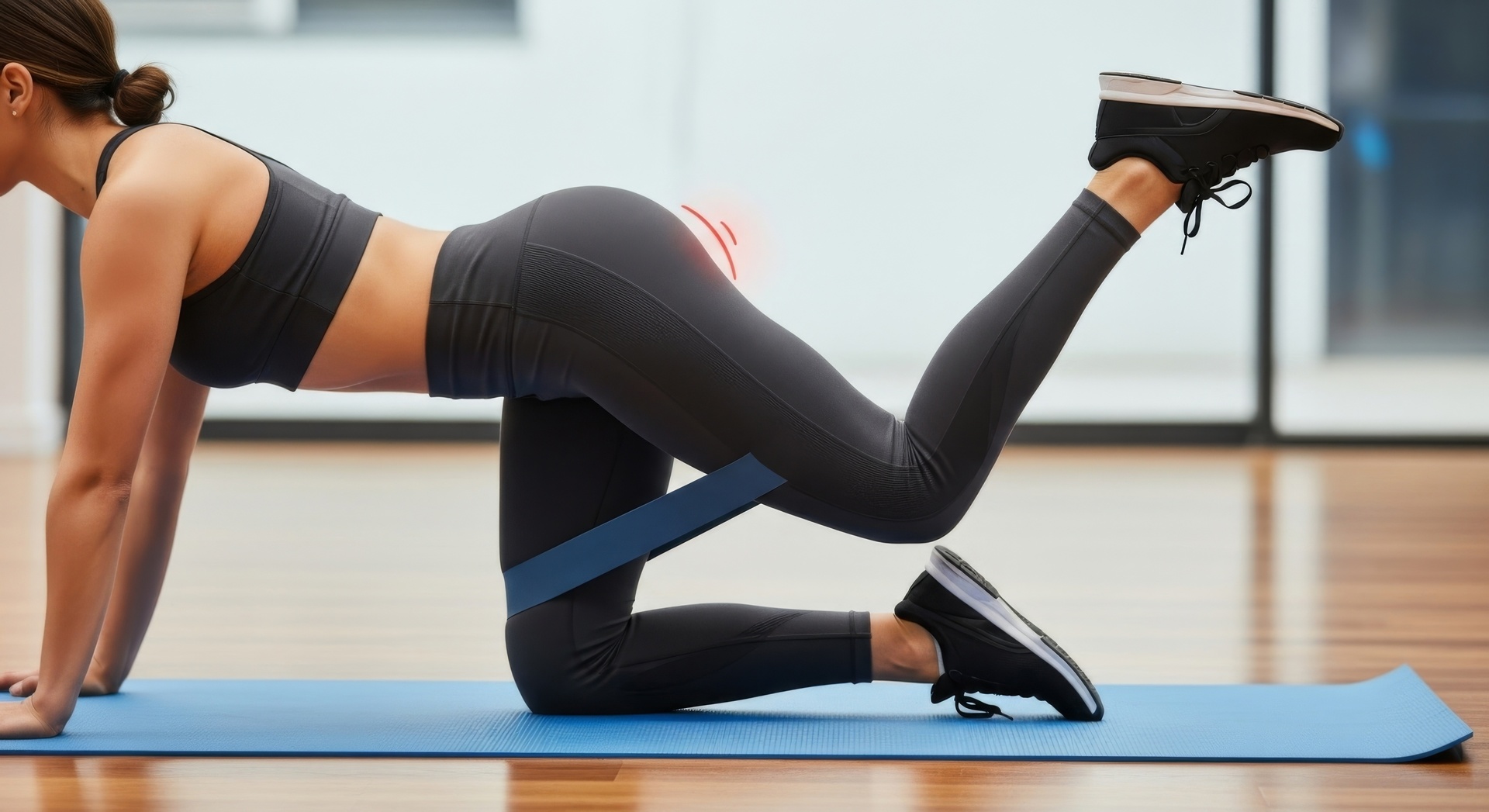
Hip And Glute Strength
When the hips are weak, the knee tends to drift inward during steps, stairs, and squats. That pattern irritates the front of the knee for a lot of people. Strong glutes help keep the thigh aligned, so the knee is not forced to absorb rotation it cannot control.
Quad Strength
The quads help control the knee, especially when you sit down, stand up, go down stairs, or walk downhill. When the quads are not doing their job, the knee joint takes more stress. We build quad strength in a way that matches your tolerance, then progress it so the knee can handle more.
Calf And Foot Strength
The calf and foot control how force travels from the ground upward. If the calf is weak or tight, the knee often compensates. Better calf strength and foot control can reduce strain higher up the chain.
Strength work in PT often includes:
- Step-ups and step-downs that match your stair demands
- Sit-to-stand training for daily strength
- Single-leg balance strength progressions
- Hip-focused work that improves knee alignment
Stretching That Actually Helps Knee Pain
Stretching can help, but only when it targets the right areas. A lot of people stretch the knee itself and feel no change. That is because the problem often sits above or below the knee.
Areas we commonly address:
- Calf tightness, especially if the heel lifts early when you walk
- Hamstring tightness that pulls the knee into a guarded position
- Hip flexor tightness that changes stride length and posture
- Quad tightness that increases pressure in the front of the knee
Stretching should feel like a gentle pull, not a fight. If stretching feels sharp, you are usually pushing too far.
Support Strategies For Real Life
Support does not always mean a brace. Sometimes support is a better plan for your day.
Support strategies we use with patients include:
- Adjusting walking and stair habits to reduce flare-ups
- Modifying workouts so you can keep training
- Using short bouts of activity instead of one long push
- Building recovery days that still include movement
Bracing and sleeves can help some people feel more stable, especially early on.
Footwear also matters more than people expect. If shoes are worn down or lack support, knees can take more load with each step. We often talk through what you are wearing day to day and whether a small change could reduce stress.