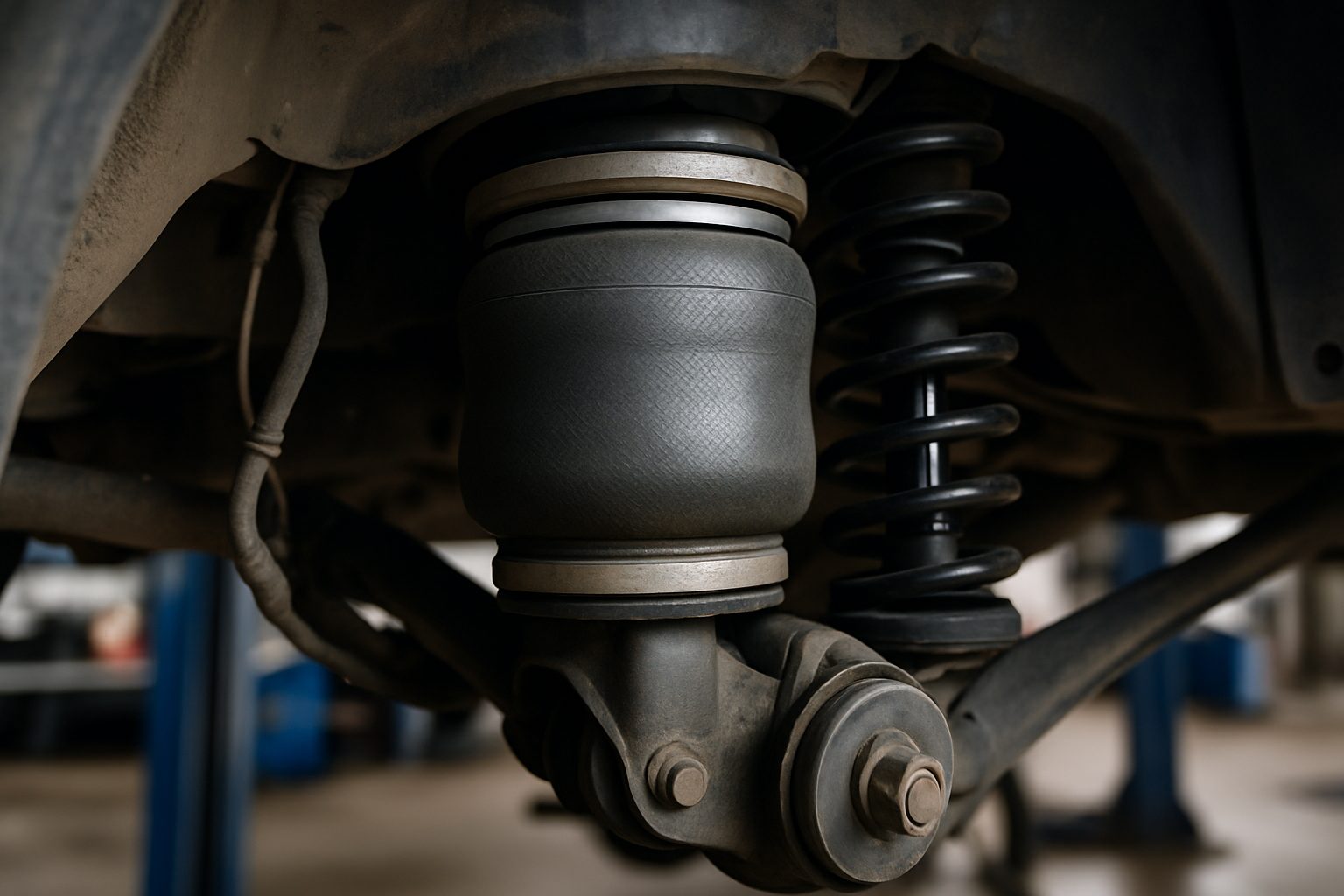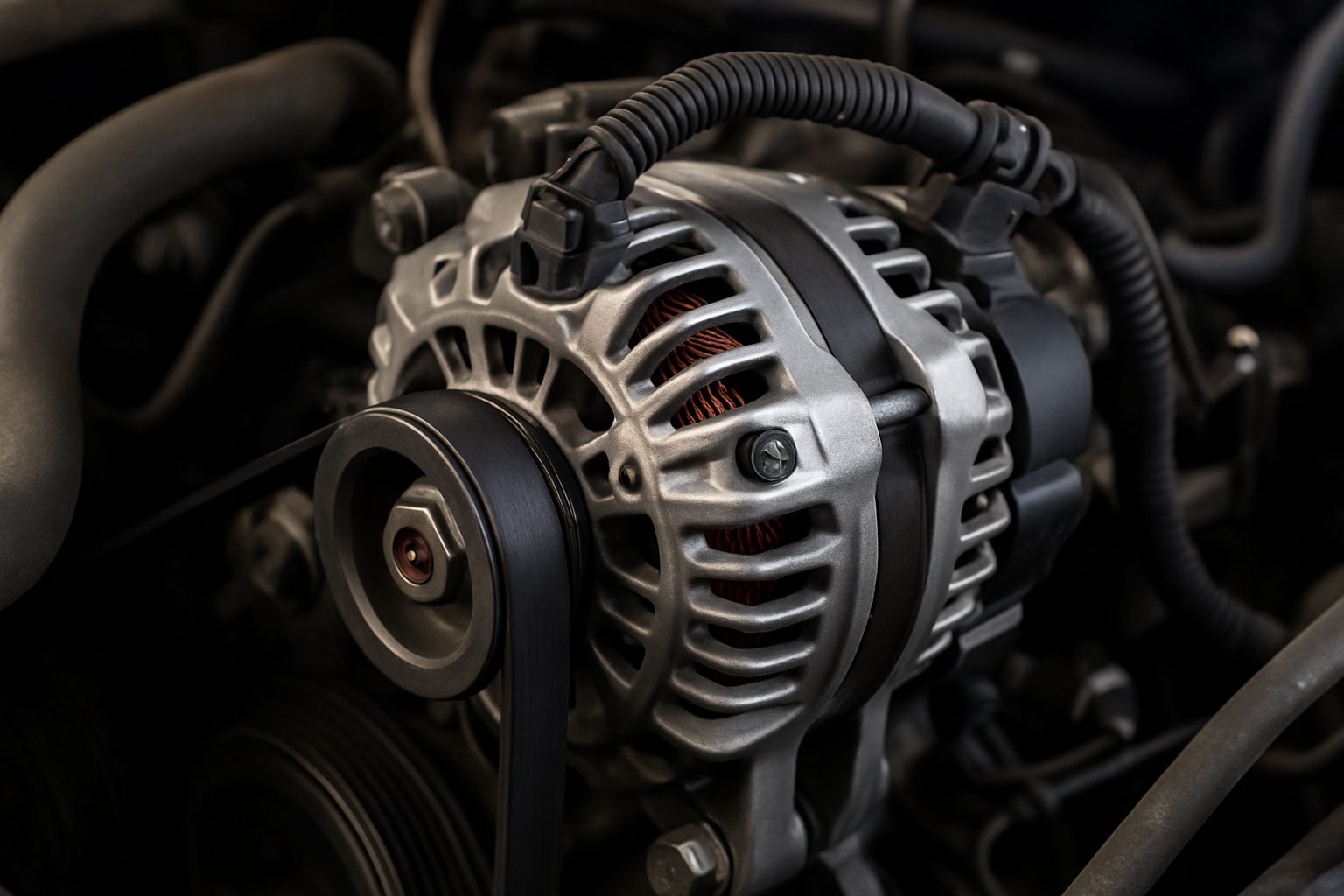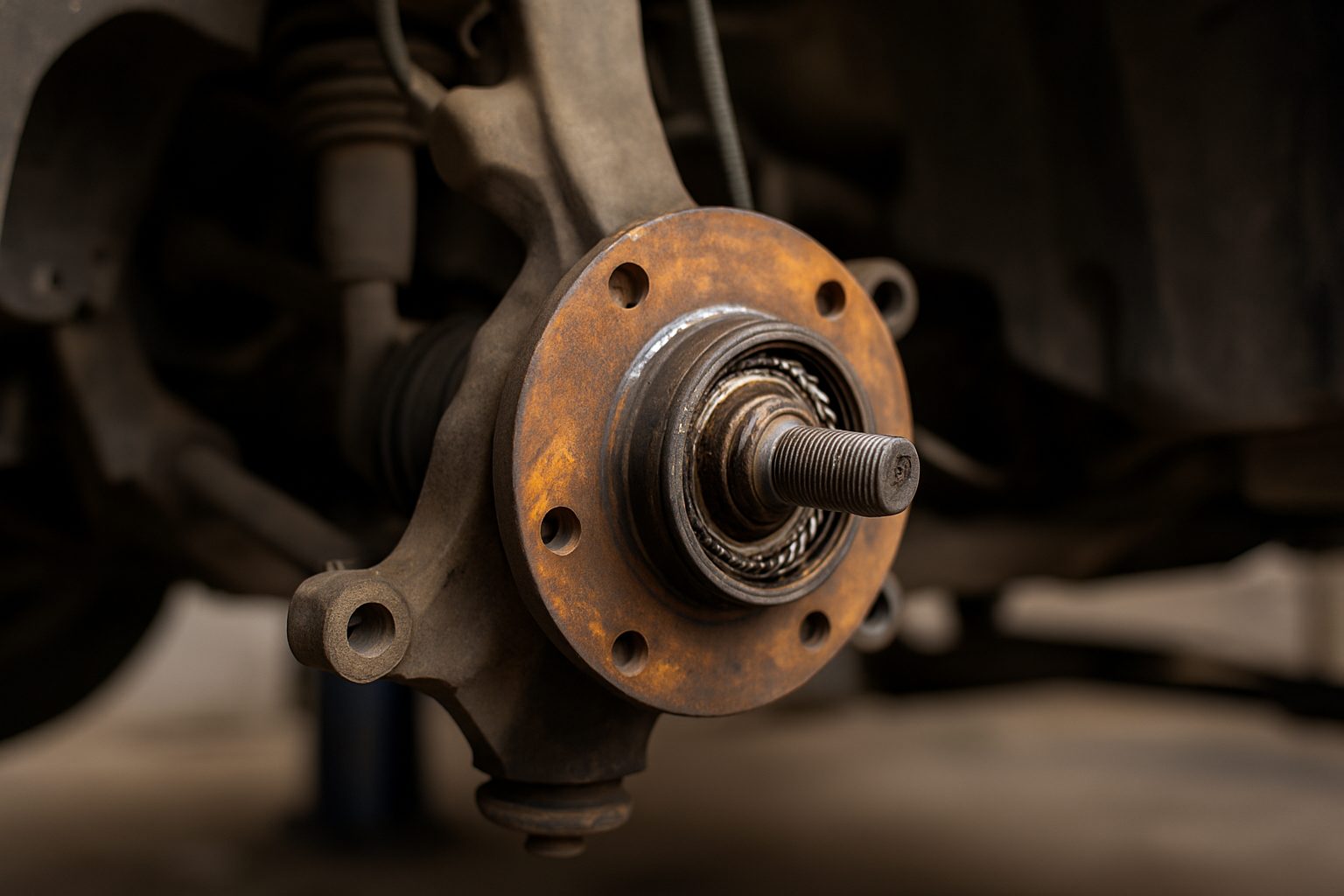
The faster your Santa Fe goes, the louder the hum from up front gets, and it rises with the speedometer instead of the tachometer. Because the sound tracks the wheels, it keeps going on a coast and fades only as the car slows down. A hum that follows road speed may start in a wheel bearing or in worn tire tread, and on a 2007 to 2023 Santa Fe the bearing lives in the same bolt-on hub as the ABS tone ring, so one worn part can set off an ABS or traction light. At Driven Auto Care of San Ramon, we check whether the hum and the light on a Blackhawk Santa Fe trace to the same front hub.
Why The Hum Follows Road Speed
Inside each front hub, a ring of steel balls rolls between two smooth races and turns every time the wheel turns. Once those surfaces wear or pit, each rotation rolls the balls over rough metal, and you hear a hum or growl that climbs with speed. Cupped or unevenly worn tire tread makes a similar hum that also rises with road speed. So on that visit we look across each tire's tread for scalloped patches and raised edges, since one car can carry worn tread and a worn bearing at once. Through a turn, a bearing hum changes as the load moves, and that change is where the road test starts.
Finding The Side On A Road Test
A worn bearing gets louder as it carries more weight, and a long, sweeping turn moves weight from one side of your Santa Fe to the other. On the road test, we hold a steady speed through sweeping turns in both directions. In a right-hand sweep, the weight moves onto the left front wheel. When the hum swells in a right turn and fades in a left turn, the left front bearing is the suspect, and the reverse puts it on the right.
With the side picked, we raise the car so the wheel hangs free. Our technician rocks the wheel top to bottom to feel for play, then spins it by hand to feel and hear roughness through the hub. Play at that wheel matters beyond the noise, because the same hub carries the ABS tone ring.
Why The ABS Light Joins The Noise
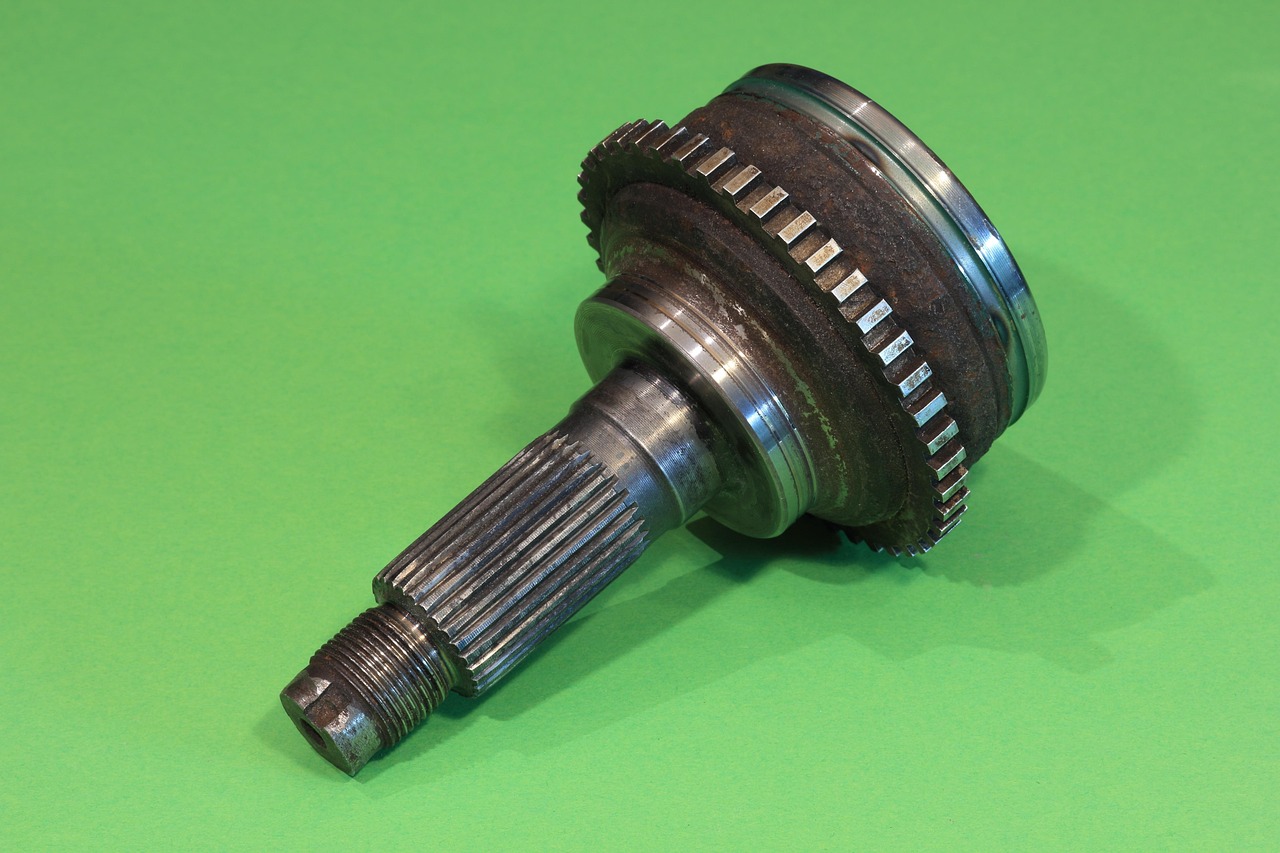
On a 2007 to 2023 Santa Fe, the front hub also carries the ABS tone ring, a toothed ring that the wheel-speed sensor reads to measure how fast that wheel turns. That sensor sits a small, fixed distance from the teeth. Wear opens up play in the bearing, and the play lets the ring wobble away from the sensor on every revolution. The sensor signal turns ragged, so the ABS module gets a wheel speed that jumps from one revolution to the next, and an ABS or traction warning comes on. Your Santa Fe can show the hum and the light weeks apart, and both can still trace back to one worn bearing in this hub. Left in place, a worn bearing develops play that grows over time, and you feel it in the steering as looseness. If the hum turns to grinding with a wobble in the steering or a pull while braking, stop driving and get it towed.
The Hub Replacement And The Return Drive
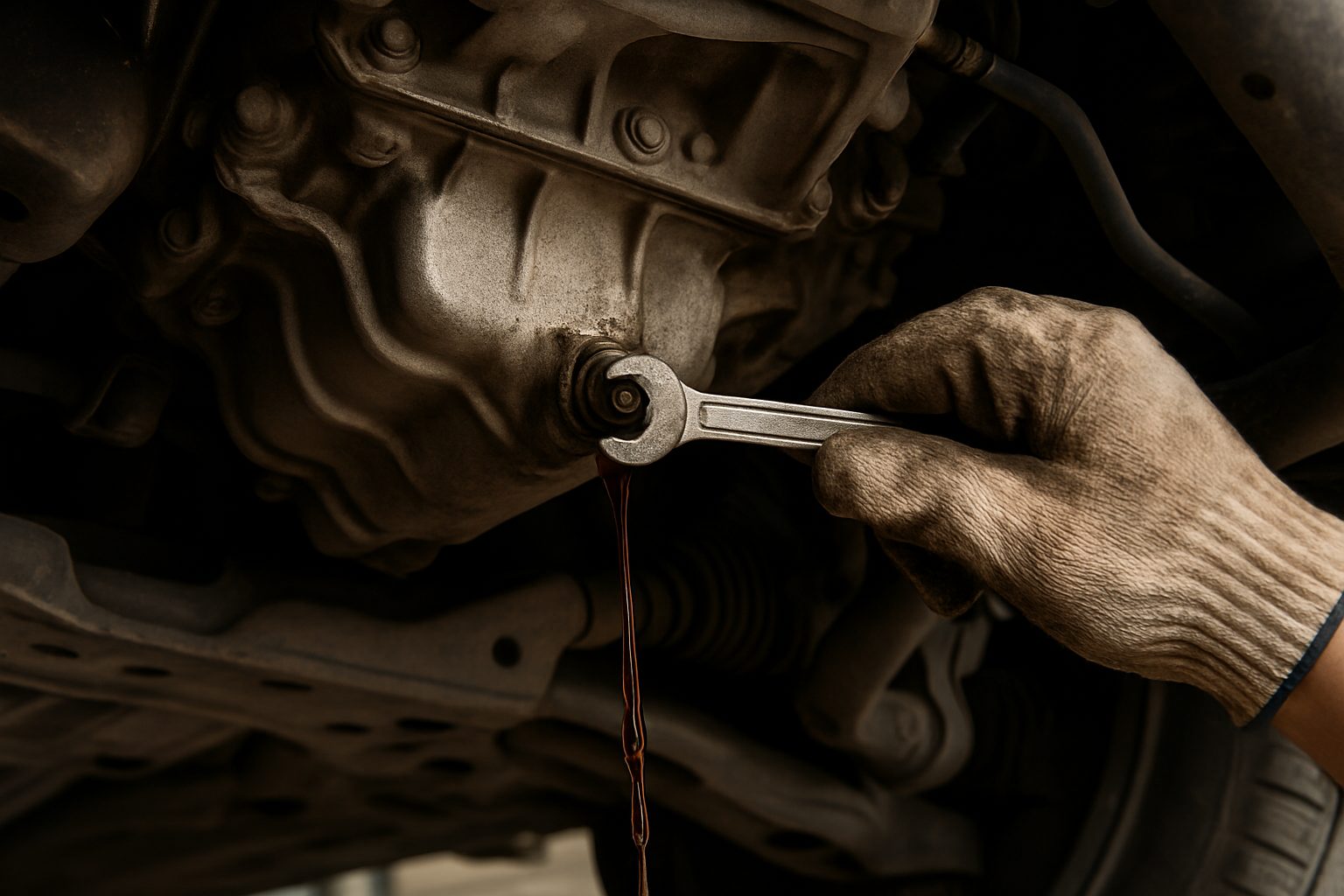
These Santa Fes seal the front bearing inside a bolt-on hub assembly that also holds the wheel studs, and we replace that assembly as a unit. To reach it, we take off the wheel and unbolt the brake caliper so the rotor lifts clear, then unbolt the old hub from the knuckle and fit the new one. The new hub carries its own tone ring, set at the correct distance from the sensor. Then we drive your Santa Fe back through the same sweeping turns to confirm the hum is gone in both directions.
Which Way The Road Curved When The Hum Peaked
Call Driven Auto Care of San Ramon at (925) 830-4701 with the direction the road was curving when the hum was loudest. We start our road test from that side first. You'll head back to Blackhawk knowing which front hub wore out and whether the ABS light came from that same hub.