On a cold San Ramon morning, your Audi Q3 cranks slowly after a night in the driveway, or it only clicks. Sometimes the battery in it is only weeks old. When a fresh battery goes flat the same way the old one did, the cause is usually a circuit on the car that still draws power after you lock it. At Driven Auto Care of San Ramon, we find that circuit with a parasitic draw test, which measures the current the parked Q3 takes from its battery.
Why a New Battery Goes Flat Overnight
Every modern car pulls a small amount of current while it sits parked. The clock, the alarm and the keyless entry receiver all need a trickle of power, and a healthy battery carries that load for weeks. The trouble starts when a module or circuit stays powered up after you walk away. A Q3 has many control modules linked on one network, and when one of them keeps sending messages, the others on that network can stay powered up too. The battery then loses more charge each night than a short drive puts back.
Cold makes the same drain show up sooner. A cold battery delivers less starting power because its chemistry slows down, and a cold engine with thick oil takes more effort to turn. A small drain that a battery survives in warm weather can leave the Q3 too weak to crank after a cold night. The cold didn't cause the drain, so the drain is still there when the weather warms up.
How We Measure the Draw on a Q3
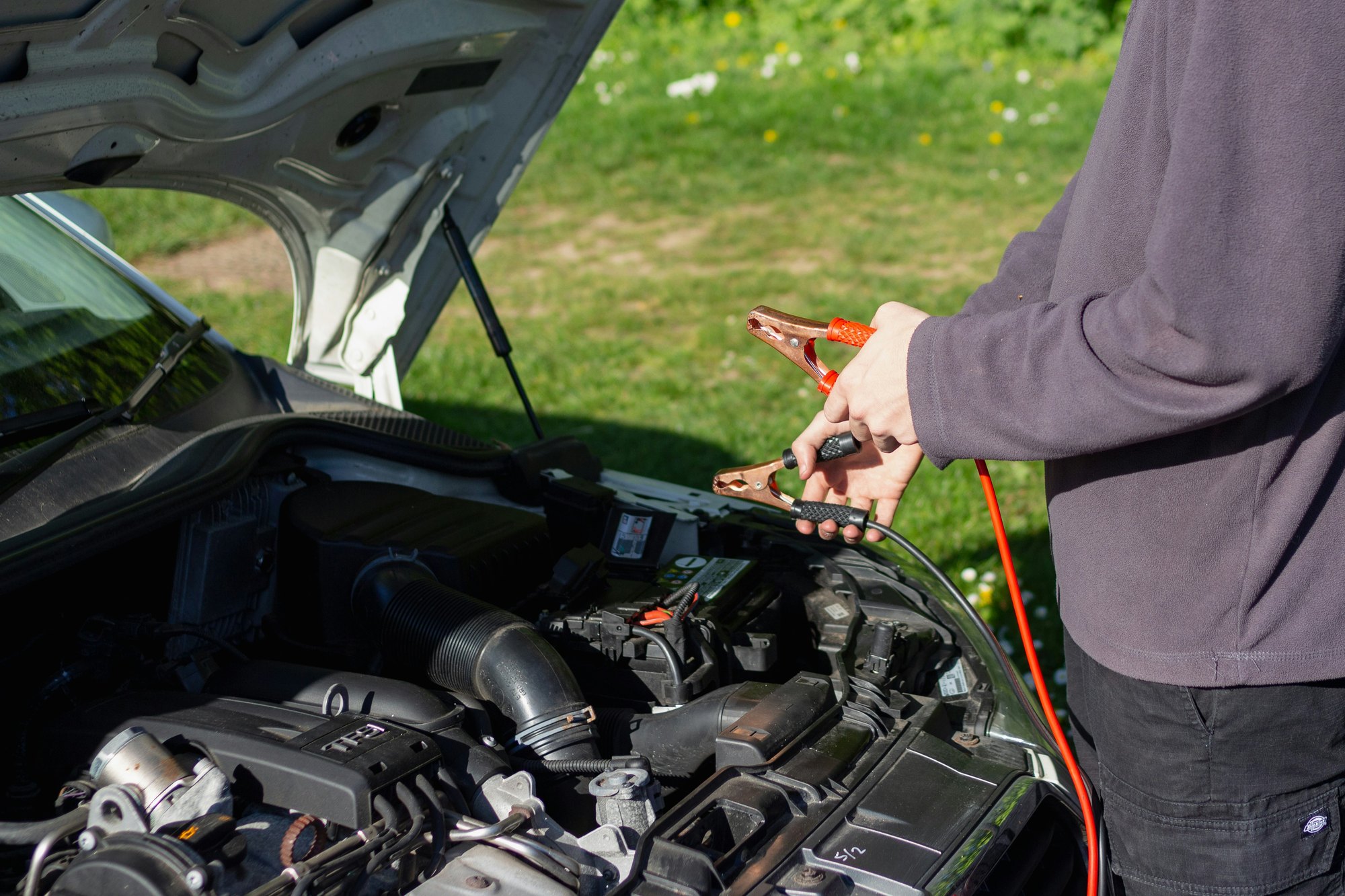
We connect a meter at the battery's ground cable, lock the Q3 and leave it alone. The reading in the first minutes is always high, because the modules are still running through their shutdown. On a Q3 that shutdown takes several minutes even when the engine is cold, and it runs longer after a drive, while the fuel pump and cooling fan keep running to manage engine heat. We take the reading only after the current drops to its resting level.
A few ordinary actions during the test restart that wait. Opening a door wakes the network again, and a key fob left close to the car can set off the door-handle sensors and start the cycle over. We keep the doors, hood and tailgate closed and keep the key well away from the Q3 for the whole test. If we took the reading too early, a healthy car would look like it has a drain.
Tracing the Circuit That Stays On
When the resting current is too high, we trace it to one circuit by watching the meter while we work through the fuse panels. The circuit whose fuse drops the reading is where we look next, whether that is an infotainment unit, a module on the comfort network, a door or tailgate switch, or an add-on accessory wired in after the car left the factory. We also check the charging system and the battery cables, since a weak charge or a poor ground can leave a battery low with no drain at all.
Registering the New Battery on a Q3
A Q3 stores its battery's age and size, and the alternator charges to match them. When a new battery goes into a Q3, we register it with a scan tool so the charging matches a new battery. A Q3 with start-stop uses an AGM battery, and we fit the type and size the car was built with. Then we confirm it charges correctly on the drive. If your Q3 shows a message that comfort features are switching off, it's the car's power management cutting loads to protect starting power. If you see it after short stops or on most mornings, have the battery and draw checked.
Getting Your Q3 Starting Again
Call Driven Auto Care of San Ramon at (925) 830-4701 to book a parasitic draw test for your Q3. Once every module has shut down, we measure what the parked car pulls from its battery and repair the circuit that stays on. Your Q3 then starts on cold mornings and the new battery keeps its charge.