 Olympic swimmers brought cupping to the front pages a few years back, and the photos of those circular impressions on shoulders and backs gave the technique a permanent place in popular memory. The marks looked alarming to anyone who hadn't seen them before, and the misreadings stuck around longer than the news cycle. Recovery Lab of La Verne serves San Dimas clients who walk in with the same questions everyone else carries: what are those circles, why do they show up, and what is the suction doing to the body underneath. The honest answers turn out to be more interesting than the assumptions.
How the Suction Pulls Tissue Apart
Dry cupping uses controlled negative pressure to lift the skin and the soft tissue beneath it away from the deeper structures the body usually holds them against. The cup creates a vacuum, and the tissue rises into that vacuum during the time the cup stays in place. Surface capillaries break under the pressure differential, and small amounts of blood release into the tissue around them, which is what produces the circular marks visitors notice in the mirror later. A Recovery Specialist places each cup with care, monitors the session from start to finish, and removes them when the work is done.
What the Marks Actually Tell You
Those circles aren't bruises in the impact sense, since nothing struck the body to create them. The skin shows the response of capillaries reacting to the suction, and the marks fade across several days as the body processes the released blood. Some areas mark more than others, depending on how compacted the tissue underneath has become from daily load, posture, or training stress. Many San Dimas, CA clients find the marks fading faster after their second or third session, since the tissue underneath responds differently once it's been worked.
Where Cupping Fits Inside a Recovery Routine
Stiffness in the upper back, restricted shoulder range, lower back tightness, and tight calves all show up regularly in the rooms where we apply cupping at Recovery Lab of La Verne. The technique reaches tissue layers that pulling and stretching have a hard time touching, since decompression works on the body in a different direction than compression does. Cupping pairs well with mobility work, percussion therapy, or the rest of the modalities our studio carries, and Recovery Specialists help sequence the visit if you want to combine inputs. The technique has carried this role for centuries across multiple medicine systems, including Traditional Chinese Medicine and Middle Eastern hijama practice.
Who Tends to Book a Session First
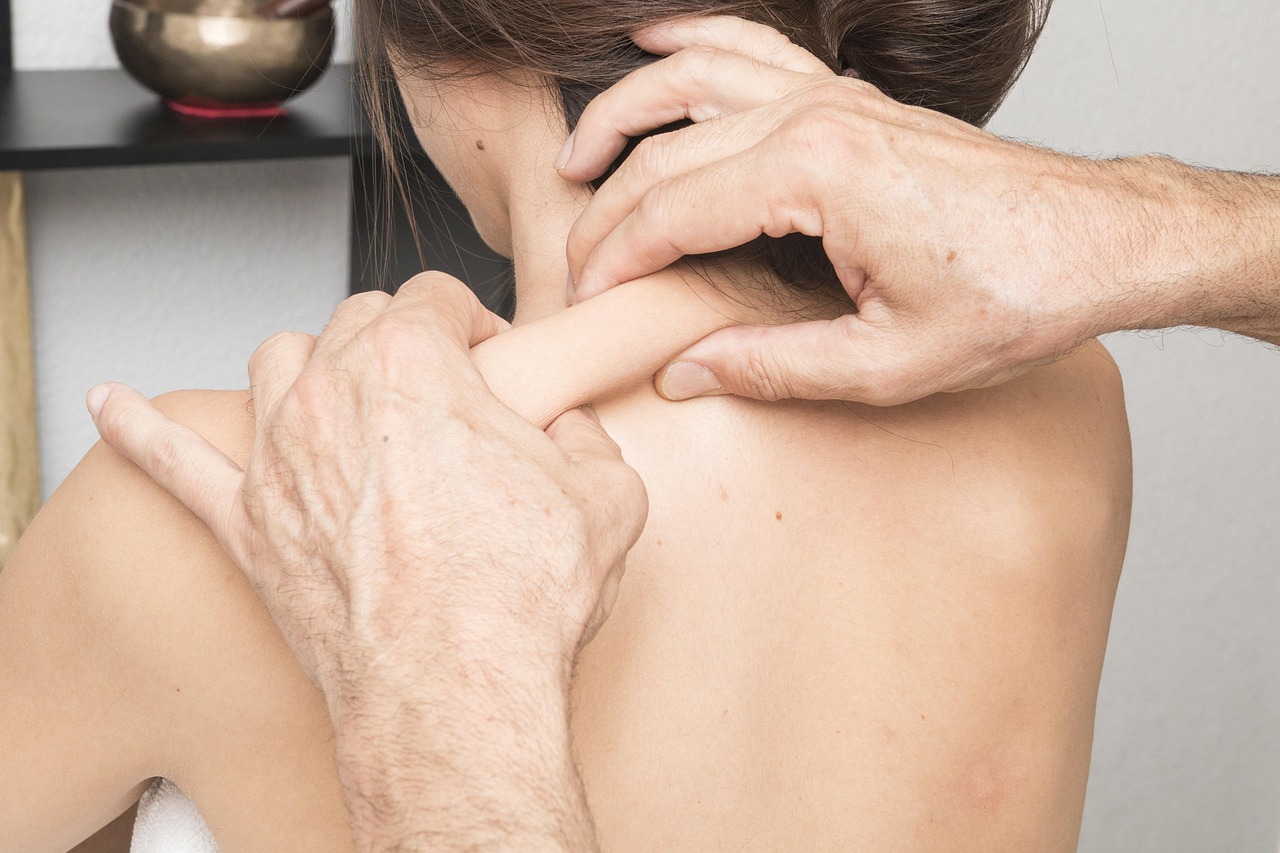
San Dimas, CA weekend athletes with restricted overhead range walk in skeptical and curious in equal measure, and the curiosity wins more often than the skepticism does. Desk workers carrying upper-back tension from long screen days find their way in too, since cupping reaches the trapezius region in ways that self-massage struggles to match. The technique is approachable for people who haven't tried it before, and the Recovery Specialist will explain everything during your intake.
A Specific Question Deserves a Specific Answer
If your shoulder won't move overhead the way it used to, or your lower back has been tight for weeks, dial Recovery Lab of La Verne at (909) 477-9841 and tell us where the stiffness sits. We'll talk through whether cupping fits your situation and book a session at our La Verne studio when the timing works.
Olympic swimmers brought cupping to the front pages a few years back, and the photos of those circular impressions on shoulders and backs gave the technique a permanent place in popular memory. The marks looked alarming to anyone who hadn't seen them before, and the misreadings stuck around longer than the news cycle. Recovery Lab of La Verne serves San Dimas clients who walk in with the same questions everyone else carries: what are those circles, why do they show up, and what is the suction doing to the body underneath. The honest answers turn out to be more interesting than the assumptions.
How the Suction Pulls Tissue Apart
Dry cupping uses controlled negative pressure to lift the skin and the soft tissue beneath it away from the deeper structures the body usually holds them against. The cup creates a vacuum, and the tissue rises into that vacuum during the time the cup stays in place. Surface capillaries break under the pressure differential, and small amounts of blood release into the tissue around them, which is what produces the circular marks visitors notice in the mirror later. A Recovery Specialist places each cup with care, monitors the session from start to finish, and removes them when the work is done.
What the Marks Actually Tell You
Those circles aren't bruises in the impact sense, since nothing struck the body to create them. The skin shows the response of capillaries reacting to the suction, and the marks fade across several days as the body processes the released blood. Some areas mark more than others, depending on how compacted the tissue underneath has become from daily load, posture, or training stress. Many San Dimas, CA clients find the marks fading faster after their second or third session, since the tissue underneath responds differently once it's been worked.
Where Cupping Fits Inside a Recovery Routine
Stiffness in the upper back, restricted shoulder range, lower back tightness, and tight calves all show up regularly in the rooms where we apply cupping at Recovery Lab of La Verne. The technique reaches tissue layers that pulling and stretching have a hard time touching, since decompression works on the body in a different direction than compression does. Cupping pairs well with mobility work, percussion therapy, or the rest of the modalities our studio carries, and Recovery Specialists help sequence the visit if you want to combine inputs. The technique has carried this role for centuries across multiple medicine systems, including Traditional Chinese Medicine and Middle Eastern hijama practice.
Who Tends to Book a Session First
San Dimas, CA weekend athletes with restricted overhead range walk in skeptical and curious in equal measure, and the curiosity wins more often than the skepticism does. Desk workers carrying upper-back tension from long screen days find their way in too, since cupping reaches the trapezius region in ways that self-massage struggles to match. The technique is approachable for people who haven't tried it before, and the Recovery Specialist will explain everything during your intake.
A Specific Question Deserves a Specific Answer
If your shoulder won't move overhead the way it used to, or your lower back has been tight for weeks, dial Recovery Lab of La Verne at (909) 477-9841 and tell us where the stiffness sits. We'll talk through whether cupping fits your situation and book a session at our La Verne studio when the timing works.
San Dimas, CA - Can Cupping Therapy Reduce Inflammation and Improve Mobility?
SYNOPSIS: Recovery Lab explains how cupping therapy works, what the marks mean, and how it supports mobility and reduces stiffness for San Dimas clients.
Cupping Therapy in San Dimas: What the Marks Mean
BY: Crystal Lopez, Recovery Lab of La Verne, CA
Olympic swimmers brought cupping to the front pages a few years back, and the photos of those circular impressions on shoulders and backs gave the technique a permanent place in popular memory. The marks looked alarming to anyone who hadn't seen them before, and the misreadings stuck around longer than the news cycle. Recovery Lab of La Verne serves San Dimas clients who walk in with the same questions everyone else carries: what are those circles, why do they show up, and what is the suction doing to the body underneath. The honest answers turn out to be more interesting than the assumptions.
How the Suction Pulls Tissue Apart
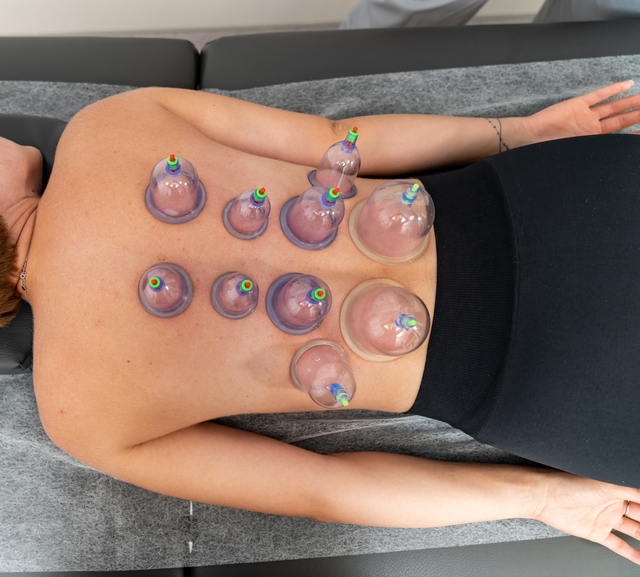
Dry cupping uses controlled negative pressure to lift the skin and the soft tissue beneath it away from the deeper structures the body usually holds them against. The cup creates a vacuum, and the tissue rises into that vacuum during the time the cup stays in place. Surface capillaries break under the pressure differential, and small amounts of blood release into the tissue around them, which is what produces the circular marks visitors notice in the mirror later. A Recovery Specialist places each cup with care, monitors the session from start to finish, and removes them when the work is done.
What the Marks Actually Tell You
Those circles aren't bruises in the impact sense, since nothing struck the body to create them. The skin shows the response of capillaries reacting to the suction, and the marks fade across several days as the body processes the released blood. Some areas mark more than others, depending on how compacted the tissue underneath has become from daily load, posture, or training stress. Many San Dimas, CA clients find the marks fading faster after their second or third session, since the tissue underneath responds differently once it's been worked.
Where Cupping Fits Inside a Recovery Routine
Stiffness in the upper back, restricted shoulder range, lower back tightness, and tight calves all show up regularly in the rooms where we apply cupping at Recovery Lab of La Verne. The technique reaches tissue layers that pulling and stretching have a hard time touching, since decompression works on the body in a different direction than compression does. Cupping pairs well with mobility work, percussion therapy, or the rest of the modalities our studio carries, and Recovery Specialists help sequence the visit if you want to combine inputs. The technique has carried this role for centuries across multiple medicine systems, including Traditional Chinese Medicine and Middle Eastern hijama practice.
Who Tends to Book a Session First
San Dimas, CA weekend athletes with restricted overhead range walk in skeptical and curious in equal measure, and the curiosity wins more often than the skepticism does. Desk workers carrying upper-back tension from long screen days find their way in too, since cupping reaches the trapezius region in ways that self-massage struggles to match. The technique is approachable for people who haven't tried it before, and the Recovery Specialist will explain everything during your intake.
A Specific Question Deserves a Specific Answer
If your shoulder won't move overhead the way it used to, or your lower back has been tight for weeks, dial Recovery Lab of La Verne at (909) 477-9841 and tell us where the stiffness sits. We'll talk through whether cupping fits your situation and book a session at our La Verne studio when the timing works.