Is a Mastic Repair Valid? Why Patching Flat Roofs with Tar Can Ruin Commercial Substructures
It’s a scenario we see all too often across Fort Myers, Naples, and Port Charlotte: a building maintenance worker spots a leak along a commercial flat roof seam, grabs a $20 can of black roofing mastic (tar) from a local supply shop, and smears a thick layer over the crack. The dripping stops temporarily, the invoice is closed, and everyone assumes the problem is solved.
While a mastic patch is tempting, it represents a dangerous illusion of a repair. In the commercial space, superficial band-aids routinely turn minor maintenance issues into six-figure structural disasters.
The Physics of the "Mastic Band-Aid" Trap
Roofing mastic is fundamentally designed as a temporary tie-in material, not a structural repair compound. The core failure boils down to a lack of structural elasticity.
As detailed in our previous technical briefs, commercial roof membranes expand and contract constantly due to extreme Gulf Coast heat.
[caption id="attachment_3335" align="alignnone" width="763"]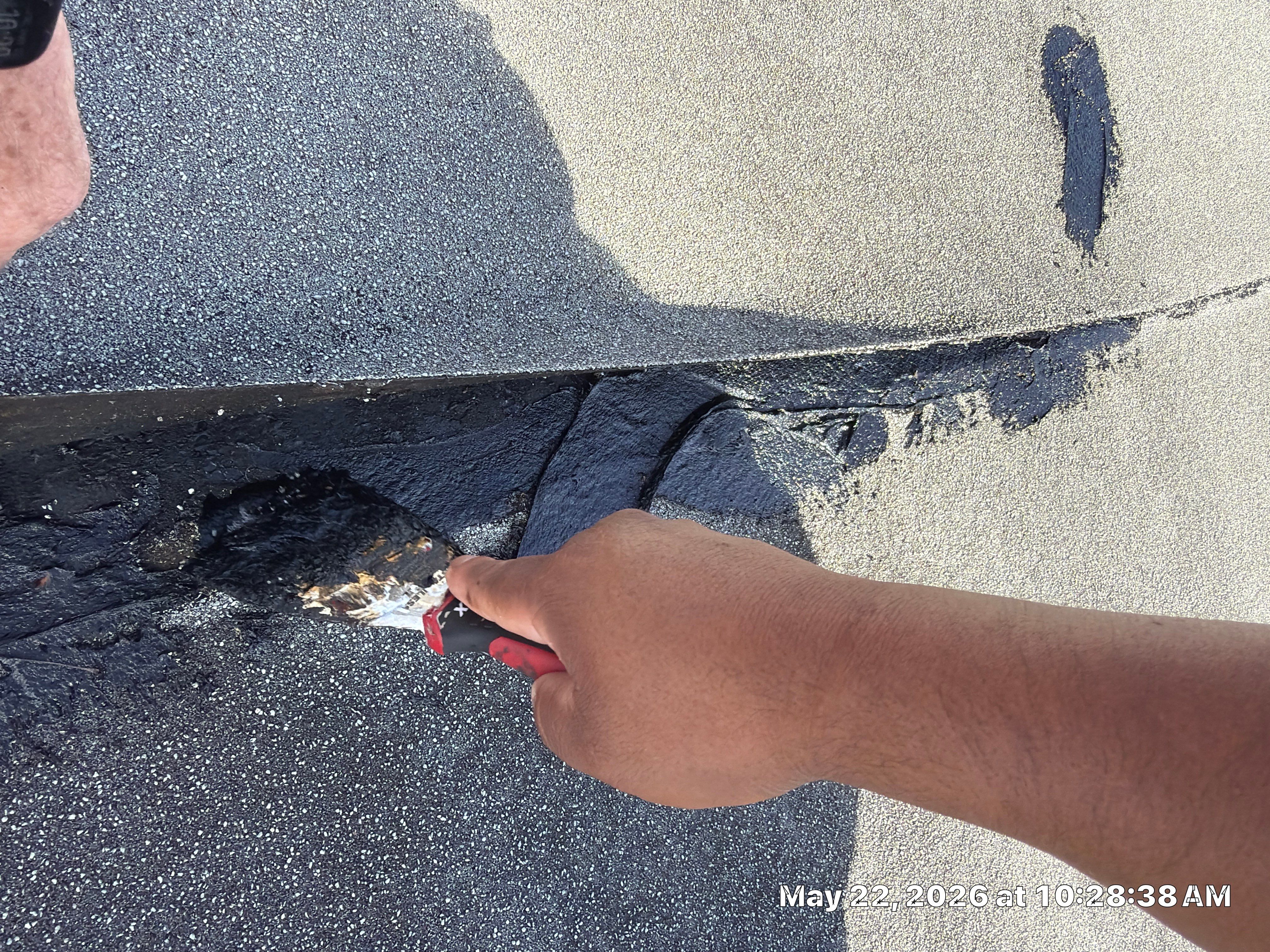 A manual application of roofing mastic over a compromised seam—a temporary patch that rapidly degrades under UV exposure.[/caption]
When mastic is smeared over a moving crack or split seam (as shown in the field application above), it quickly hardens and bakes under the intense Florida sun. Because the cured tar cannot stretch, the underlying structural crack will split right through the brittle mastic layer within a matter of weeks, re-opening the leak pathway.
The Invisible Incubator: How Tar Traps Rot
The true danger of a mastic patch isn't just that it fails quickly—it’s what it hides underneath.
When tar is applied over a leaking area, there is almost always existing moisture trapped inside the underlying insulation board or plywood deck. The thick, oil-based mastic layer creates a non-breathable vapor barrier. When the hot sun beats down on the roof, it bakes that trapped water, creating a pressurized, highly humid environment directly underneath the patch.
This creates a perfect incubator for:
-
Accelerated Wood Rot: Turning solid structural plywood decking into wet mulch.
-
Core Insulation Saturation: Destroying the R-value of your building's insulation and driving up cooling costs.
-
Mold Remediation Crises: Allowing mold spores to migrate silently downward into your ceiling tiles and ventilation systems.
The Commitment to Permanent Solutions
At PRG Roofing & Construction, our commitment to value means doing the job right once, rather than doing it poorly three times. We don't use short-term patches to hide systemic issues.
When Rob and Randy audit a flat roof section, we utilize moisture-detection protocols to ensure the underlying core is completely dry. If the membrane is structurally sound, we don't force a full replacement; instead, we strip away failing temporary patches and apply permanently flexible, reinforced elastomeric or liquid-applied flashing systems engineered to match the life cycle of your building.
Stop patching the same leak every six months. Demand transparency, look at the photographic data, and invest in permanent protection for your commercial property.