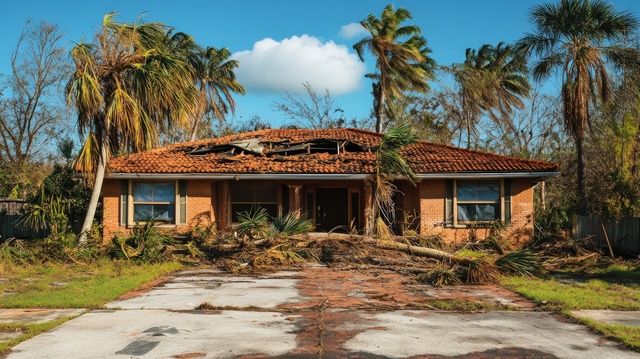
 The morning after the hurricane, pieces of broken clay tile are lying in the side yard of your Naples home. Up on the back slope, a row of tile is gone. The dark sheet that sat under it is out in the weather. More rain is on the way before a permanent repair can be scheduled. How much of that rain reaches the wood under the bare sheet depends on where a cover starts and what holds its edges.
A tarp limits storm damage by turning an open roof back into one that sheds water, so the next rain runs over the opening instead of into the deck. What it limits is the rain still to come, in every storm between now and the permanent repair. It does that when its top edge starts above the damage and its sides are held well past it. At PRG Roofing & Construction Inc., serving Naples from Fort Myers, we dry in storm-damaged roofs with a tarp or temporary membrane chosen for the roof type.
A Few Missing Tiles Still Call For A Cover
From the yard, a short gap in a course of tile looks like a small job. On tile, the clay takes the sun and the weather, and the underlayment beneath it is the waterproof sheet that keeps the house dry. A tile that has broken away or slid out of its course can leave that layer open to sun and rain, and where it does, even a short gap is a section that needs a cover. The cover goes over the bare sheet and well past it, since storm wind drives rain under laps and any loose edge near the gap. How high on the slope it starts matters as much as how far it reaches.
Over The Ridge And Down The Far Slope
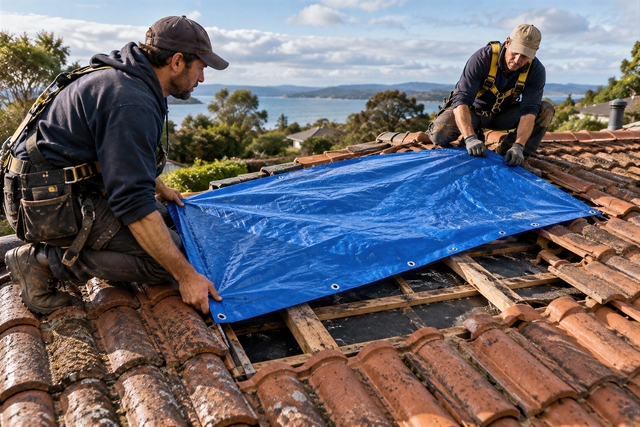
On a pitched roof, rain running downhill meets the top edge of a cover first, and that edge is where water gets under. When a tarp stops on the same slope as the damage, water from above slides under that edge and into the opening. Where the roof allows it, the tarp wraps over the ridge onto the opposite slope, so its top edge sheds water down the far side. Folded over the peak, the cover leaves the damaged slope with no upper edge at all, so rain from above drains down the back side and away from the opening.
A Cover Wider Than The Hole
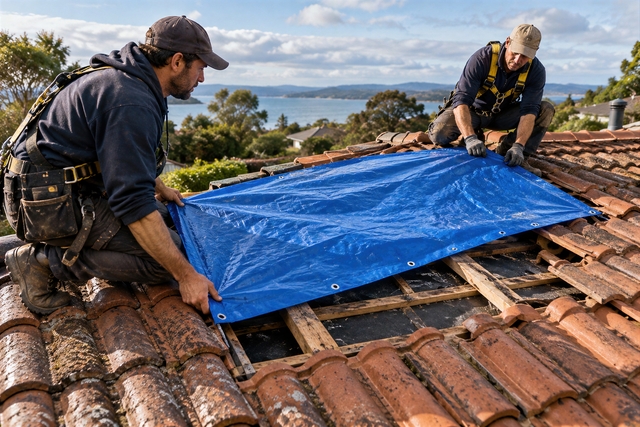
Cut to the size of the hole, a tarp puts its edges right at the break, where the first gust pushes rain straight in. A cover has to reach well past the damage on every side, about four feet, so rain the wind drives under an edge stops short of the opening. Wood strips called battens are fastened through the tarp into the deck to hold those edges, since ropes through grommets alone tear out in high wind. Each batten has the tarp edge rolled around it before it is fastened, so the load spreads along the whole board. That leaves no flapping corner to tear the cover wider between one storm and the next.
What A Storm Cover Protects
Under the opening sits the wood deck that your roofing is fastened to. Wood decays when it stays moist and warm, so decking left wet in a hot attic keeps breaking down. Each storm that lands on an open roof adds water to wood still wet from the last one. Once new water stops, the deck gets a chance to dry. Below the deck, the same cover keeps new rain off the insulation and the drywall under the opening, and the wood it kept dry is what the permanent repair fastens into.
When The Cover Comes Off
Sunlight breaks polyethylene down, faster on a thin sheet than a heavy one. A tarp is a bridge to the permanent repair, never the repair. When the tarp comes up ahead of the permanent repair, our crew probes the wood deck by hand and runs a pin moisture meter across it. Wet panels are dried before the roof closes, and soft or delaminated sheathing is replaced. The repair then goes onto sound, dry wood.
What You Hold After The Dry-In
After the visit, the opening on your Naples roof is dried in by our crew. You also hold time-stamped photos of the opening, taken before the cover went on. To book an emergency dry-in, call PRG Roofing & Construction Inc. at (239) 237-2906.