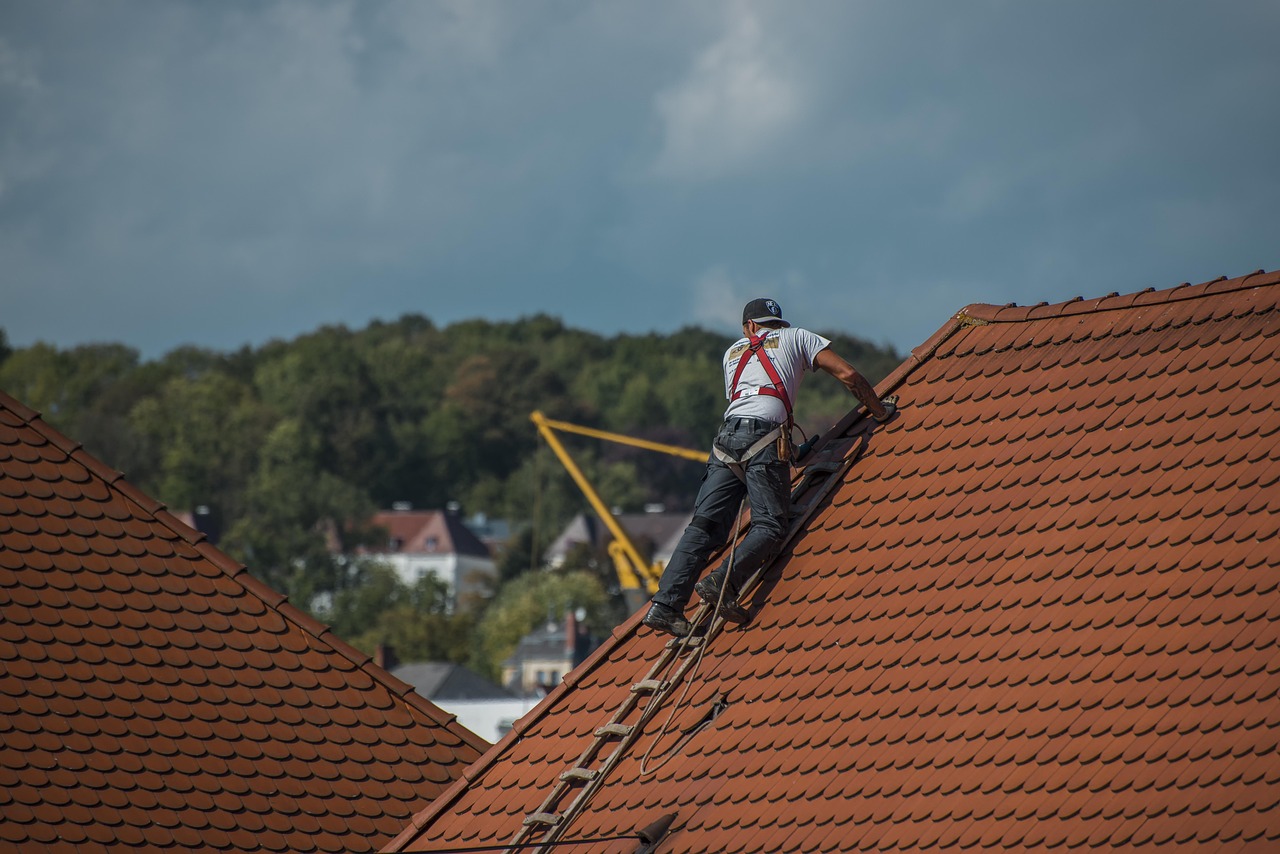
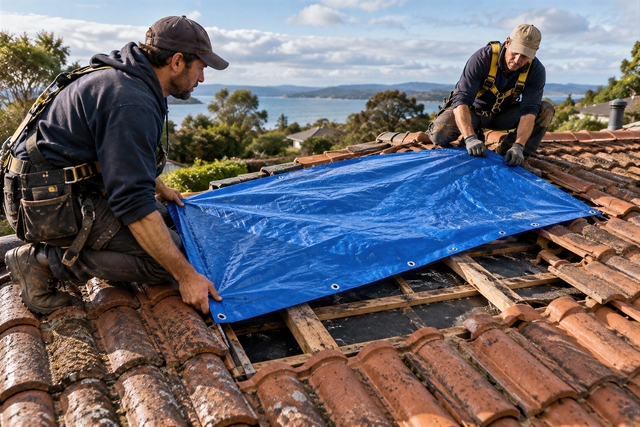
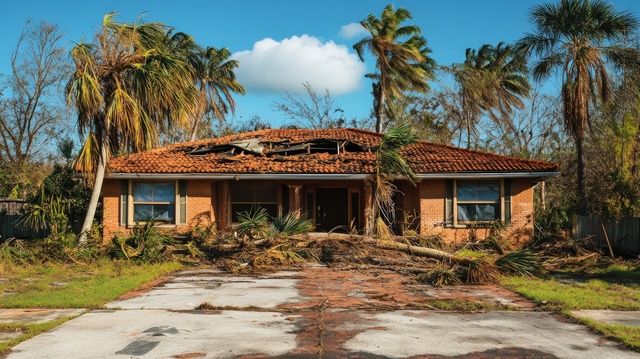
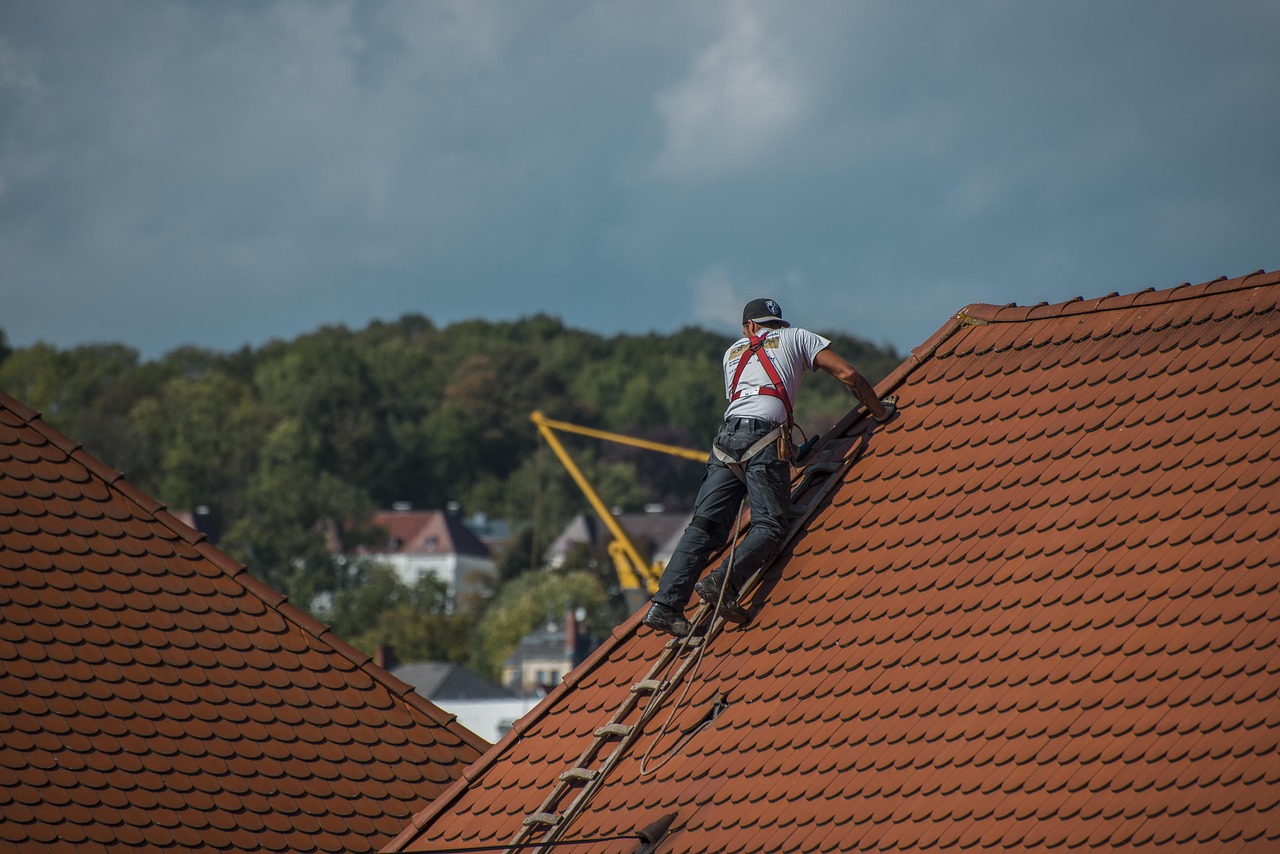
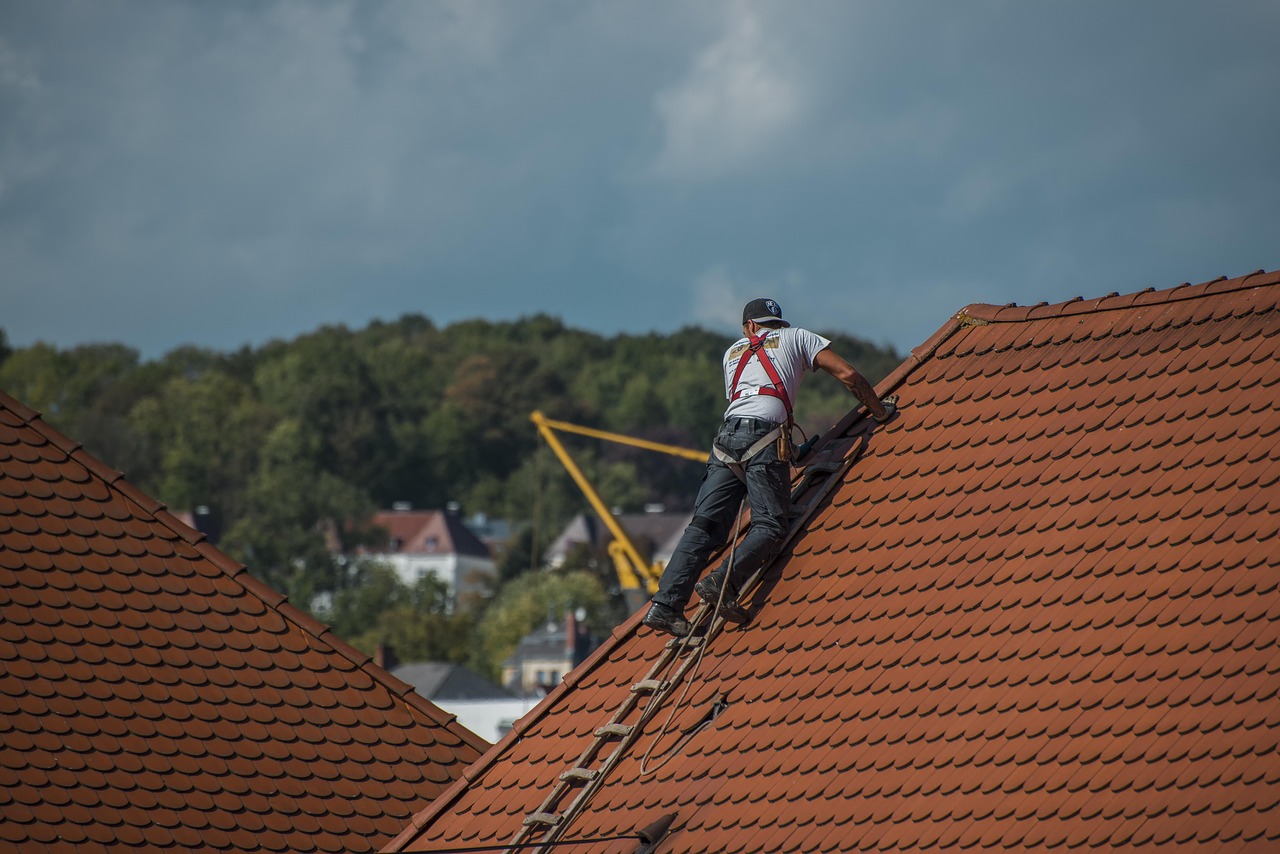
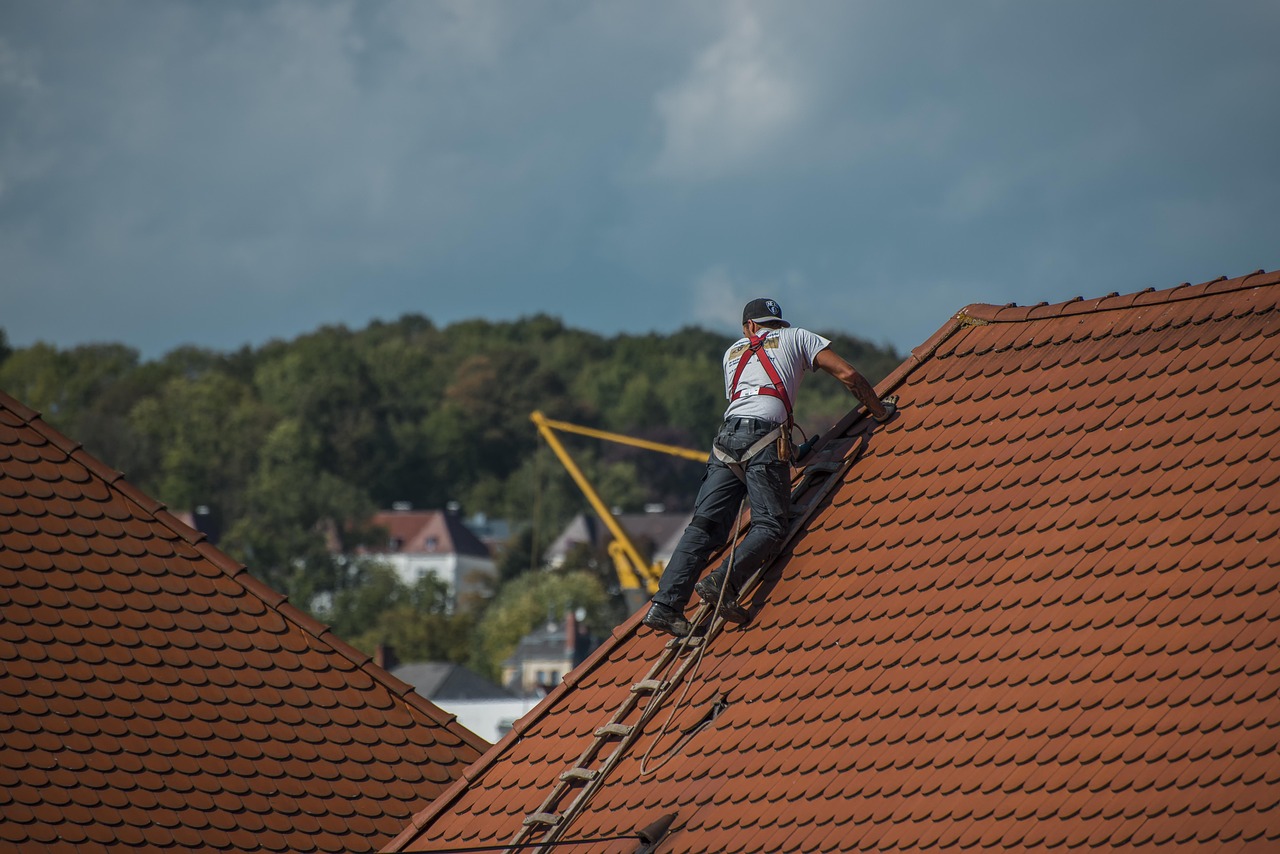
 The missing cap matters for what now sits open to the rain beneath it, because the underlayment under the tile is the layer that stops water from reaching your house. Tile takes the wear and shields that sealed sheet from sun and rain. From the lawn you see the tile, and little of the sheet doing the waterproofing. Whether we can repair your roof at the broken tiles or discover that you need a new roof, it comes down to both layers, the tile and the sheet beneath it. When we come out from Fort Myers after a storm, our crew checks what is under each broken tile.
Mortar-Set Caps Along The Ridge And Hips
Hips and ridges are the capped lines where two slopes of the roof meet. On many tile roofs those caps sit on a bed of mortar instead of fasteners or foam. When a cap lifts in a gust and settles back, the mortar under it can crack loose while the cap still sits in line. Older mortar-set ridge tiles let go at lower wind speeds than the tile across the slopes. We check each cap along the line and photograph any gap or loose piece where it sits.
Tile And Metal At The Eaves And Gable Edges
Tiles along the gable edges and eaves get the same close look, since those edges rank among the most wind-vulnerable parts of a tile roof. A loose tile at the eave can sit out of view behind the gutter line, and one at the rake can sit above a lower porch roof, so neither shows from the yard. For a coastal home, we inspect the edge metal and its fasteners, because salt air corrodes them and reduces their holding. Corroded edge metal is a failure point of its own, so our crew puts an arrow on it in your report too.
Cracked And Slipped Tile Across The Field
Field tile covers the open slope between the ridge and the edges. In hurricane wind, a tile that breaks loose becomes debris, and it can strike and break other tiles on the same roof as it goes. So one roof can show a cracked tile halfway down one slope and a slipped tile near the eave on another, far from the ridge. Our crew looks for cracked tiles and for tiles that have slid out of their course. A slipped tile leaves a strip of underlayment bare to the sun, and a cracked one lets rain onto the sheet below. On a far slope, a single tile out of place can mean a section of that sheet has sat without its cover since the storm.
Old Felt Or A Newer Sheet
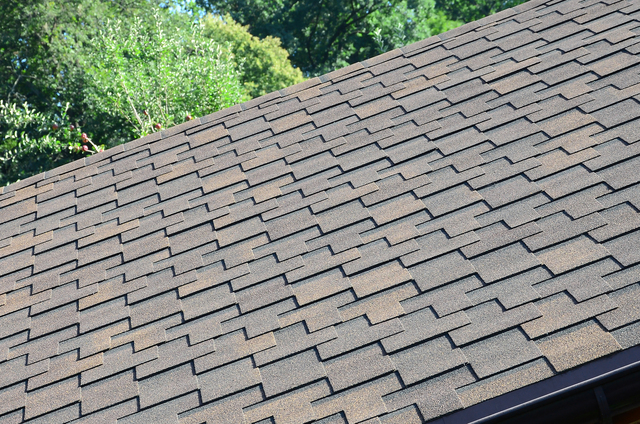
Under the broken tiles on an older roof, organic felt that years of heat and moisture have worked on turns brittle at its folds and around the fastener holes. A repair at a broken tile means lifting the tiles around it, laying new underlayment lapped into the old, and setting the tile back. Brittle felt cracks as those tiles come up, so the patch has sound sheet to lap into only where the felt still bends. If the sheet is newer and its folds are sound, a repair at the broken tiles can suit your roof well. Where the felt has turned brittle across the slopes, a replacement puts new underlayment under the whole roof.
Your Report And Both Options
In your inspection report, each of those arrows carries a written cause and a recommended repair. Where repair and replacement both fit your roof, we write each option up with its own lifespan and warranty. You hold photos of the cracked cap at the ridge and the bare underlayment on the far slope, taken on your own roof. Then you pick the job that suits your plans for the house. The inspection is free, on residential and commercial properties alike. Call PRG Roofing & Construction Inc. at (239) 237-2906 to book a storm damage inspection for your Bonita Springs tile roof.