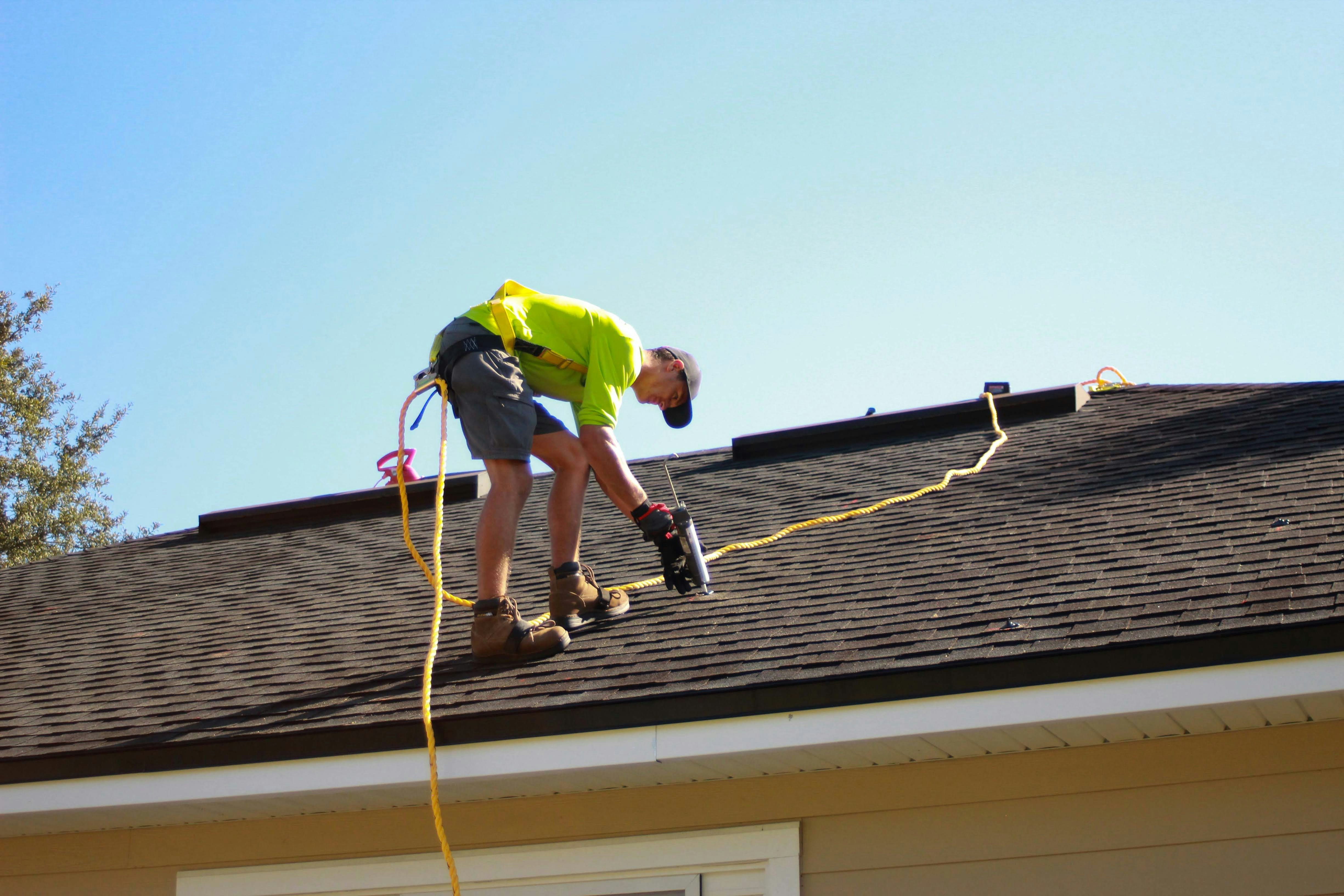
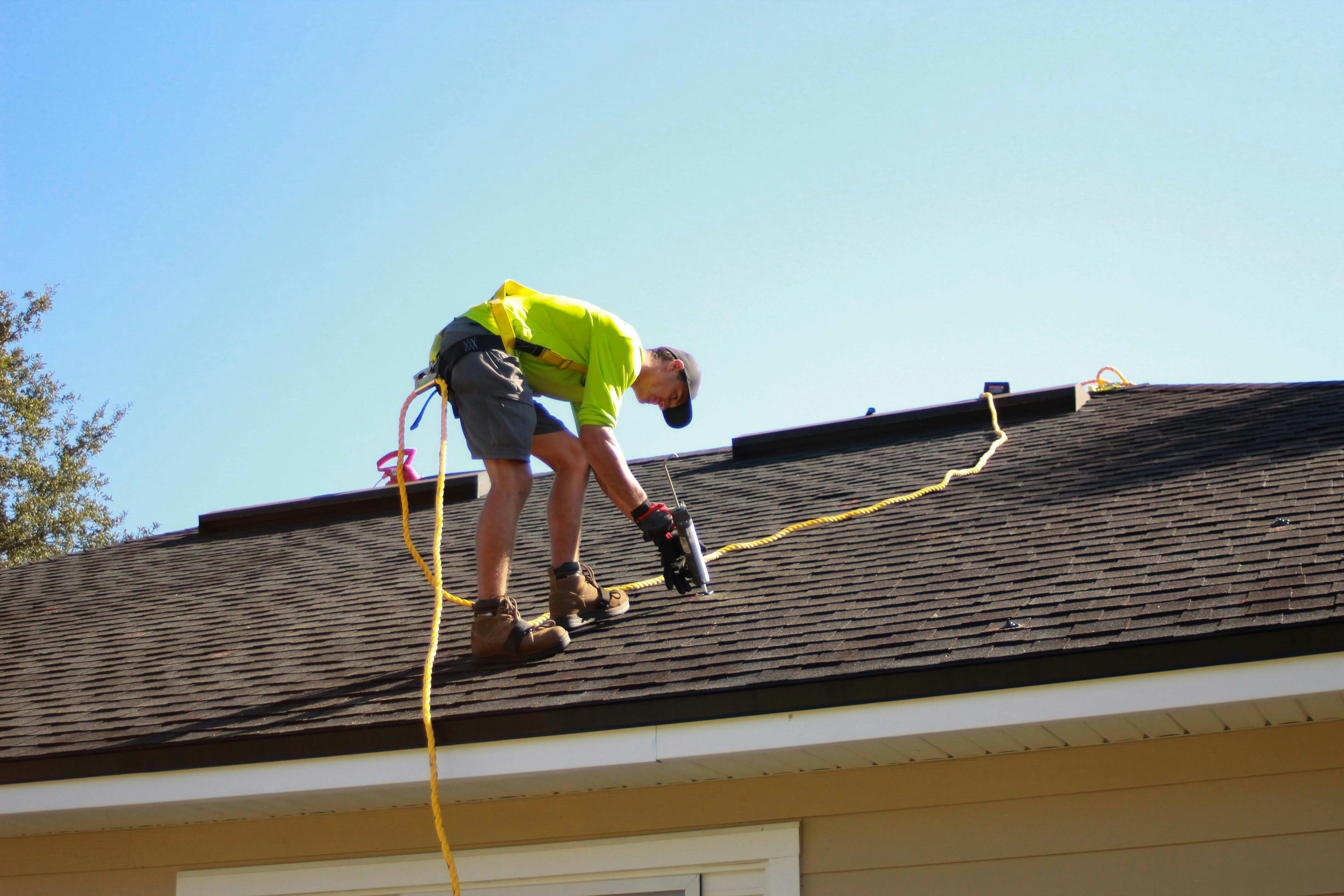
 A sheet of bare plywood on a Fort Myers roof, stripped of its old shingles, shows two things clearly on install day. One is the line of nails holding it to each truss, with their size and spacing in plain view. The other is the open seam between that sheet and the next one, still bare before the tape seals it. Then the underlayment goes down, and both sit under new layers. So how do you show, years from now, that they are there?
How the deck is fastened and whether a sealed barrier covers its seams are two of the roof features insurance carriers look for, and at PRG Roofing & Construction Inc. our crew installs both on a reroof and photographs each one while it is still in view. On a shingle or tile reroof over a wood deck, install day is the one day the nailing and the seam tape can both be seen from above. A photo from that day catches both features bare, before anything covers them.
How A Wind Credit Is Earned
Insurance carriers offer credits on the windstorm portion of the premium for wind-resistant features they can verify. The features on record are roof shape, roof covering, deck attachment, roof-to-wall connections, secondary water resistance and opening protection. Several are set by how the house was built, like its roof shape and the protection over its windows and doors. Roof-to-wall connections, the straps or clips tying the roof framing to the walls, sit on that list too, and they are seen from inside the attic. Two of the six go in under the covering on a reroof. They are the deck attachment and the sealed barrier. On a residential reroof, both are part of the job, and our crew handles the permit and the requirements for your address.
The Nail Rows In The Deck
When hurricane wind pulls upward across a roof, the nails holding the plywood sheathing to the rafters or trusses are what keep the deck on the framing. Two things describe that attachment, the size of each nail and how close together they run along each truss. On a reroof, the upgraded fastening goes in while the deck is bare. Our crew drives the new nails in rows along each truss line and photographs those rows against the bare wood. Once the underlayment goes down, the nailing can be checked only from the attic side, so the install-day photo is the lasting record of those rows from above, nail heads on bare wood.
The Taped Seams Under The Covering
On the night wind tears shingles or tile off a section, the layer that limits rain at the gaps between the plywood sheets is the sealed barrier, a self-adhered sheet laid over the deck seams beneath the covering. Our crew shoots the barrier stage on its own, after the seams are sealed and before the covering goes down. A finished roof looks the same from the street with or without it. Years later, that tape cannot be seen without pulling roofing off, so the install-day photo is the record of the sealed seams you keep.
The Dated File From Tear-Off Up
In CompanyCam, each photo our crew takes is stamped with its time and location, and the crew member who took it is logged beside it. Your file opens on the tear-off, with the old roof coming off, and follows the work up through the deck and the fastening to the sealed seams and then the covering. Because each layer is photographed before the next one goes over it, the nailing photo shows bare wood and the seam photo shows bare tape. This live photo report is yours, so if anyone asks what went under your covering, you can show them a dated photo of it.
Every Hidden Layer On Record
If your roof is nearing replacement, the reroof is when both features go in and our crew photographs each one in view. After the last course goes on, you'll hold dated photos of the nail rows on bare plywood and the tape over every seam. Call PRG Roofing & Construction Inc. at (239) 237-2906 to schedule your free roof assessment in Fort Myers.