ARTICLE:
A faint brown ring on the ceiling dries between rains and darkens after the next one. That ring marks an active path through your decking. Every afternoon thunderstorm over Port Charlotte pushes more water down that same path, while the surface above still looks nearly intact. Some shingle problems give you time to plan a repair. Others are already working their way into the structure. PRG Roofing & Construction Inc., based in Fort Myers and serving Port Charlotte, sorts these warning signs the way our crew chiefs do on a service call.
An Active Interior Leak Goes to the Front of the Line
A brown ring on the ceiling or a musty smell in a closet means one thing. Water has already crossed the underlayment and reached the inside of your home. That moisture does not stay where it landed. It tracks sideways along the rafters and surfaces several feet from the breach above. We bring a pin moisture meter to find where the water enters, not only where it shows. The source is rarely directly above the spot you see.
Flashing Failures at Penetrations Leak Before the Field Does
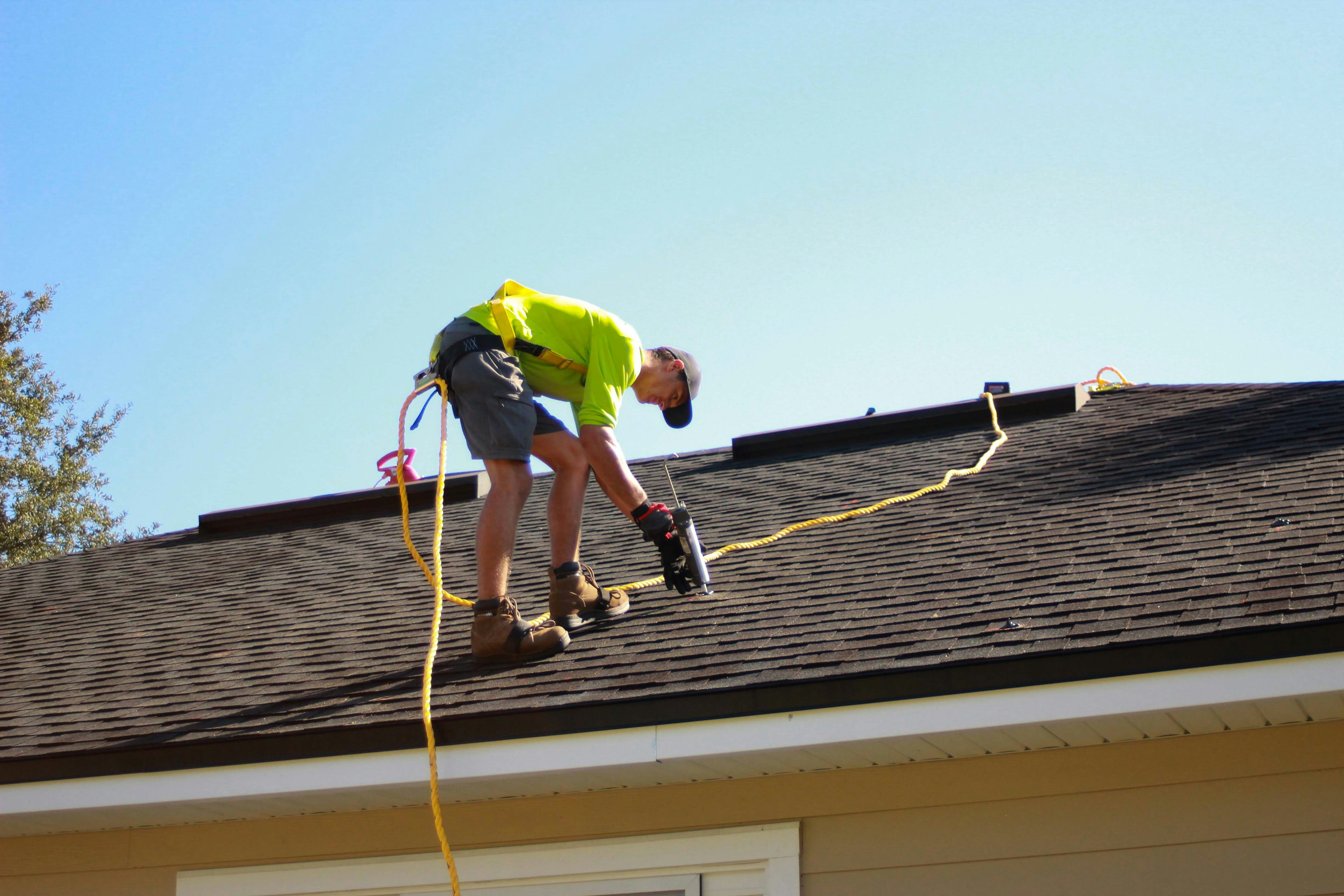
Most active shingle-roof leaks start at the penetrations, not in the open field. The usual culprits are step flashing, counterflashing, or a failing pipe-boot. A cracked rubber vent boot the size of a coffee-cup ring can feed a slow drip into a bedroom ceiling for weeks. The shingles can still look fine from the street the whole time. For odd penetrations where no stock piece fits, we fabricate flashing on site and set a metal-collar boot that outlasts bare neoprene, because simplecaulk smeared over the gap will release within a season.
A Released Seal Strip Turns One Tab Into a Peel Zone
The factory seal strip on each shingle course bonds it to the row below. That bond is the first defense against wind uplift. Once it releases, a single creased tab becomes the corner a future gust grabs to peel a wider strip of shingles off the roof. Hurricane season here runs from June through November. We hand-seal or replace lifted tabs with the course lifted, and we never face-nail through the exposure. A nail driven through the shingle face becomes the next leak.
Backed-Out Fasteners Feed a Wider Wet Zone Than They Show
A nail that has worked loose stands proud above the shingle surface. It becomes a direct water entry point in the next rain. Because moisture travels sideways through the decking, that one glinting nail head can feed a stain three feet away in the room below. Saturated OSB and plywood lose their grip on fasteners as the moisture content climbs. A leak left active long enough turns a fastener repair into a deck replacement. We set a pin moisture meter at each suspect point and treat any reading at or above 18% as the line where wet sheathing comes out.
Drip-Edge Curl and a Failed Starter Course Leave the Eave Undefended
A drip edge that has curled a finger-width from the fascia gives wind-blown rain a lip to ride behind. Port Charlotte thunderstorms drive rain sideways, not straight down. The starter course and the nailed first row anchor the perimeter against uplift. A compromised eave is the first section a storm peels. A choked soffit intake screen makes it worse, because trapped attic heat cooks the adhesives from below.
Get a Straight Read Before the Next Storm Cycle Decides It
The safest move is to let us put eyes and a moisture meter on the roof before anyone guesses at the urgency. Climbing up to look is never something we want you doing. Call PRG Roofing & Construction Inc. at (239) 237-2906, and we document every finding with time-stamped photographs and pin moisture readings. We verify Florida Product Approval on the replacement material and prepare wind-mitigation documentation for your insurance carrier file. You learn whether this is a same-week repair or a fix that can wait. The next storm should not be the one that decides it.