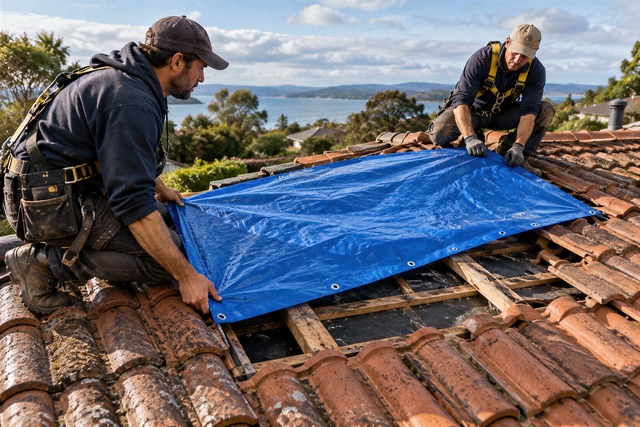
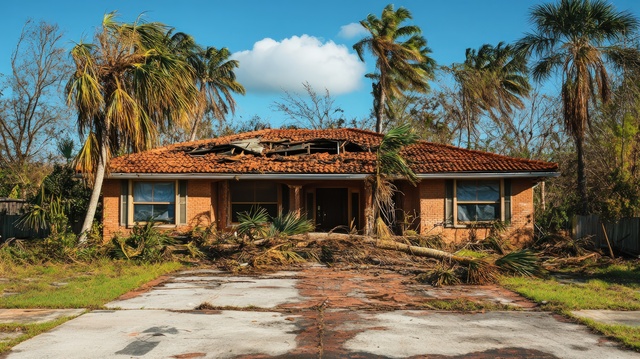
 The first 20 minutes of a hurricane assessment happen on the ground, with no ladder anywhere in the picture. Our thorough crew reads the perimeter, the attic, and the documentation evidence before any boots touch the field of the roof. The order we do things in matters because hurricane damage hides in places a roof-down inspection misses, and the photographs your carrier needs must capture the path of water, not only the result. PRG Roofing & Construction Inc. in Fort Myers builds every post-storm assessment around a sequence designed to find what other approaches step over.
The Perimeter Walk Reads The Ground Before The Roof
Splash patterns at the foundation, debris caught in the gutter line, fascia scarring above the soffit return, and drip-edge displacement at corners all appear on the perimeter walk. Soffit panels pulled at edges show wind that lifted the eave assembly during a gust. Tree-strike marks on siding tell us where projectiles came from and what they may have hit. None of those readings require a ladder, and each shapes what we look for once the inspection moves higher.
The Attic Reading Reveals What The Surface Hasn’t Yet Shown
Thermal imaging picks up moisture migration in insulation that is not visible to the eye, and a pin moisture meter reads decking and rafter tails for saturation that has no surface signal. Daylight visible through deck seams or around penetrations is documented from inside before the same areas are evaluated from above. The attic step catches hidden damage, since wind-driven rain travels along structural pathways for hours before any interior leak appears. Skipping this step is how secondary damage compounds in a Fort Myers home for months.
The Roof Inspection Reads The Field By Zone
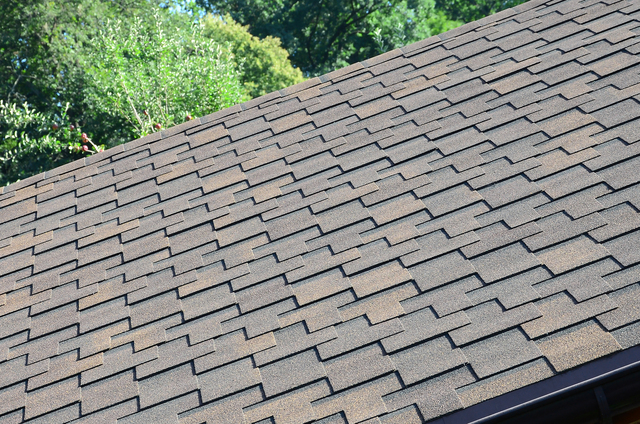
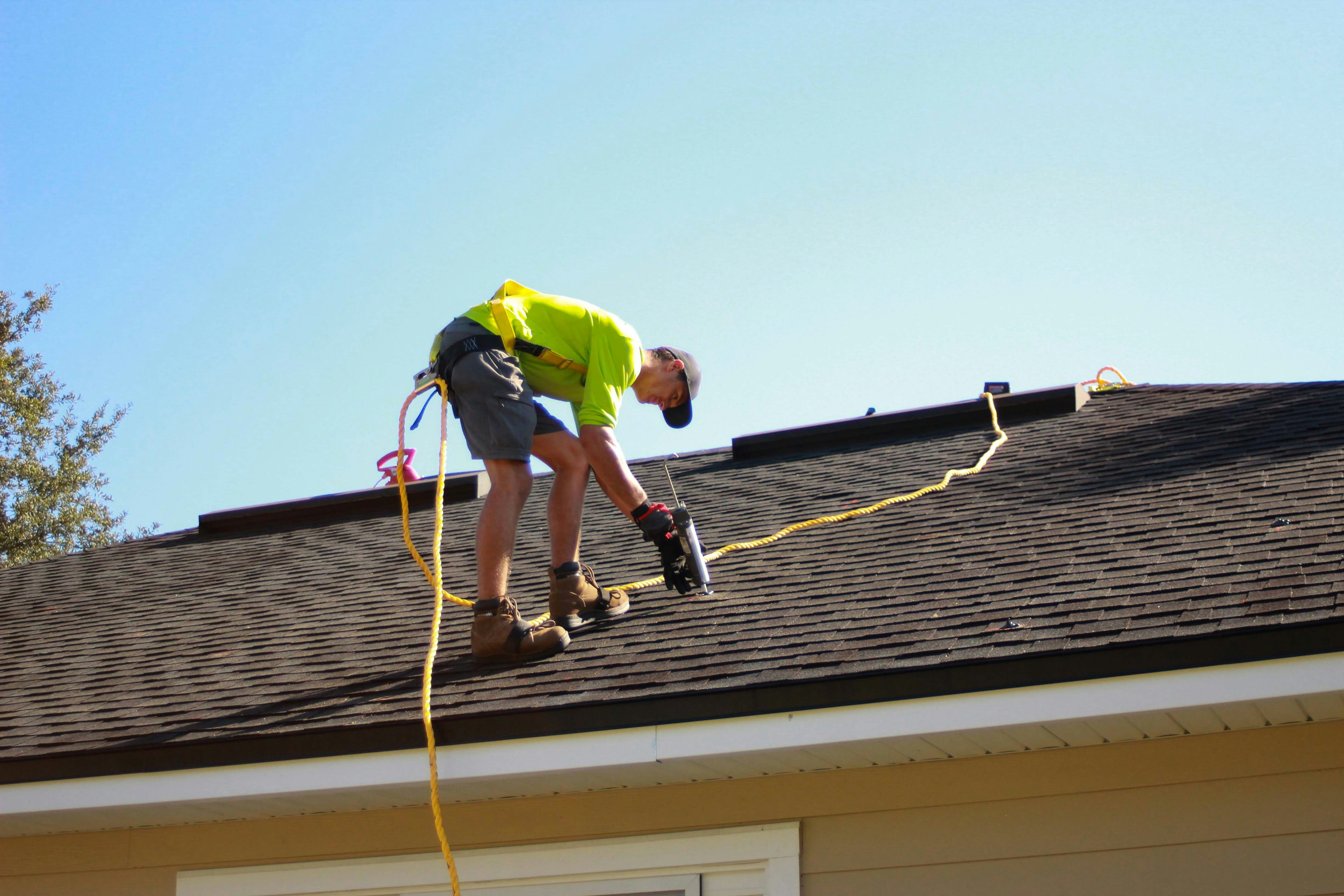
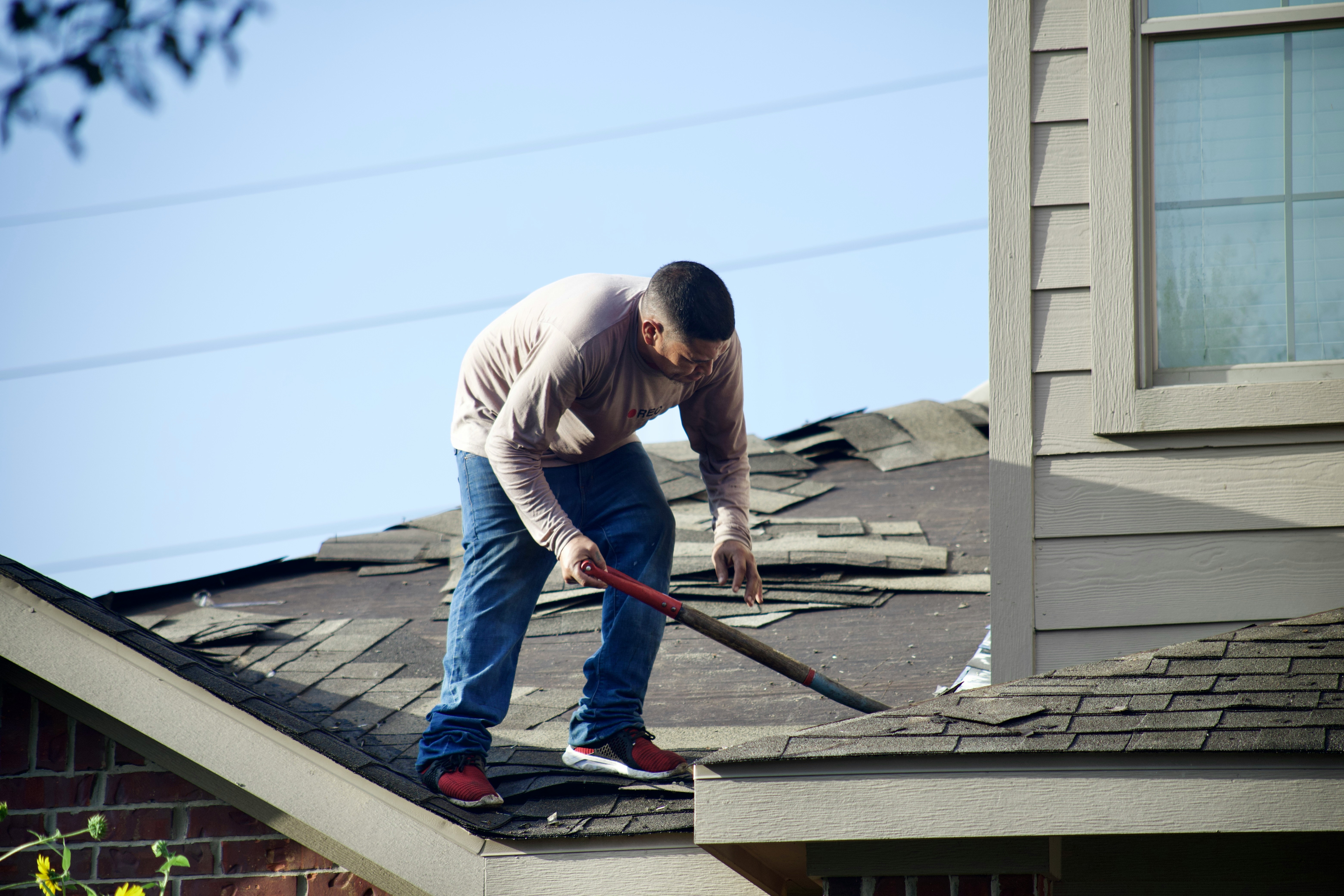
Field shingles or panels, ridges and hips, valleys, penetrations and flashings, edge details and drip line each get evaluated against their specific failure modes. Lifted shingle tabs along ridges signal one type of wind event; granule loss in valleys signals another; flashing pulled at chimney curbs signals a third. Each finding is photographed in context first, then in detail, and tagged to its location on a roof diagram. The inspection moves zone by zone rather than scanning the surface as a single image.
Photographs Are Tagged To Your Carrier’s Estimating Workflow
Time-stamped images match the line items in the insurance carrier’s estimating software, so the adjuster’s job becomes reading rather than interpreting. Each image is captioned with location, finding, and scope of repair, and the captions use language insurance carriers recognize from their templates. A clean evidentiary file moves the insurance claim through review faster and reduces back-and-forth that eats your dry-in window. The packet becomes part of your permanent property record once the insurance claim closes.
The Report Sorts The Findings Into Three Decisions
Repair, restoration with coating, or full replacement are the three paths every assessment delivers, with the evidence for each path documented in the same packet. Targeted repairs handle isolated damage where the surrounding roof has functional service life remaining. Restoration coatings extend a roof at the edge of its service window. Replacement enters the conversation when the report shows damage too widespread or too compounded for the other two options, and the report explains why each path was scored where it was.
Schedule The Walk-Through Your Adjuster Will Thank You For
A hurricane in Fort Myers leaves damage your eye won’t see, and your insurance file needs it captured before secondary water tracks deeper. Schedule a PRG Roofing & Construction Inc. assessment by calling (239) 237-2906, and we arrive with the thermal camera, pin moisture meter, and roof diagram your claim needs.