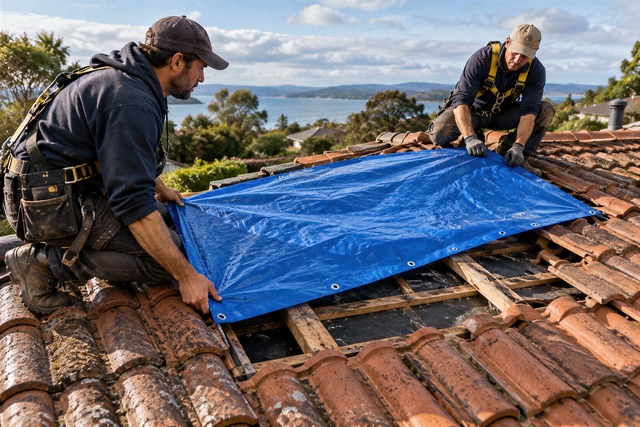
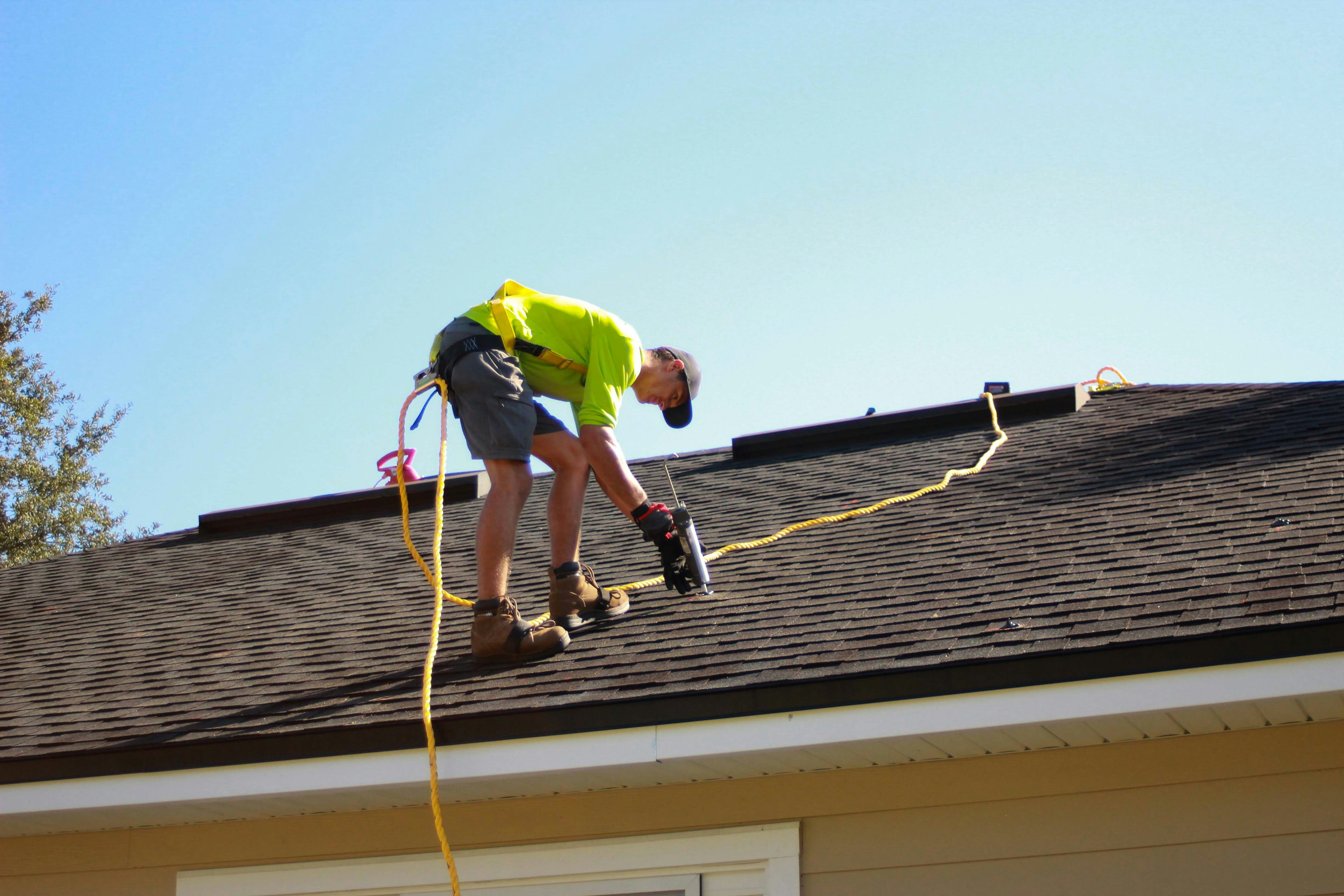
 A PRG crew is standing in a Fort Myers driveway with a portable metal brake, feeding a sheet of aluminum through the machine and bending it to match the exact angle where your roof plane meets the sidewall of your second story. That angle isn’t 90 degrees. It’s closer to 83, and the stock flashing you can buy from a supplier only comes bent at 90. Those seven degrees of mismatch leave a gap at the bend, and the next wind-driven afternoon storm will push rain water straight through it.
This is why flashing and valley work decides whether a roof repair lasts two seasons or 10. The shingle field across the center of your roof handles rain just fine when it’s intact. The joints are where the system gets tested, and the joints are where most Fort Myers roof repairs either prove themselves or fall apart.
Every Joint On Your Roof Carries Concentrated Load
Flashings seal every transition point on your roofing system: where the roof meets a wall, wraps around a plumbing vent, frames a skylight opening, or terminates at the drip edge. Valleys are the channels where two sloping roof planes converge and funnel rain water into a concentrated stream heading toward your gutter system. During a heavy Fort Myers thunderstorm, valleys move more water per minute than any flat section of shingle field. A valley lined with cracked underlayment or corroded metal will redirect that volume into your decking and attic space before the storm even passes.
What A Valley Rebuild Looks Like When It’s Done Right
Proper valley repair isn’t a patch job over existing material. Our crew strips the valley down to bare decking and tests the wood with a moisture meter. Any section reading above 18% moisture content gets cut out and replaced with new plywood, because saturated decking won’t grip fasteners and it harbors mold growth between layers. We install self-adhering ice and water shield membrane extending at least 24 inches from the valley centerline on each side, per manufacturer specifications. New valley metal goes on with sealed overlapping edges, and shingles are cut and set with the correct exposure so they don’t dam water flow at the convergence point. This isn’t a two-hour fix. It’s a rebuild that addresses every layer from wood to finished surface.
The Wall Transition That Fails In Silence
Step flashing runs along every joint where your roof meets a vertical wall. At the very bottom of that run, a small angled piece called a kick-out flashing is supposed to divert water away from the wall and into the gutter. When that kick-out is missing, undersized, or poorly sealed, rain water enters the wall cavity and drops through the framing. Building Science Corporation has documented this failure path extensively; water travels vertically inside the wall, soaking sheathing and insulation for months before any discoloration appears on an interior surface. By the time you notice a stain on a first-floor wall, the wood behind the siding has been absorbing moisture through multiple storm cycles. PRG replaces kick-out flashings during every wall-transition repair because this single component prevents one of the most damaging concealed leak paths in residential roofing.
We Verify Before We Leave The Roof
After rebuilding a valley or replacing flashing at a transition, our crew sets a laser level across the repair to confirm correct pitch for drainage. Then we run a live water test, pouring water through the repaired section and watching it clear to the gutter before anyone packs up a tool. This verification step catches problems that look fine dry but perform differently under flow. We photograph every stage of the repair so you have a permanent record of what was installed beneath the finished shingles.
June 1st Doesn’t Wait For Weak Joints
Hurricane season opens in eight weeks, and your roof’s flashings and valleys are the components that face the highest stress during a wind event. If those joints haven’t been assessed since last season, call PRG Roofing & Construction Inc. at (239) 237-2906 and schedule a flashing and valley evaluation now, because a seven-degree gap in a piece of metal can cost you an entire ceiling.