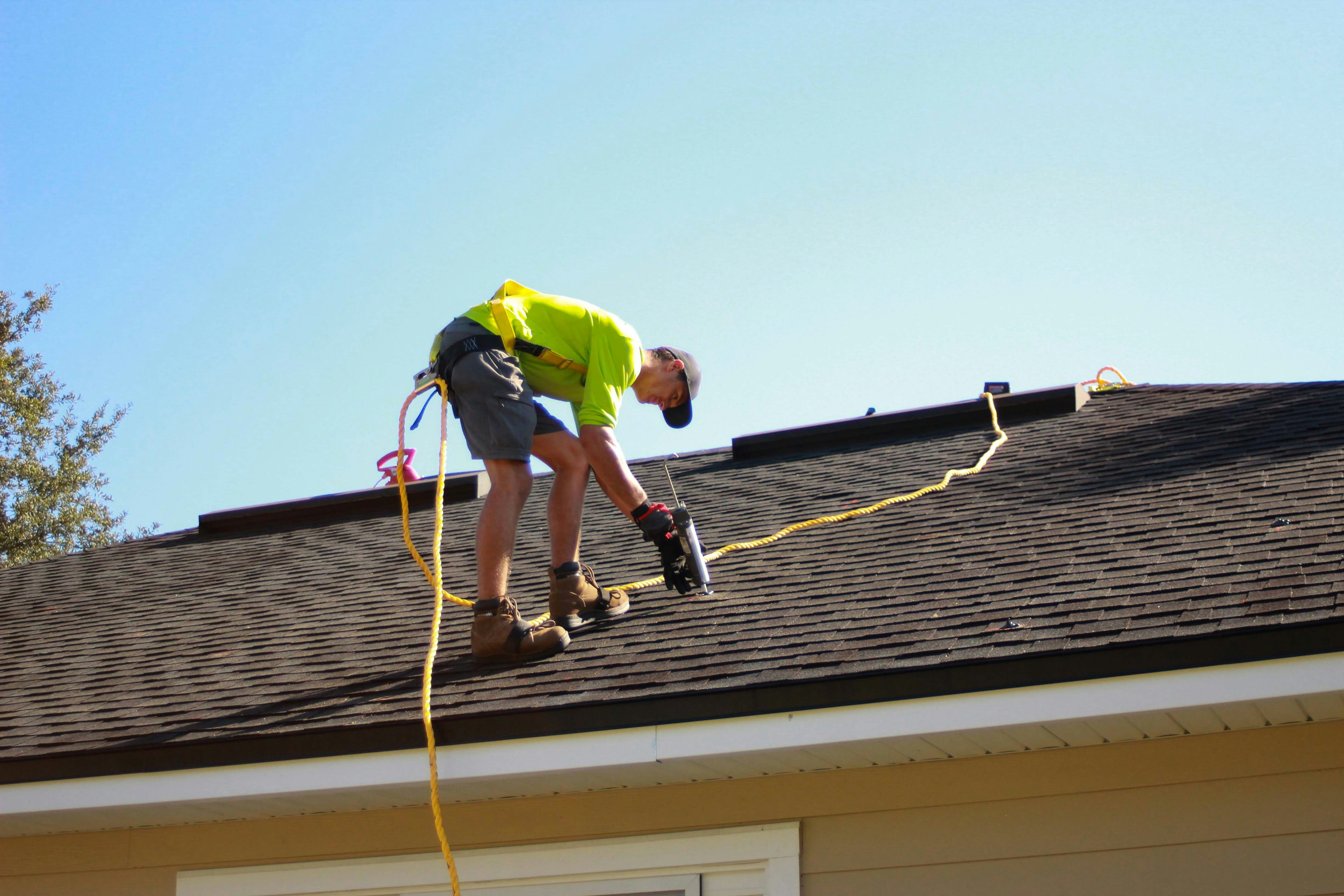
 Look up at that brown spot on your Fort Myers ceiling. Now forget everything you assume about where the water came from. Rain doesn’t punch straight through shingles and land on drywall. It sneaks under a lifted edge somewhere, rides along the underlayment for six or eight feet, pools above a nail hole, and finally drips through when gravity wins. That stain you noticed last Tuesday could trace back to a flashing crack that opened up during a storm six months ago.
We track water backward. And what we find usually surprises people.
Our Meter Reads What Eyes Miss
When we push a moisture probe into your fascia board,the number tells us more than a visual inspection ever could. Wood reading above 18% has gone soft inside even when the paint looks fine. If we seal over that and we’ve just trapped rot underneath where it’ll spread for years. We check multiple spots across the roofline because moisture travels in ways that don’t follow straight lines.
Edges and Penetrations Fail First
The middle of your shingle field almost never causes the leak. Counter-flashings at chimneys, step flashings where roof meets wall, valley metal at slope intersections; that’s where water concentrates during every Fort Myers afternoon storm. UV breaks down seal strips over time, and sideways rain finds those gaps within seconds. We put hands on these spots during every inspection because what looks fine from the ground often tells a different story up close. A lot of roofing contractors skip this part. We don’t.
Your Attic Might Be Cooking Your Shingles
Ridge vents accomplish nothing when soffit intake is blocked. Insulation shoved against baffles, paint clogging perforations, decades of debris piled up; any of these turns your attic into an oven. Heat and humidity bake shingle adhesive from below, causing granule loss and curling that no coating will reverse. We measure actual airflow, not just whether vent components exist. The math matters because bad ventilation destroys new roofs faster than hurricanes do.
Some Roofs Deserve Repair, Others Don’t
Targeted work can buy three to five solid years at a fraction of replacement cost. But only on roofs where the surrounding field still has life in it. When the whole surface has worn down together, patching one section just moves the next failure somewhere else. We map conditions with photos showing exactly where problems sit and how much service remains around them. If a silicone coating can stretch things seven years because the membrane underneath is still bonded, we’ll say so. If you’re throwing repair money at a dying system, we’ll tell you that too.
Photos Are Protection After We Leave
Our time-stamped images become evidence when you need it. Insurance adjusters want before and after documentation. Future buyers want proof when you sell. Warranty questions five years from now need installation records showing what was done and how. We capture everything because we’ve watched too many homeowners scramble for paperwork they never thought to keep. You’ll want this file later.
The Calendar Doesn’t Care About Your Schedule
Hurricane season opens June first, and roofs with weak edges, cracked flashings, or loose fastener patterns won’t survive another round of wind-driven rain. The leak you’re tolerating spreads through decking and insulation while you think about it. Mold doubles in size every day or two once it establishes. Call PRG Roofing & Construction Inc. at (239) 237-2906 for an inspection showing exactly where things stand before the next storm answers the question for you.