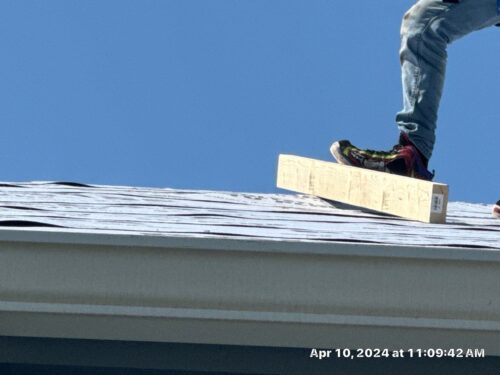
 Not all metal roofs are created equal. When we arrived at a property on Sand Castle Road in Sanibel Island, the homeowner already had a metal roof—26-gauge 5V crimp panels that should have been providing solid protection. But what we discovered underneath told a very different story about structural integrity and the importance of addressing problems before they become catastrophic.
At PRG Roofing & Construction Company, we’ve learned that the most dangerous roofing problems are often the ones you can’t see from the ground. This Sand Castle Road project proved that lesson once again.
The Problem Hidden Beneath the Panels
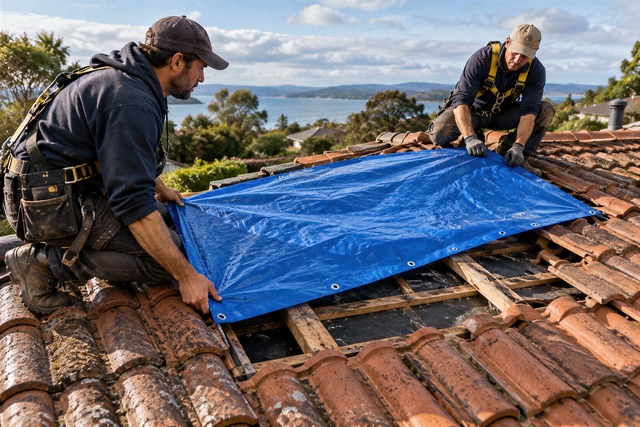
The existing metal panels showed visible waviness and irregularities that signaled something more serious than surface-level wear. When our team began the assessment, we confirmed what we suspected: significant truss sagging throughout the roof structure.
Sagging trusses don’t just create aesthetic issues—they compromise your roof’s ability to shed water properly, create stress points that can fail during high winds, and make it impossible to install a new roofing system that will perform as engineered. You cannot install a precision standing seam metal roof over compromised structure and expect hurricane-grade performance.
 Sometimes You Have to Go Backwards to Move Forward
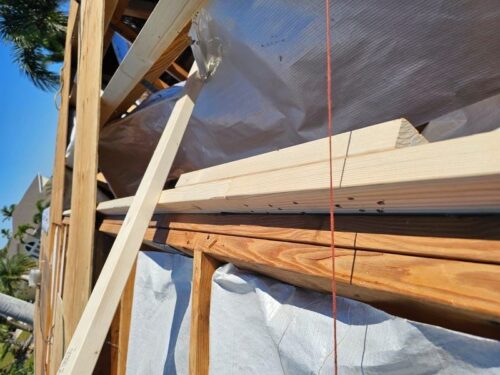
The scope of structural damage required us to remove approximately three-quarters of one side of the roof to access and repair the sagging trusses. This isn’t the kind of work most roofing contractors are equipped to handle—it requires carpentry expertise, structural understanding, and the willingness to do what’s right rather than what’s easy.
Our team systematically repaired each compromised truss, restoring proper roof plane geometry so the new metal panels would lay perfectly flat. This precision matters tremendously when you’re installing a standing seam system where panel alignment affects both weather performance and visual appeal.
 Upgrading to Hurricane-Resistant Performance
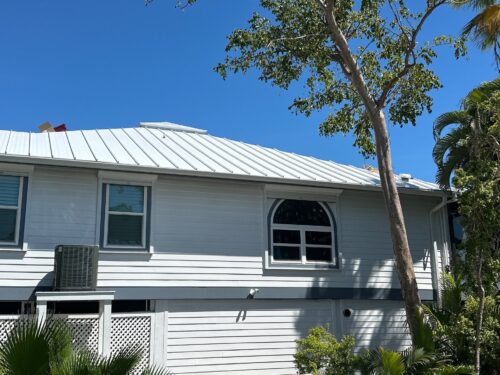
With the structural foundation properly restored, we installed a Drexel Metals 24-gauge 1.75″ standing seam roof in Bone White—a dramatic upgrade from the existing 26-gauge 5V crimp panels in both material gauge and system engineering.
The difference between these two metal roofing systems is significant. Standing seam features concealed fasteners that eliminate the thermal expansion issues and leak points that plague exposed fastener systems like 5V crimp panels. The interlocking panel design provides superior wind uplift resistance tested to withstand winds up to 180 mph—critical performance for Sanibel Island properties that face hurricane threats every season.
The 24-gauge steel is thicker and more durable than the 26-gauge material being replaced, and the 1.75″ tall seams create stronger weather barriers than lower-profile systems.
 Two Weeks From Structural Repair to Final Inspection
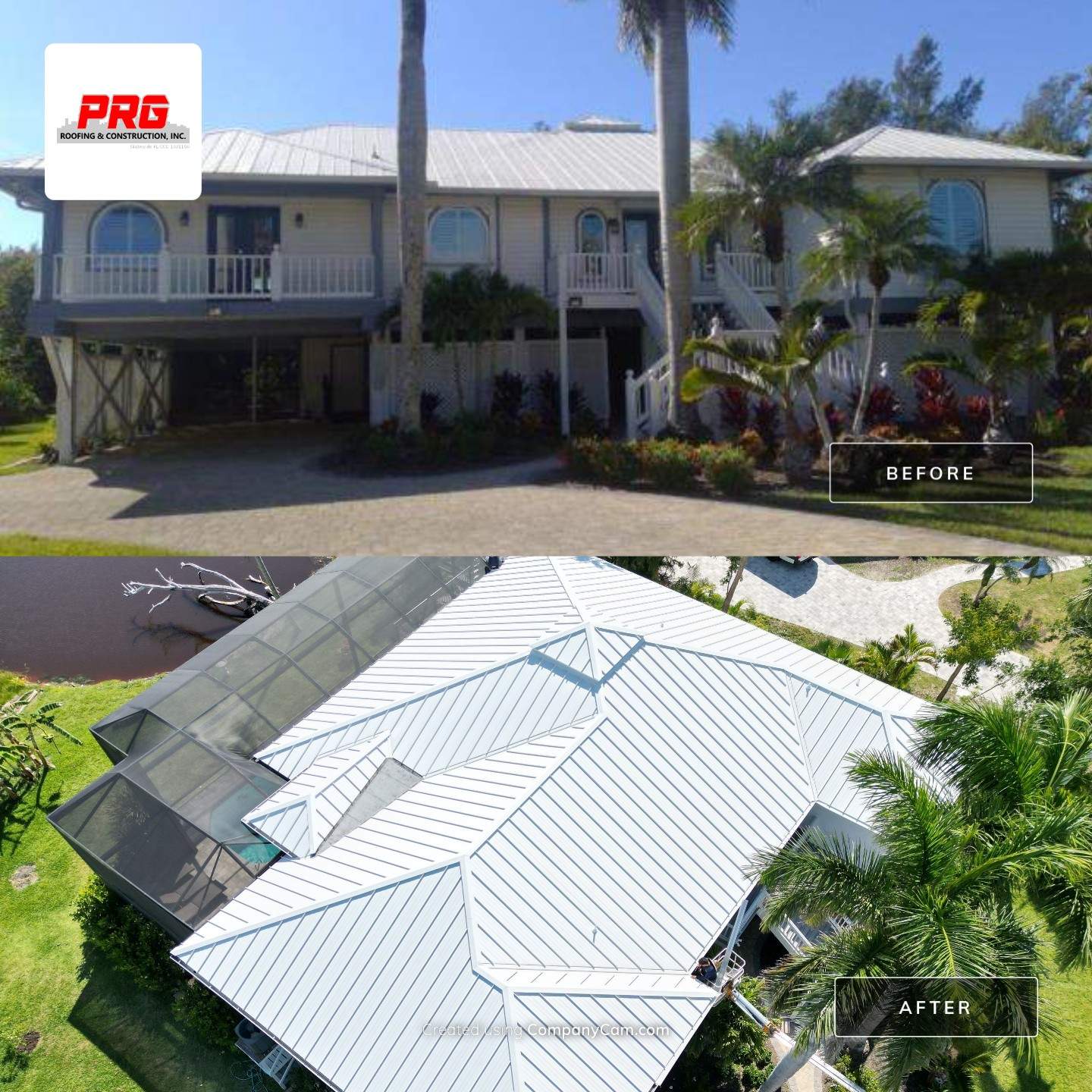
Despite the extensive structural work required, our team completed the entire project—including all necessary building inspections—in just two weeks. Through our CompanyCam documentation system, this homeowner could see every phase of their structural repairs and roof transformation, from exposed trusses being corrected to the gleaming white standing seam panels taking shape overhead.
This Sand Castle Road project demonstrates why thorough assessments matter and why choosing experienced contractors makes the difference between a roof that looks good and one that performs when Southwest Florida weather tests it.
Ready for a roofing partner who solves structural problems instead of covering them up? Contact PRG Roofing & Construction Company at (239) 237-2906 or visit https://prgroofing.net to schedule your comprehensive roof assessment. Serving Fort Myers, Cape Coral, Sanibel, Captiva, Naples, Bonita Springs, and throughout Southwest Florida—we’ve got you covered.