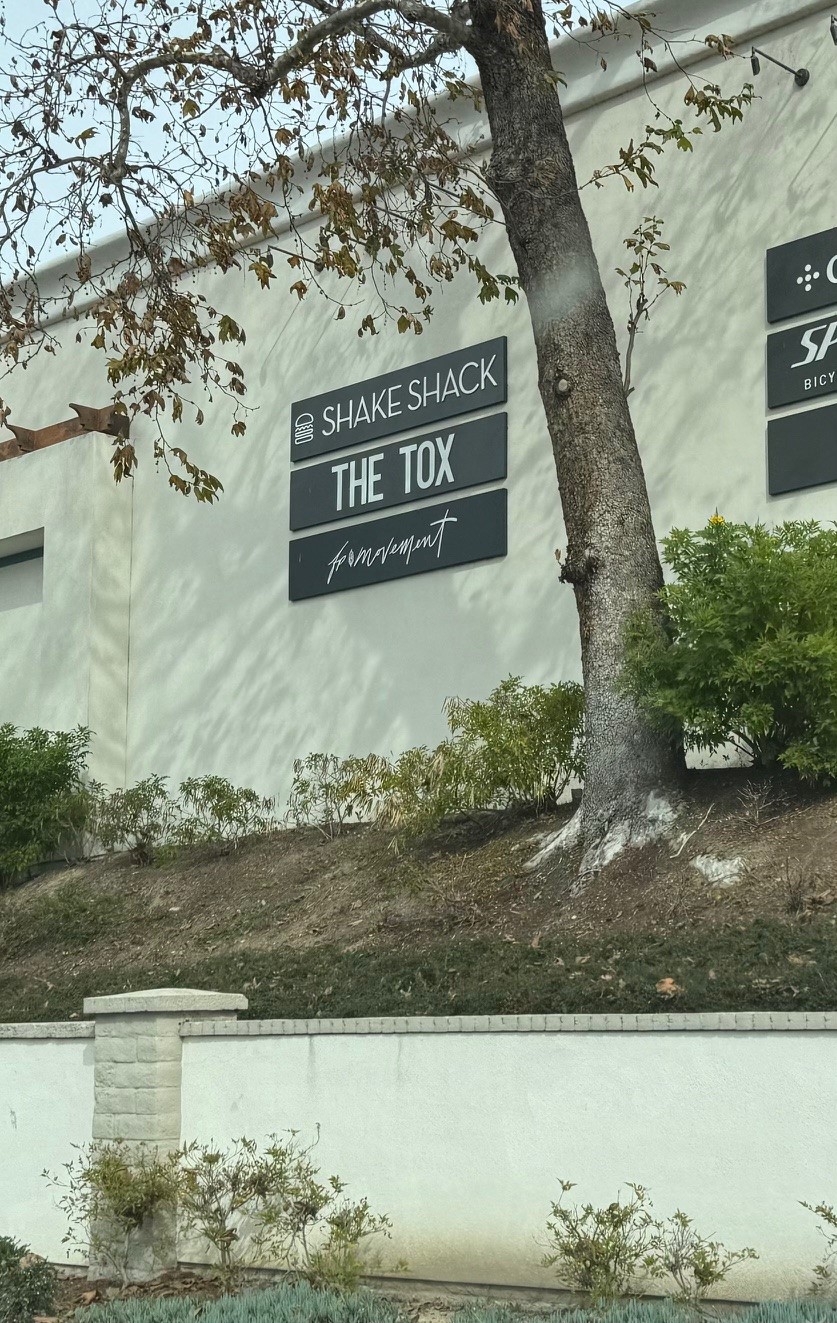
 The short answer is yes, custom sign shops should mount acrylic logos with VHB tape, but only when three conditions check out on the actual panel. The longer answer is that most failed VHB installs aren't tape failures; they're inspection failures from shops that quoted the work before standing in front of the substrate. North Coast Signs is based in Vista and serves Carlsbad. We just verified all three conditions on a new THE TOX franchise install before any tape touched the panel, and the result is a wordmark that bonded clean and stayed put.
Condition One: The Substrate Has to Be Flat
Very High Bond tape transfers force across its full footprint, which only works when the panel sits flat enough for the tape to make contact at every point. Bowed panels, warped panels, and panels with sub-surface damage create dead spots where the adhesive carries no load. Running a long straightedge across the panel face is the test. Gaps under the straightedge are the answer.
Condition Two: The Panel Surface Has to Be Clean
Tenant panels in commercial centers collect what the air leaves behind: silicone residue from previous adhesive removal, dust trapped in textured finishes, sunscreen and oil deposits from passing pedestrians, and oxidation from years of UV exposure. VHB bonds to clean acrylic. It rejects silicone like a magnet repels another magnet. A shop that wipes the panel with shop rag and sprays water is missing the contaminants the tape will fail against three months later. Isopropyl alcohol on a clean lint-free cloth, applied in straight passes across the surface, is the only prep that earns its place.
Condition Three: The Install Has to Allow Even Pressure
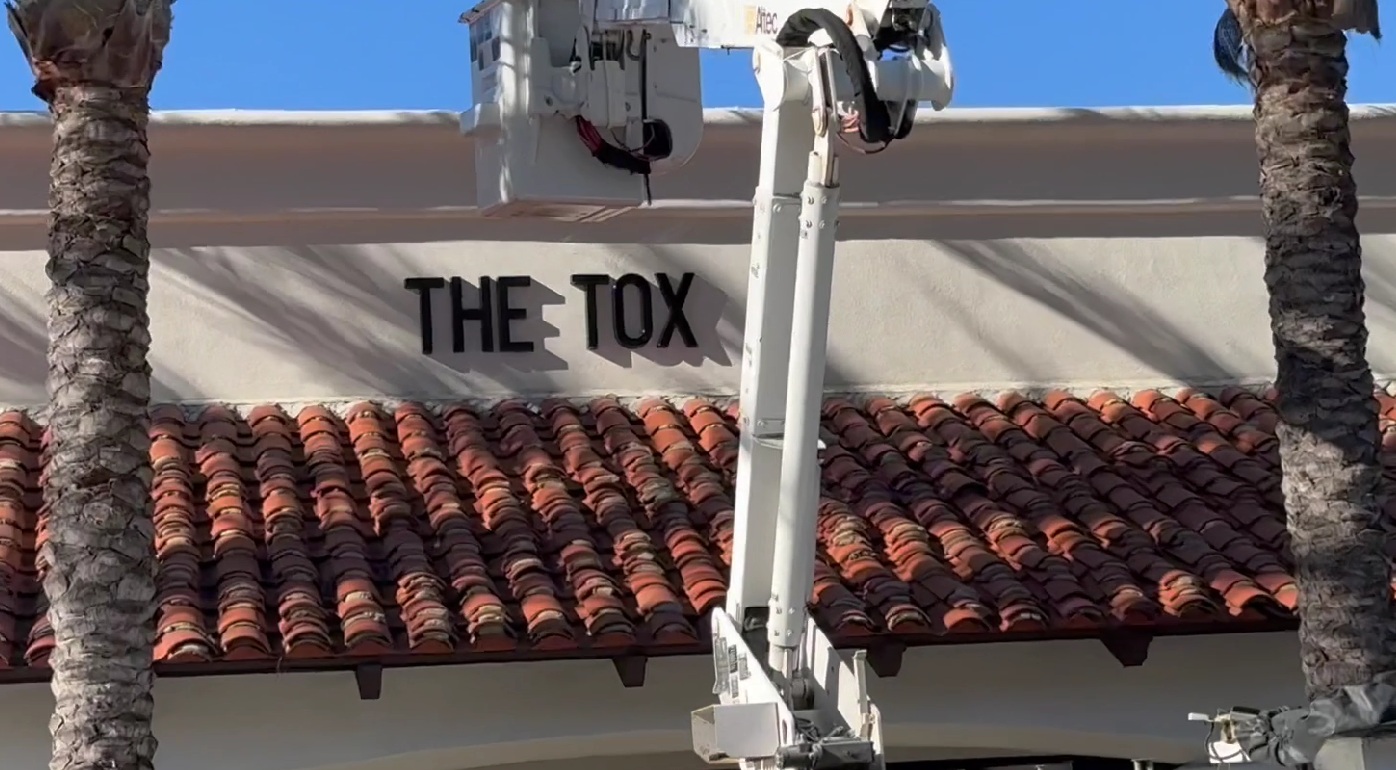
VHB reaches full bond strength when the installer applies firm, even pressure across the entire logo footprint at install. The THE TOX site sits on a steep slope that made standard truck positioning impossible, which forced a bucket truck to stage on the sidewalk so the boom could reach the panel from a stable angle. A truck angled wrong, or a crew rushing to apply a logo while balancing on uneven ground, leaves dead spots in the bond that show up months later when one corner peels and pulls the rest behind it. The install conditions are the third condition every shop should verify before tape leaves the roll.
What Got Mounted on the THE TOX Panel
The wordmark is 1/4-inch thick white acrylic with a matte finish, in the brand's Kenzo typeface, sized at 68.80 inches wide by 18 inches tall. It's mounted to an existing 120 by 24-inch tenant panel that the franchisee inherited along with the lease and couldn't legally drill into. Matte finish was chosen because gloss surfaces throw glare back at readers in midday sun. White acrylic on the existing dark panel reads cleanly across the parking lot at any hour of daylight.
What Shops Quoting VHB Without Inspection Get Wrong
A shop that quotes VHB off a phone photo or a tenant's verbal description hasn't met any of the three conditions yet. The franchisee gets a quote, accepts the work, and finds out at install day that the panel surface is textured, the substrate is bowed, or the install access is impossible from a standard ladder. Estimates change. Schedules slip. The franchisee inherits the headache.
Schedule the Inspection Before the Install
A VHB install that holds for the length of a lease starts with a shop willing to walk the property before pricing the work. If your Carlsbad storefront has an existing tenant panel and a custom logo that needs to mount without drilling, call North Coast Signs at (760) 536-5454 and we'll inspect the substrate before we quote the tape.
The short answer is yes, custom sign shops should mount acrylic logos with VHB tape, but only when three conditions check out on the actual panel. The longer answer is that most failed VHB installs aren't tape failures; they're inspection failures from shops that quoted the work before standing in front of the substrate. North Coast Signs is based in Vista and serves Carlsbad. We just verified all three conditions on a new THE TOX franchise install before any tape touched the panel, and the result is a wordmark that bonded clean and stayed put.
Condition One: The Substrate Has to Be Flat
Very High Bond tape transfers force across its full footprint, which only works when the panel sits flat enough for the tape to make contact at every point. Bowed panels, warped panels, and panels with sub-surface damage create dead spots where the adhesive carries no load. Running a long straightedge across the panel face is the test. Gaps under the straightedge are the answer.
Condition Two: The Panel Surface Has to Be Clean
Tenant panels in commercial centers collect what the air leaves behind: silicone residue from previous adhesive removal, dust trapped in textured finishes, sunscreen and oil deposits from passing pedestrians, and oxidation from years of UV exposure. VHB bonds to clean acrylic. It rejects silicone like a magnet repels another magnet. A shop that wipes the panel with shop rag and sprays water is missing the contaminants the tape will fail against three months later. Isopropyl alcohol on a clean lint-free cloth, applied in straight passes across the surface, is the only prep that earns its place.
Condition Three: The Install Has to Allow Even Pressure
VHB reaches full bond strength when the installer applies firm, even pressure across the entire logo footprint at install. The THE TOX site sits on a steep slope that made standard truck positioning impossible, which forced a bucket truck to stage on the sidewalk so the boom could reach the panel from a stable angle. A truck angled wrong, or a crew rushing to apply a logo while balancing on uneven ground, leaves dead spots in the bond that show up months later when one corner peels and pulls the rest behind it. The install conditions are the third condition every shop should verify before tape leaves the roll.
What Got Mounted on the THE TOX Panel
The wordmark is 1/4-inch thick white acrylic with a matte finish, in the brand's Kenzo typeface, sized at 68.80 inches wide by 18 inches tall. It's mounted to an existing 120 by 24-inch tenant panel that the franchisee inherited along with the lease and couldn't legally drill into. Matte finish was chosen because gloss surfaces throw glare back at readers in midday sun. White acrylic on the existing dark panel reads cleanly across the parking lot at any hour of daylight.
What Shops Quoting VHB Without Inspection Get Wrong
A shop that quotes VHB off a phone photo or a tenant's verbal description hasn't met any of the three conditions yet. The franchisee gets a quote, accepts the work, and finds out at install day that the panel surface is textured, the substrate is bowed, or the install access is impossible from a standard ladder. Estimates change. Schedules slip. The franchisee inherits the headache.
Schedule the Inspection Before the Install
A VHB install that holds for the length of a lease starts with a shop willing to walk the property before pricing the work. If your Carlsbad storefront has an existing tenant panel and a custom logo that needs to mount without drilling, call North Coast Signs at (760) 536-5454 and we'll inspect the substrate before we quote the tape.
Carlsbad, CA - Should a Custom Sign Shop Mount Acrylic Logos With VHB Tape?
SYNOPSIS: North Coast Signs installed a matte white acrylic logo using VHB mounting, ensuring proper surface conditions for a secure, clean finish.
Acrylic Logo Mounting in Carlsbad With VHB Tape
BY: ,
The short answer is yes, custom sign shops should mount acrylic logos with VHB tape, but only when three conditions check out on the actual panel. The longer answer is that most failed VHB installs aren't tape failures; they're inspection failures from shops that quoted the work before standing in front of the substrate. North Coast Signs is based in Vista and serves Carlsbad. We just verified all three conditions on a new THE TOX franchise install before any tape touched the panel, and the result is a wordmark that bonded clean and stayed put.
Condition One: The Substrate Has to Be Flat
Very High Bond tape transfers force across its full footprint, which only works when the panel sits flat enough for the tape to make contact at every point. Bowed panels, warped panels, and panels with sub-surface damage create dead spots where the adhesive carries no load. Running a long straightedge across the panel face is the test. Gaps under the straightedge are the answer.
Condition Two: The Panel Surface Has to Be Clean
Tenant panels in commercial centers collect what the air leaves behind: silicone residue from previous adhesive removal, dust trapped in textured finishes, sunscreen and oil deposits from passing pedestrians, and oxidation from years of UV exposure. VHB bonds to clean acrylic. It rejects silicone like a magnet repels another magnet. A shop that wipes the panel with shop rag and sprays water is missing the contaminants the tape will fail against three months later. Isopropyl alcohol on a clean lint-free cloth, applied in straight passes across the surface, is the only prep that earns its place.
Condition Three: The Install Has to Allow Even Pressure
VHB reaches full bond strength when the installer applies firm, even pressure across the entire logo footprint at install. The THE TOX site sits on a steep slope that made standard truck positioning impossible, which forced a bucket truck to stage on the sidewalk so the boom could reach the panel from a stable angle. A truck angled wrong, or a crew rushing to apply a logo while balancing on uneven ground, leaves dead spots in the bond that show up months later when one corner peels and pulls the rest behind it. The install conditions are the third condition every shop should verify before tape leaves the roll.
What Got Mounted on the THE TOX Panel
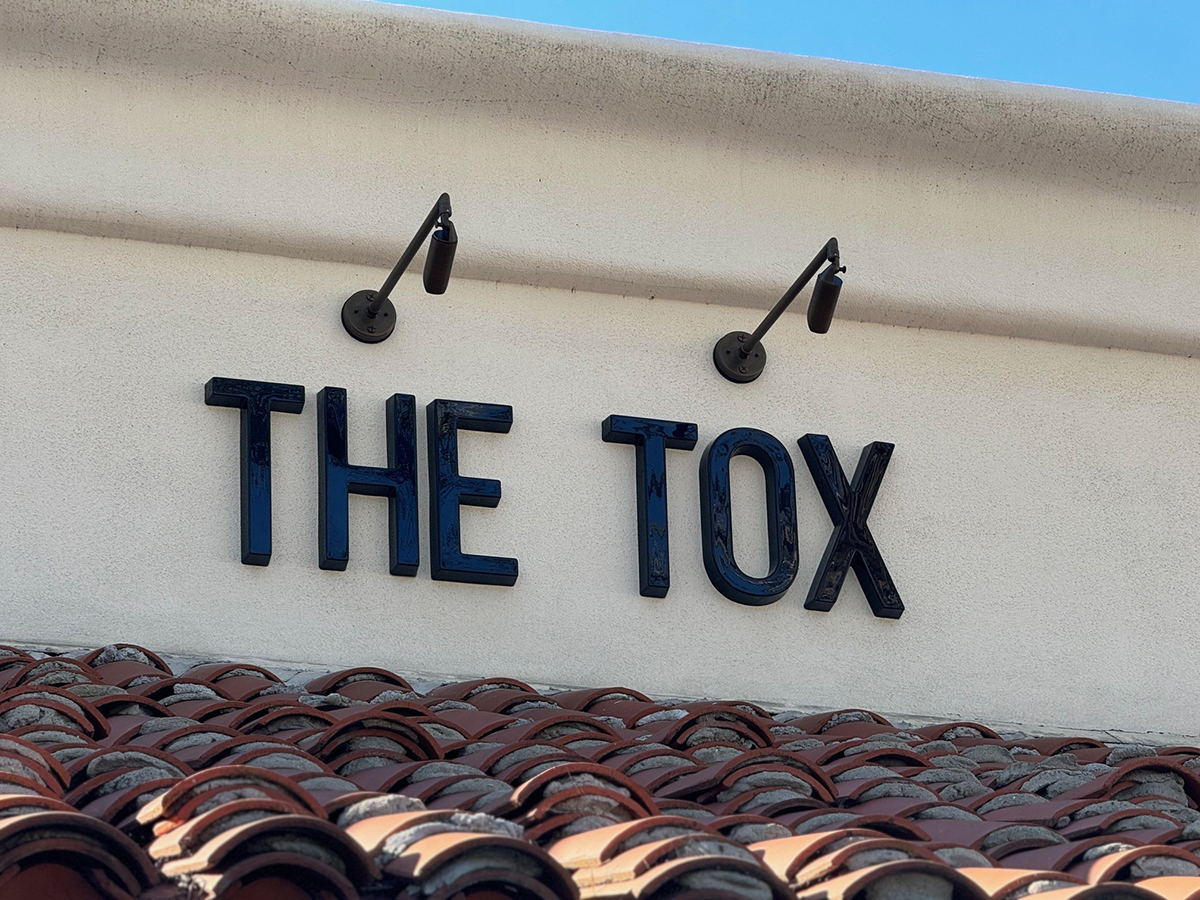
The wordmark is 1/4-inch thick white acrylic with a matte finish, in the brand's Kenzo typeface, sized at 68.80 inches wide by 18 inches tall. It's mounted to an existing 120 by 24-inch tenant panel that the franchisee inherited along with the lease and couldn't legally drill into. Matte finish was chosen because gloss surfaces throw glare back at readers in midday sun. White acrylic on the existing dark panel reads cleanly across the parking lot at any hour of daylight.
What Shops Quoting VHB Without Inspection Get Wrong
A shop that quotes VHB off a phone photo or a tenant's verbal description hasn't met any of the three conditions yet. The franchisee gets a quote, accepts the work, and finds out at install day that the panel surface is textured, the substrate is bowed, or the install access is impossible from a standard ladder. Estimates change. Schedules slip. The franchisee inherits the headache.
Schedule the Inspection Before the Install
A VHB install that holds for the length of a lease starts with a shop willing to walk the property before pricing the work. If your Carlsbad storefront has an existing tenant panel and a custom logo that needs to mount without drilling, call North Coast Signs at (760) 536-5454 and we'll inspect the substrate before we quote the tape.