 Peeling vinyl is not a maintenance issue; it’s a material failure. Coastal air in Carlsbad carries salt and moisture that break down adhesives, plasticizers, and protective coatings far faster than inland conditions. The sun intensifies the problem, burning through pigments and softening vinyl until it curls and cracks. What begins as small edge lifting becomes full delamination within a single season. When that happens, every patch or re-application is money thrown at a system designed to fail. The only real solution is to eliminate the weak link.
The Physical Evidence of Material Breakdown
When we inspect a damaged monument sign, the diagnosis is tactile. Press a fingertip against a sun-baked letter and you will feel the brittleness that signals total failure. The vinyl no longer bends; it fractures with a dry snap because ultraviolet radiation has destroyed the molecular structure that once gave it flexibility. The same damage shows on the paint. Wipe a rag across the panel and it comes away chalky white or gray. That powder is an oxidized pigment, proof that the coating’s binder has collapsed. These failures do not happen because a sign is old; they happen because it was built with the wrong system for coastal exposure.
Fabricating a Sign That Cannot Peel
A permanent monument sign begins with the right construction method. At North Coast Signs, we remove vinyl from the equation entirely. Each sign starts as a sheet of .080 aluminum, shaped into a 2-inch thick pan face for strength and clean dimensionality. Letters and logos are routed directly into the metal using a CNC system calibrated to thousandths of an inch. The openings are then filled with half-inch acrylic letters, push-fit through the face, and secured from behind. Each element becomes part of the structure itself, not a layer glued to its surface. The result is a monolithic face that resists wind, moisture, and time.
The Coating That Makes It Last
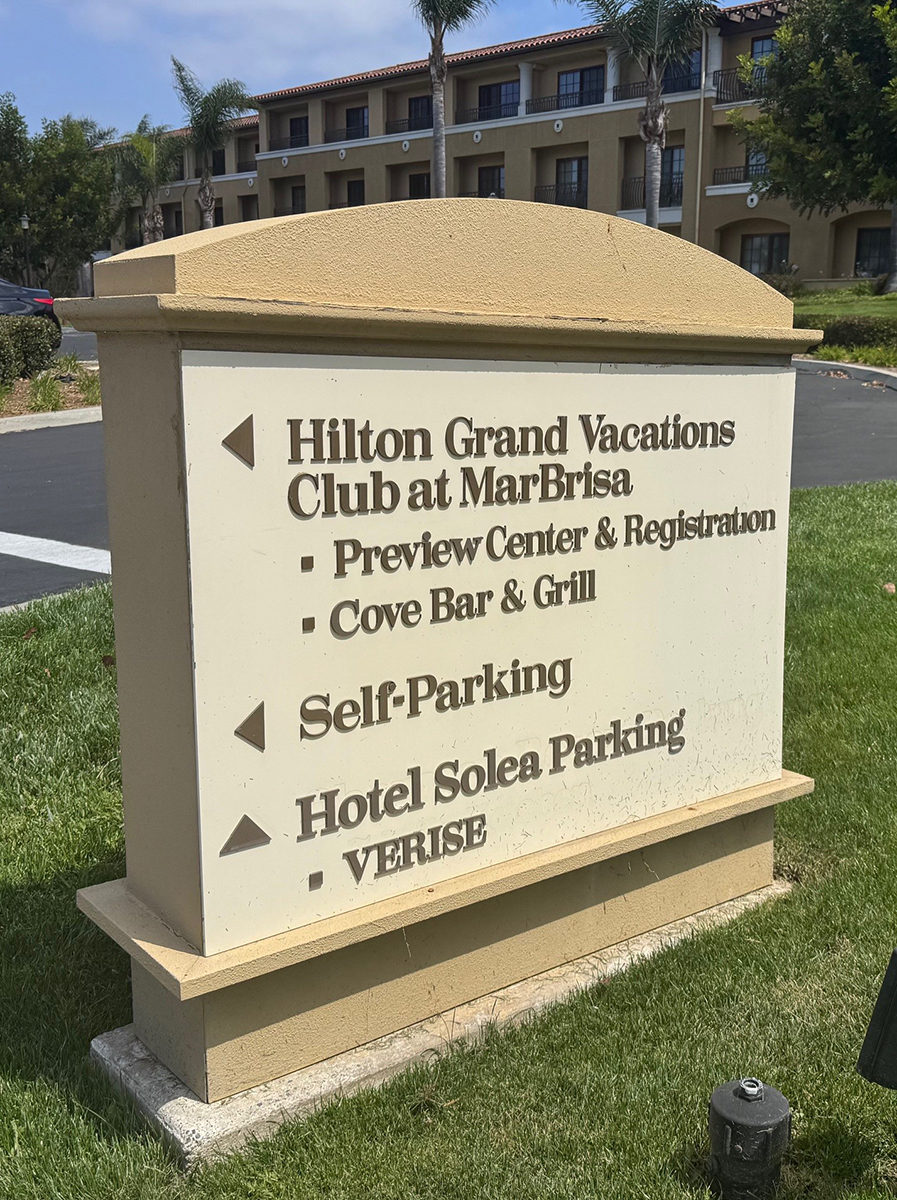
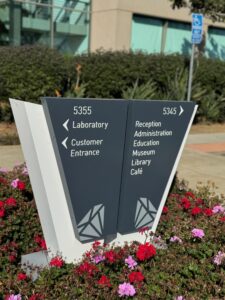
Carlsbad’s salt-heavy air and constant sunlight demand coatings engineered for endurance, not marketing gloss. That is why we use the Matthews Paint System, a polyurethane formula used in both the architectural and transportation industries. It chemically bonds to the aluminum surface, forming a hard, UV-stable shell that resists corrosion, fading, and chipping. This system also allows perfect color control. For a recent Carlsbad project, we finished a six-inch aluminum cabinet in white with a front panel painted PMS Cool Gray 11c and a diamond accent in PMS Cool Gray 6c. Every tone matched the client’s brand precisely because Matthews allows Pantone-level calibration. This finish will retain its depth and color for years, even under constant coastal exposure.
Foundations That Outlast the Structure Around Them
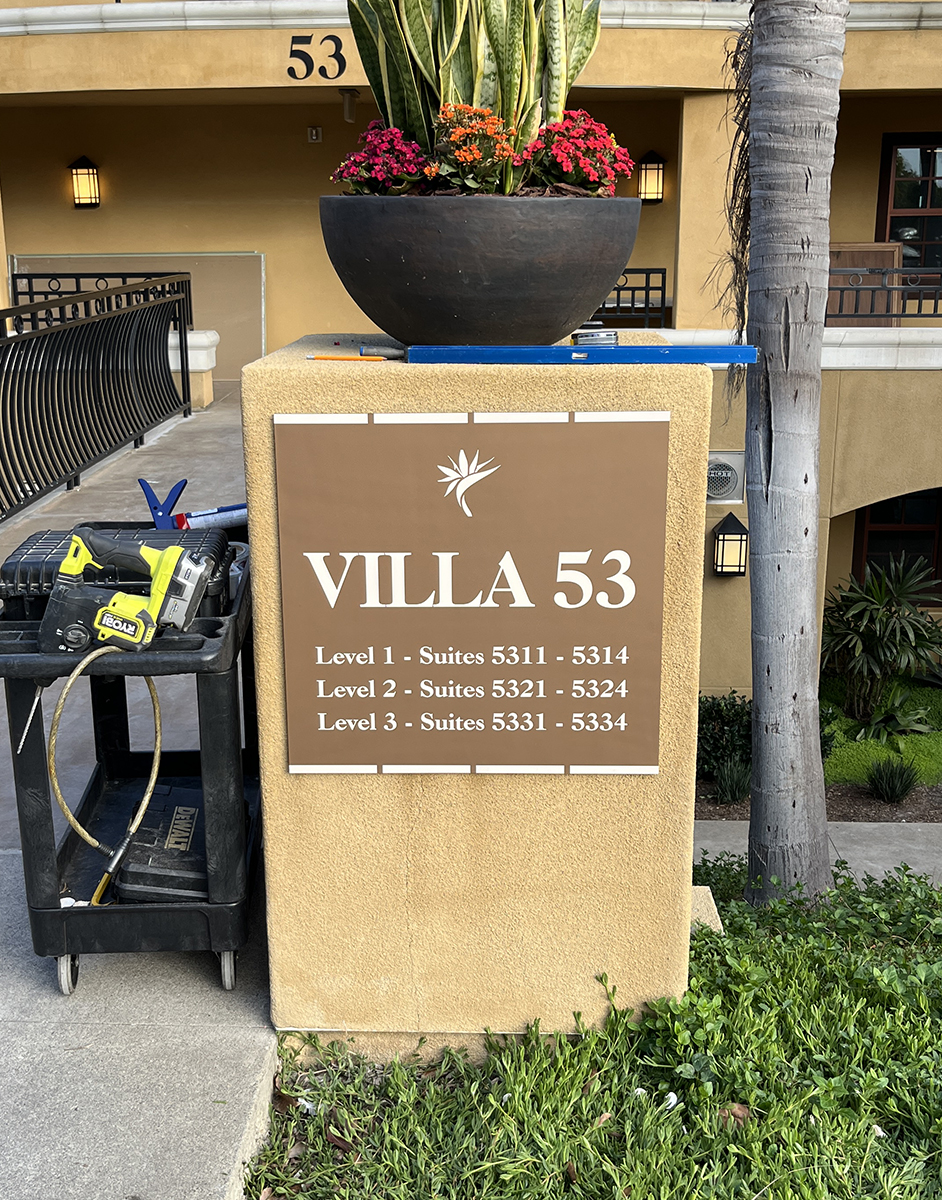
A monument sign’s strength starts below the ground. We begin each installation with a site inspection for underground utilities, then hand-dig footings to the required depth based on wind load and soil density. Two-inch steel posts are set in concrete and cured for full structural rigidity before the sign cabinet is mounted. The aluminum body is then attached to this hidden steel skeleton, producing a monument sign that will not twist, lean, or separate over time. This substructure allows the sign to survive both storms and decades of sun without visible wear.
Turning Maintenance Costs into Long-Term Value
Every vinyl repair or repaint is a short-term patch that chips away at your maintenance budget. The push-thru acrylic system eliminates that cycle entirely. The letters never peel, the paint never chalks, and the structure never delaminates. Over ten years, the cost of replacement graphics far exceeds the investment in one properly fabricated monument sign.
Build the Last Monument Sign You’ll Ever Need
A monument sign should project permanence, not decay. If your current sign is peeling or fading, it is time to rebuild it the right way. Call North Coast Signs in Vista at (760) 536-5454 to schedule a site review. We design, fabricate, and install Carlsbad monument signs that are engineered for longevity, finished for precision, and built to withstand the coast for decades.
Peeling vinyl is not a maintenance issue; it’s a material failure. Coastal air in Carlsbad carries salt and moisture that break down adhesives, plasticizers, and protective coatings far faster than inland conditions. The sun intensifies the problem, burning through pigments and softening vinyl until it curls and cracks. What begins as small edge lifting becomes full delamination within a single season. When that happens, every patch or re-application is money thrown at a system designed to fail. The only real solution is to eliminate the weak link.
The Physical Evidence of Material Breakdown
When we inspect a damaged monument sign, the diagnosis is tactile. Press a fingertip against a sun-baked letter and you will feel the brittleness that signals total failure. The vinyl no longer bends; it fractures with a dry snap because ultraviolet radiation has destroyed the molecular structure that once gave it flexibility. The same damage shows on the paint. Wipe a rag across the panel and it comes away chalky white or gray. That powder is an oxidized pigment, proof that the coating’s binder has collapsed. These failures do not happen because a sign is old; they happen because it was built with the wrong system for coastal exposure.
Fabricating a Sign That Cannot Peel
A permanent monument sign begins with the right construction method. At North Coast Signs, we remove vinyl from the equation entirely. Each sign starts as a sheet of .080 aluminum, shaped into a 2-inch thick pan face for strength and clean dimensionality. Letters and logos are routed directly into the metal using a CNC system calibrated to thousandths of an inch. The openings are then filled with half-inch acrylic letters, push-fit through the face, and secured from behind. Each element becomes part of the structure itself, not a layer glued to its surface. The result is a monolithic face that resists wind, moisture, and time.
The Coating That Makes It Last
Carlsbad’s salt-heavy air and constant sunlight demand coatings engineered for endurance, not marketing gloss. That is why we use the Matthews Paint System, a polyurethane formula used in both the architectural and transportation industries. It chemically bonds to the aluminum surface, forming a hard, UV-stable shell that resists corrosion, fading, and chipping. This system also allows perfect color control. For a recent Carlsbad project, we finished a six-inch aluminum cabinet in white with a front panel painted PMS Cool Gray 11c and a diamond accent in PMS Cool Gray 6c. Every tone matched the client’s brand precisely because Matthews allows Pantone-level calibration. This finish will retain its depth and color for years, even under constant coastal exposure.
Foundations That Outlast the Structure Around Them
A monument sign’s strength starts below the ground. We begin each installation with a site inspection for underground utilities, then hand-dig footings to the required depth based on wind load and soil density. Two-inch steel posts are set in concrete and cured for full structural rigidity before the sign cabinet is mounted. The aluminum body is then attached to this hidden steel skeleton, producing a monument sign that will not twist, lean, or separate over time. This substructure allows the sign to survive both storms and decades of sun without visible wear.
Turning Maintenance Costs into Long-Term Value
Every vinyl repair or repaint is a short-term patch that chips away at your maintenance budget. The push-thru acrylic system eliminates that cycle entirely. The letters never peel, the paint never chalks, and the structure never delaminates. Over ten years, the cost of replacement graphics far exceeds the investment in one properly fabricated monument sign.
Build the Last Monument Sign You’ll Ever Need
A monument sign should project permanence, not decay. If your current sign is peeling or fading, it is time to rebuild it the right way. Call North Coast Signs in Vista at (760) 536-5454 to schedule a site review. We design, fabricate, and install Carlsbad monument signs that are engineered for longevity, finished for precision, and built to withstand the coast for decades.
Carlsbad, CA - Custom Non-Illuminated Monument Signs from a Local Sign Company
SYNOPSIS: North Coast Signs, based in Vista and serving Carlsbad, fabricates custom non-illuminated monument signs outlast the coastal elements. We replace short-lived vinyl graphics with push-thru acrylic.
Why Signs Fail in Carlsbad’s Coastal Air
BY: ,
Peeling vinyl is not a maintenance issue; it’s a material failure. Coastal air in Carlsbad carries salt and moisture that break down adhesives, plasticizers, and protective coatings far faster than inland conditions. The sun intensifies the problem, burning through pigments and softening vinyl until it curls and cracks. What begins as small edge lifting becomes full delamination within a single season. When that happens, every patch or re-application is money thrown at a system designed to fail. The only real solution is to eliminate the weak link.
The Physical Evidence of Material Breakdown
When we inspect a damaged monument sign, the diagnosis is tactile. Press a fingertip against a sun-baked letter and you will feel the brittleness that signals total failure. The vinyl no longer bends; it fractures with a dry snap because ultraviolet radiation has destroyed the molecular structure that once gave it flexibility. The same damage shows on the paint. Wipe a rag across the panel and it comes away chalky white or gray. That powder is an oxidized pigment, proof that the coating’s binder has collapsed. These failures do not happen because a sign is old; they happen because it was built with the wrong system for coastal exposure.
Fabricating a Sign That Cannot Peel
A permanent monument sign begins with the right construction method. At North Coast Signs, we remove vinyl from the equation entirely. Each sign starts as a sheet of .080 aluminum, shaped into a 2-inch thick pan face for strength and clean dimensionality. Letters and logos are routed directly into the metal using a CNC system calibrated to thousandths of an inch. The openings are then filled with half-inch acrylic letters, push-fit through the face, and secured from behind. Each element becomes part of the structure itself, not a layer glued to its surface. The result is a monolithic face that resists wind, moisture, and time.
The Coating That Makes It Last
Carlsbad’s salt-heavy air and constant sunlight demand coatings engineered for endurance, not marketing gloss. That is why we use the Matthews Paint System, a polyurethane formula used in both the architectural and transportation industries. It chemically bonds to the aluminum surface, forming a hard, UV-stable shell that resists corrosion, fading, and chipping. This system also allows perfect color control. For a recent Carlsbad project, we finished a six-inch aluminum cabinet in white with a front panel painted PMS Cool Gray 11c and a diamond accent in PMS Cool Gray 6c. Every tone matched the client’s brand precisely because Matthews allows Pantone-level calibration. This finish will retain its depth and color for years, even under constant coastal exposure.
Foundations That Outlast the Structure Around Them
A monument sign’s strength starts below the ground. We begin each installation with a site inspection for underground utilities, then hand-dig footings to the required depth based on wind load and soil density. Two-inch steel posts are set in concrete and cured for full structural rigidity before the sign cabinet is mounted. The aluminum body is then attached to this hidden steel skeleton, producing a monument sign that will not twist, lean, or separate over time. This substructure allows the sign to survive both storms and decades of sun without visible wear.
Turning Maintenance Costs into Long-Term Value
Every vinyl repair or repaint is a short-term patch that chips away at your maintenance budget. The push-thru acrylic system eliminates that cycle entirely. The letters never peel, the paint never chalks, and the structure never delaminates. Over ten years, the cost of replacement graphics far exceeds the investment in one properly fabricated monument sign.
Build the Last Monument Sign You’ll Ever Need
A monument sign should project permanence, not decay. If your current sign is peeling or fading, it is time to rebuild it the right way. Call North Coast Signs in Vista at (760) 536-5454 to schedule a site review. We design, fabricate, and install Carlsbad monument signs that are engineered for longevity, finished for precision, and built to withstand the coast for decades.