 Most construction companies don't realize their safety signs are illegal until OSHA shows up with a clipboard and a five-figure fine. The cheap banner you bought online might say "Hard Hat Area," but if it tears in the first windstorm or fades after two weeks of sun, you're not just out forty dollars; you're liable for every worker who didn't see the warning. North Coast Signs has watched contractors learn this lesson the expensive way, which is why we build coroplast safety signs that survive job sites, not just photo ops.
Construction safety signage isn't about checking boxes on compliance forms; it's about materials that endure when everything else on your site gets beaten to hell. North Coast Signs, located in Vista and serving Carlsbad construction companies, prints on coroplast because we've seen what happens to foam boards after one rainy night and metal signs that become projectiles in Santa Ana winds. Digitally printed full-color vinyl with overlaminate isn't fancy terminology; it's the difference between signs that last six months and signs you're replacing every other week because the safety message disappeared under mud spray and UV damage.
Why Coroplast Beats Everything Else On Active Sites
Corrugated plastic sounds cheap until you understand the physics of job site survival. Our coroplast weighs nothing compared to aluminum, won't rust like steel, costs less than composite materials, and takes impact without shattering like acrylic. We've pulled our signs off sites where excavators backed into them, scaffold pipes fell across them, and concrete trucks splattered them daily. The signs bent, sure, but the safety message stayed readable, which is more than you can say for the rigid materials that crack on the first impact. At four millimeters thick, Coroplast flexes without failing, returns to shape without permanent creasing, and holds up where materials costing three times more would already be in your dumpster.
Size Options That Match Real Site Needs
Those specific dimensions we offer aren't random: fourteen by eighteen inches works for single hazard warnings at equipment stations, eighteen by twenty-four inches provides visibility for area notifications without blocking sightlines, and thirty-six-inch squares command attention at site entrances where missing the message could kill someone. We've measured viewing distances at hundreds of job sites, factoring in dust clouds, equipment movement, and the reality that workers don't stop to read novels on signs. Each size serves a purpose based on where you mount it and who needs to see it because a tiny sign at a crane operation zone is as useless as a billboard in a confined space.
Full-Color Printing That Survives Sun And Storm
Digital printing with protective overlaminate means your safety symbols stay OSHA-compliant red, your warning text remains highway-safety yellow, and your company logo doesn't fade to unrecognizable paste after a month outdoors. We use UV-resistant inks rated for five-year outdoor exposure because construction projects don't pause for sign replacement. That overlaminate isn't just protection against scratches; it's a barrier against concrete dust, paint overspray, and the thousand other contaminants that turn unprotected prints into illegible smears. When inspectors arrive, they need to see crisp hazard symbols and readable text, not ghostly outlines of what used to be safety communication.
Corner Grommets Designed For Real Installation
Four corner grommets might seem like overkill until you're zip-tying signs to chain link in thirty-knot winds. We've watched single-grommet signs spin like weather vanes, two-grommet signs fold in half, and three-grommet signs tear out the unsupported corner. Four points of attachment distribute wind load, prevent material fatigue at stress points, and give installers flexibility for different mounting surfaces. Those grommets are reinforced with brass rings because we've seen plastic grommets pull through coroplast like tissue paper when someone overtightens a zip tie or uses wire instead of proper fasteners.
The Hidden Cost Of Substandard Safety Signage
Buy a fifteen-dollar safety sign online and you'll spend two hundred dollars in labor replacing it monthly, plus whatever OSHA fines you for inadequate hazard communication. Factor in work stoppage during incident investigations, increased insurance premiums after violations, and the real possibility of lawsuits when someone gets hurt near a faded warning sign. Our coroplast signs cost more upfront because they include materials and processes that prevent those hidden expenses. Construction managers who track the total cost of ownership instead of just purchase price know that durability multiplied by compliance equals actual savings.
Weather Resistance Without The Premium Price
California construction faces unique challenges: morning fog that soaks everything, afternoon sun that bakes materials to failure, and seasonal winds that test every attachment point. Our coroplast handles temperature swings from overnight freezing to triple-digit afternoons without warping, cracking, or delaminating. The material's hollow flute structure provides insulation against thermal expansion while maintaining rigidity in high winds. We've tested these signs in Carlsbad coastal salt air, inland valley heat, and mountain project freezing cycles. They survive where paper signs dissolve, metal signs corrode, and wood signs split along the grain.
Your Safety Signs Should Work As Hard As Your Crew
When your workers trust that safety signage means something, they pay attention to warnings that matter instead of ignoring faded suggestions that might say anything. North Coast Signs, operating from Vista and serving Carlsbad construction sites, builds signs that maintain their message through the complete project lifecycle, not just until the first rain. Call us at (760) 536-5454 to discuss safety signage that protects your workers and your liability coverage.
Most construction companies don't realize their safety signs are illegal until OSHA shows up with a clipboard and a five-figure fine. The cheap banner you bought online might say "Hard Hat Area," but if it tears in the first windstorm or fades after two weeks of sun, you're not just out forty dollars; you're liable for every worker who didn't see the warning. North Coast Signs has watched contractors learn this lesson the expensive way, which is why we build coroplast safety signs that survive job sites, not just photo ops.
Construction safety signage isn't about checking boxes on compliance forms; it's about materials that endure when everything else on your site gets beaten to hell. North Coast Signs, located in Vista and serving Carlsbad construction companies, prints on coroplast because we've seen what happens to foam boards after one rainy night and metal signs that become projectiles in Santa Ana winds. Digitally printed full-color vinyl with overlaminate isn't fancy terminology; it's the difference between signs that last six months and signs you're replacing every other week because the safety message disappeared under mud spray and UV damage.
Why Coroplast Beats Everything Else On Active Sites
Corrugated plastic sounds cheap until you understand the physics of job site survival. Our coroplast weighs nothing compared to aluminum, won't rust like steel, costs less than composite materials, and takes impact without shattering like acrylic. We've pulled our signs off sites where excavators backed into them, scaffold pipes fell across them, and concrete trucks splattered them daily. The signs bent, sure, but the safety message stayed readable, which is more than you can say for the rigid materials that crack on the first impact. At four millimeters thick, Coroplast flexes without failing, returns to shape without permanent creasing, and holds up where materials costing three times more would already be in your dumpster.
Size Options That Match Real Site Needs
Those specific dimensions we offer aren't random: fourteen by eighteen inches works for single hazard warnings at equipment stations, eighteen by twenty-four inches provides visibility for area notifications without blocking sightlines, and thirty-six-inch squares command attention at site entrances where missing the message could kill someone. We've measured viewing distances at hundreds of job sites, factoring in dust clouds, equipment movement, and the reality that workers don't stop to read novels on signs. Each size serves a purpose based on where you mount it and who needs to see it because a tiny sign at a crane operation zone is as useless as a billboard in a confined space.
Full-Color Printing That Survives Sun And Storm
Digital printing with protective overlaminate means your safety symbols stay OSHA-compliant red, your warning text remains highway-safety yellow, and your company logo doesn't fade to unrecognizable paste after a month outdoors. We use UV-resistant inks rated for five-year outdoor exposure because construction projects don't pause for sign replacement. That overlaminate isn't just protection against scratches; it's a barrier against concrete dust, paint overspray, and the thousand other contaminants that turn unprotected prints into illegible smears. When inspectors arrive, they need to see crisp hazard symbols and readable text, not ghostly outlines of what used to be safety communication.
Corner Grommets Designed For Real Installation
Four corner grommets might seem like overkill until you're zip-tying signs to chain link in thirty-knot winds. We've watched single-grommet signs spin like weather vanes, two-grommet signs fold in half, and three-grommet signs tear out the unsupported corner. Four points of attachment distribute wind load, prevent material fatigue at stress points, and give installers flexibility for different mounting surfaces. Those grommets are reinforced with brass rings because we've seen plastic grommets pull through coroplast like tissue paper when someone overtightens a zip tie or uses wire instead of proper fasteners.
The Hidden Cost Of Substandard Safety Signage
Buy a fifteen-dollar safety sign online and you'll spend two hundred dollars in labor replacing it monthly, plus whatever OSHA fines you for inadequate hazard communication. Factor in work stoppage during incident investigations, increased insurance premiums after violations, and the real possibility of lawsuits when someone gets hurt near a faded warning sign. Our coroplast signs cost more upfront because they include materials and processes that prevent those hidden expenses. Construction managers who track the total cost of ownership instead of just purchase price know that durability multiplied by compliance equals actual savings.
Weather Resistance Without The Premium Price
California construction faces unique challenges: morning fog that soaks everything, afternoon sun that bakes materials to failure, and seasonal winds that test every attachment point. Our coroplast handles temperature swings from overnight freezing to triple-digit afternoons without warping, cracking, or delaminating. The material's hollow flute structure provides insulation against thermal expansion while maintaining rigidity in high winds. We've tested these signs in Carlsbad coastal salt air, inland valley heat, and mountain project freezing cycles. They survive where paper signs dissolve, metal signs corrode, and wood signs split along the grain.
Your Safety Signs Should Work As Hard As Your Crew
When your workers trust that safety signage means something, they pay attention to warnings that matter instead of ignoring faded suggestions that might say anything. North Coast Signs, operating from Vista and serving Carlsbad construction sites, builds signs that maintain their message through the complete project lifecycle, not just until the first rain. Call us at (760) 536-5454 to discuss safety signage that protects your workers and your liability coverage.
Carlsbad, CA - Sign Company Discusses Custom Construction Coroplast Safety Signs
SYNOPSIS: North Coast Signs, based in Vista and serving Carlsbad, produces digitally printed coroplast safety signs with protective overlaminate and corner grommets for construction site durability.
Custom Coroplast Safety Signs for Construction
BY: ,
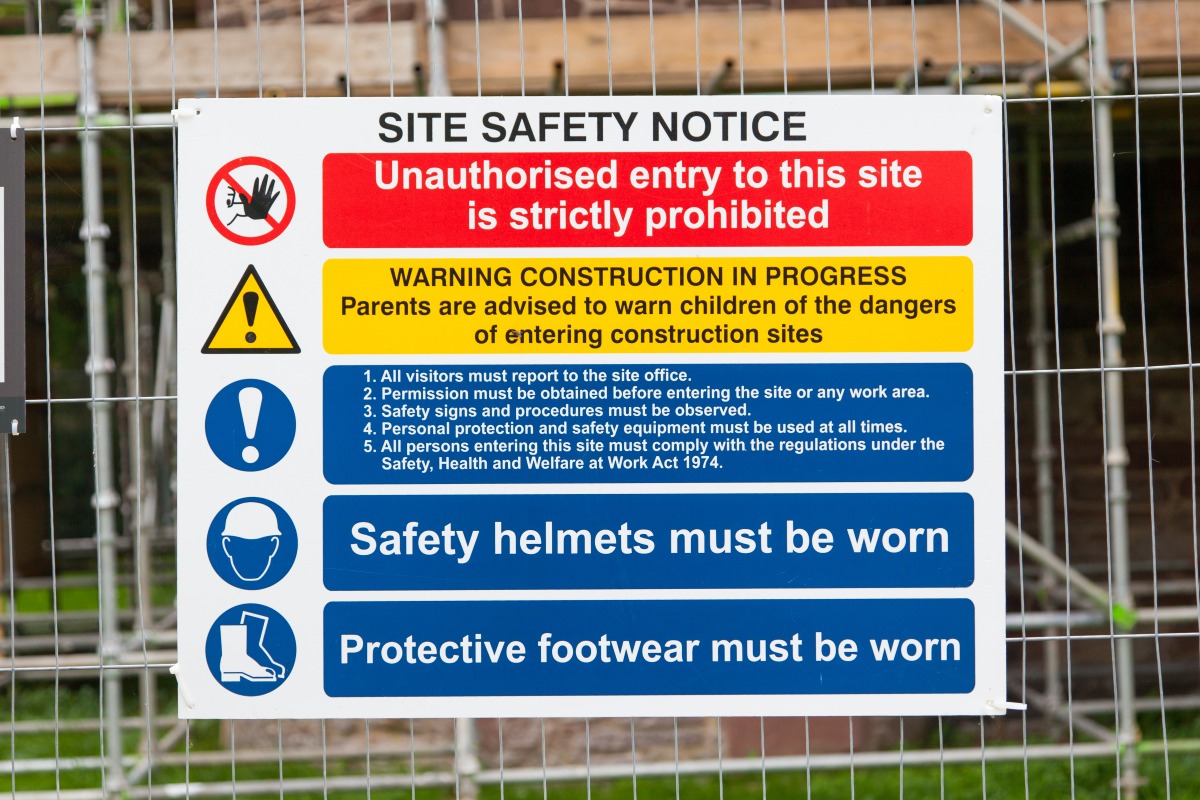
Most construction companies don't realize their safety signs are illegal until OSHA shows up with a clipboard and a five-figure fine. The cheap banner you bought online might say "Hard Hat Area," but if it tears in the first windstorm or fades after two weeks of sun, you're not just out forty dollars; you're liable for every worker who didn't see the warning. North Coast Signs has watched contractors learn this lesson the expensive way, which is why we build coroplast safety signs that survive job sites, not just photo ops.
Construction safety signage isn't about checking boxes on compliance forms; it's about materials that endure when everything else on your site gets beaten to hell. North Coast Signs, located in Vista and serving Carlsbad construction companies, prints on coroplast because we've seen what happens to foam boards after one rainy night and metal signs that become projectiles in Santa Ana winds. Digitally printed full-color vinyl with overlaminate isn't fancy terminology; it's the difference between signs that last six months and signs you're replacing every other week because the safety message disappeared under mud spray and UV damage.
Why Coroplast Beats Everything Else On Active Sites
Corrugated plastic sounds cheap until you understand the physics of job site survival. Our coroplast weighs nothing compared to aluminum, won't rust like steel, costs less than composite materials, and takes impact without shattering like acrylic. We've pulled our signs off sites where excavators backed into them, scaffold pipes fell across them, and concrete trucks splattered them daily. The signs bent, sure, but the safety message stayed readable, which is more than you can say for the rigid materials that crack on the first impact. At four millimeters thick, Coroplast flexes without failing, returns to shape without permanent creasing, and holds up where materials costing three times more would already be in your dumpster.
Size Options That Match Real Site Needs
Those specific dimensions we offer aren't random: fourteen by eighteen inches works for single hazard warnings at equipment stations, eighteen by twenty-four inches provides visibility for area notifications without blocking sightlines, and thirty-six-inch squares command attention at site entrances where missing the message could kill someone. We've measured viewing distances at hundreds of job sites, factoring in dust clouds, equipment movement, and the reality that workers don't stop to read novels on signs. Each size serves a purpose based on where you mount it and who needs to see it because a tiny sign at a crane operation zone is as useless as a billboard in a confined space.
Full-Color Printing That Survives Sun And Storm
Digital printing with protective overlaminate means your safety symbols stay OSHA-compliant red, your warning text remains highway-safety yellow, and your company logo doesn't fade to unrecognizable paste after a month outdoors. We use UV-resistant inks rated for five-year outdoor exposure because construction projects don't pause for sign replacement. That overlaminate isn't just protection against scratches; it's a barrier against concrete dust, paint overspray, and the thousand other contaminants that turn unprotected prints into illegible smears. When inspectors arrive, they need to see crisp hazard symbols and readable text, not ghostly outlines of what used to be safety communication.
Corner Grommets Designed For Real Installation
Four corner grommets might seem like overkill until you're zip-tying signs to chain link in thirty-knot winds. We've watched single-grommet signs spin like weather vanes, two-grommet signs fold in half, and three-grommet signs tear out the unsupported corner. Four points of attachment distribute wind load, prevent material fatigue at stress points, and give installers flexibility for different mounting surfaces. Those grommets are reinforced with brass rings because we've seen plastic grommets pull through coroplast like tissue paper when someone overtightens a zip tie or uses wire instead of proper fasteners.
The Hidden Cost Of Substandard Safety Signage
Buy a fifteen-dollar safety sign online and you'll spend two hundred dollars in labor replacing it monthly, plus whatever OSHA fines you for inadequate hazard communication. Factor in work stoppage during incident investigations, increased insurance premiums after violations, and the real possibility of lawsuits when someone gets hurt near a faded warning sign. Our coroplast signs cost more upfront because they include materials and processes that prevent those hidden expenses. Construction managers who track the total cost of ownership instead of just purchase price know that durability multiplied by compliance equals actual savings.
Weather Resistance Without The Premium Price
California construction faces unique challenges: morning fog that soaks everything, afternoon sun that bakes materials to failure, and seasonal winds that test every attachment point. Our coroplast handles temperature swings from overnight freezing to triple-digit afternoons without warping, cracking, or delaminating. The material's hollow flute structure provides insulation against thermal expansion while maintaining rigidity in high winds. We've tested these signs in Carlsbad coastal salt air, inland valley heat, and mountain project freezing cycles. They survive where paper signs dissolve, metal signs corrode, and wood signs split along the grain.
Your Safety Signs Should Work As Hard As Your Crew
When your workers trust that safety signage means something, they pay attention to warnings that matter instead of ignoring faded suggestions that might say anything. North Coast Signs, operating from Vista and serving Carlsbad construction sites, builds signs that maintain their message through the complete project lifecycle, not just until the first rain. Call us at (760) 536-5454 to discuss safety signage that protects your workers and your liability coverage.