The sound starts as your Outback eases into a parking space with the steering at full lock, a rapid clicking that speeds up and slows down with the car. Once the wheel straightens, the clicking fades, then returns on the next tight turn. On a Danville Outback that clicks, Driven Auto Care of San Ramon checks the inside of each wheel for the dark band of grease a torn boot throws.
We sort that sound by when it happens, because a tight turn and a bump load different parts of the car. A click that comes only in tight, slow turns is a sign of wear in the outer CV joint, where the joint runs at its steepest angle. The grease band inside the wheel marks the torn-boot path to that wear.
Which Noise Belongs To Which Part?
A shudder you feel through the floor as you pull away from a stop is a sign of wear in the inner CV joint, at the transmission end of the axle. Over bumps rather than in turns, a clunk is a sign of worn suspension parts such as control-arm bushings or ball joints. Those parts hold the wheel steady, and once they loosen, the wheel can shift and knock over bumps. Our road test takes your Outback through tight turns and over rough pavement, so we repair the part making the sound.
How The Grease Gets There
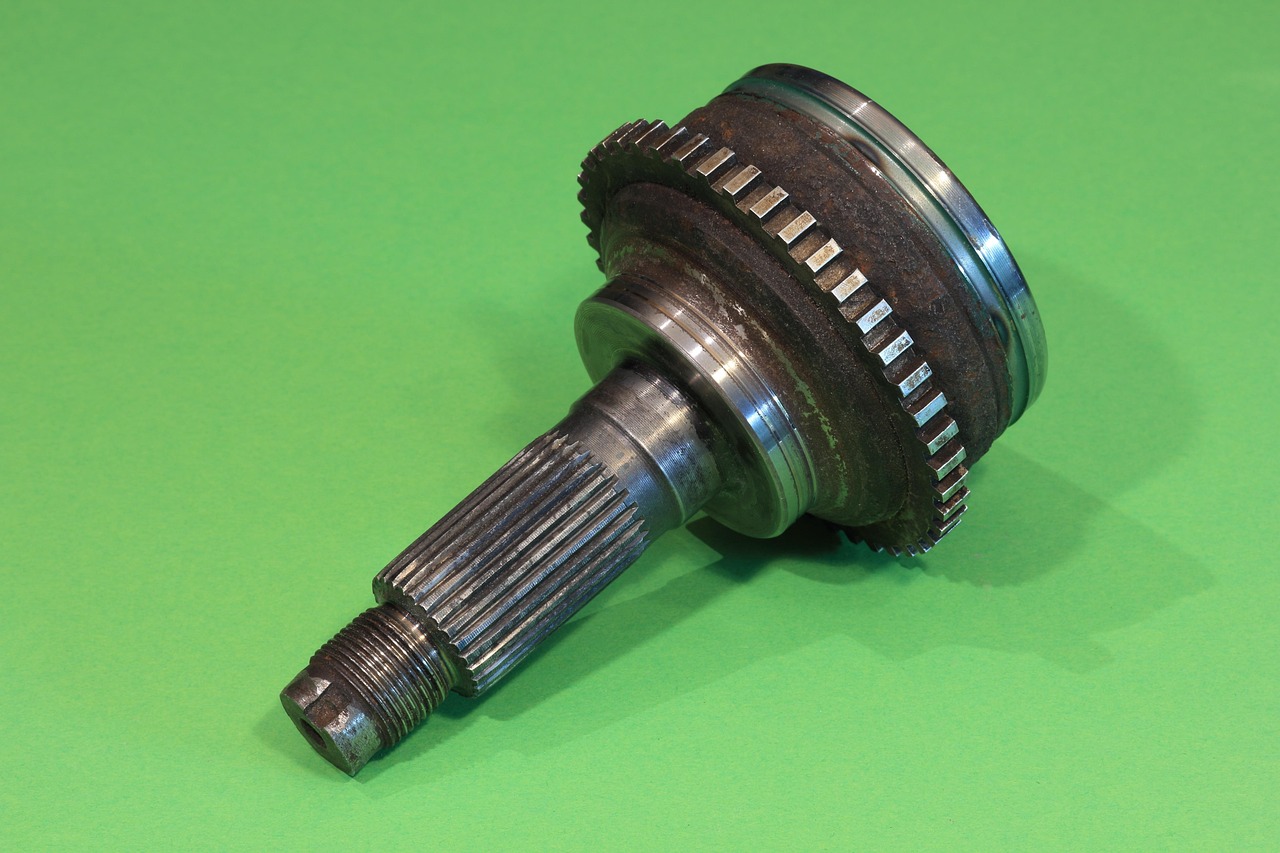
Each axle on your Outback has a CV joint at both ends. Those joints let each wheel ride up and down with the suspension while the axle keeps turning it. Up front, they let the wheel steer as well. Inside, steel balls roll in grooved tracks and stay smooth only while the joint is packed with grease. Wrapped around the joint, a rubber boot shaped like a short accordion holds that grease in. Lose that grease, and the joint wears fast.
Every steering turn and every bump flexes the boot, and over the years the rubber can crack at a fold. Once it tears, the spinning axle slings grease onto the inner face of the wheel and across nearby suspension parts. Your Outback drives all four wheels full time, so the rear wheels have CV axles too, and the mark can turn up at any corner.
Why The Click Comes Later
That same tear lets dirt and water into the joint. Grit mixed into the remaining grease wears the balls and tracks, and that wear is the click you hear later. It is most noticeable in sharp, low-speed turns, where the outer joint works hardest. Even with its boot intact, a joint can wear once the old grease breaks down, and then the click arrives with a clean wheel.
With the car on a lift, a CV inspection means checking each boot for tears and each joint for play. Caught before the clicking starts, a torn boot can be replaced and the axle kept. Once the joint clicks, it is too worn for a boot repair, and the axle is replaced.
When To Stop Driving
Every mile adds wear to a clicking joint, and one worn far enough can separate and end drive to that wheel. If you hear a loud clunk with loss of drive or feel a heavy vibration, stop driving and have it towed. Until then, bring the clicking in while your Outback still drives normally.
Fitting A New Axle Properly
A replacement axle that fits poorly is a known source of vibration on a 2015 through 2019 Outback, so we check the fit as closely as the part. While the axle is out, we torque the axle nut to its specification and check the wheel bearing at the same time. Then we drive your car through the same turns and acceleration that brought out the noise in the first place.
The Tight-Turn Test On Your Outback
Call Driven Auto Care of San Ramon at (925) 830-4701 and describe when the sound shows up, in turns or over bumps. If you've spotted dark grease inside a wheel, mention that on the call as well. At our San Ramon shop, we'll show you the corner and the part we found, then drive your Danville Outback through those same turns after the repair.