Glance at the voltage gauge on your Sierra halfway through a steady highway drive, and the needle sits lower than you might expect. On a 2007 or later V6 or V8 Sierra with the battery charged and little current flowing, the engine computer sets a target of about 12.5 to 13.1 volts to save fuel. That low number raises a fair question about the alternator, and the answer depends on what the truck is doing when you read it.
The reading that matters is the one taken while the trailer lights or work lights are on, because that is when a weak alternator falls behind. At a steady cruise, a low number is part of how these trucks are built to save fuel. On these trucks a gauge that moves with the load is normal, and a reading that stays low under load is the one we test.
Low at Cruise, Higher Under Trailer Load
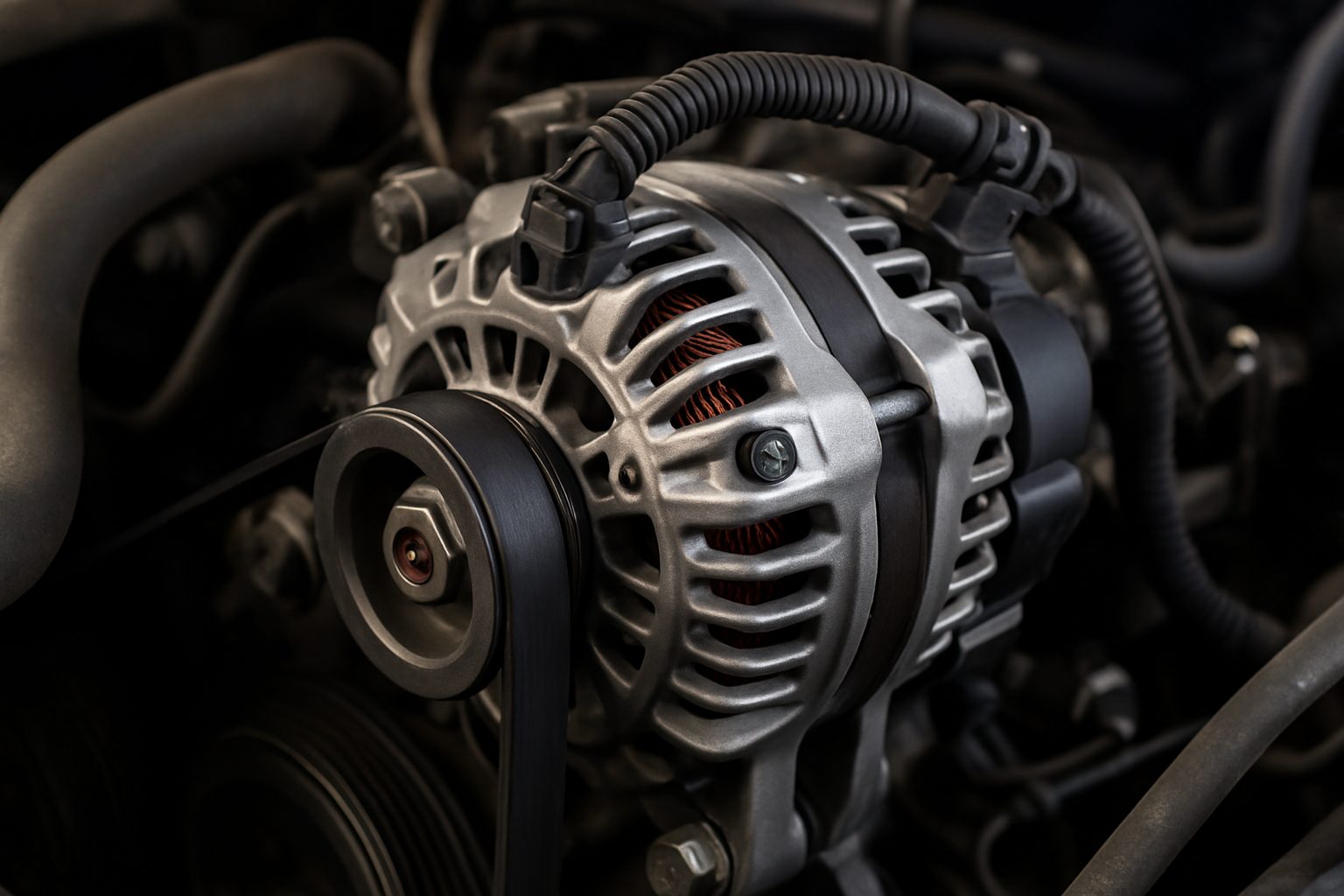
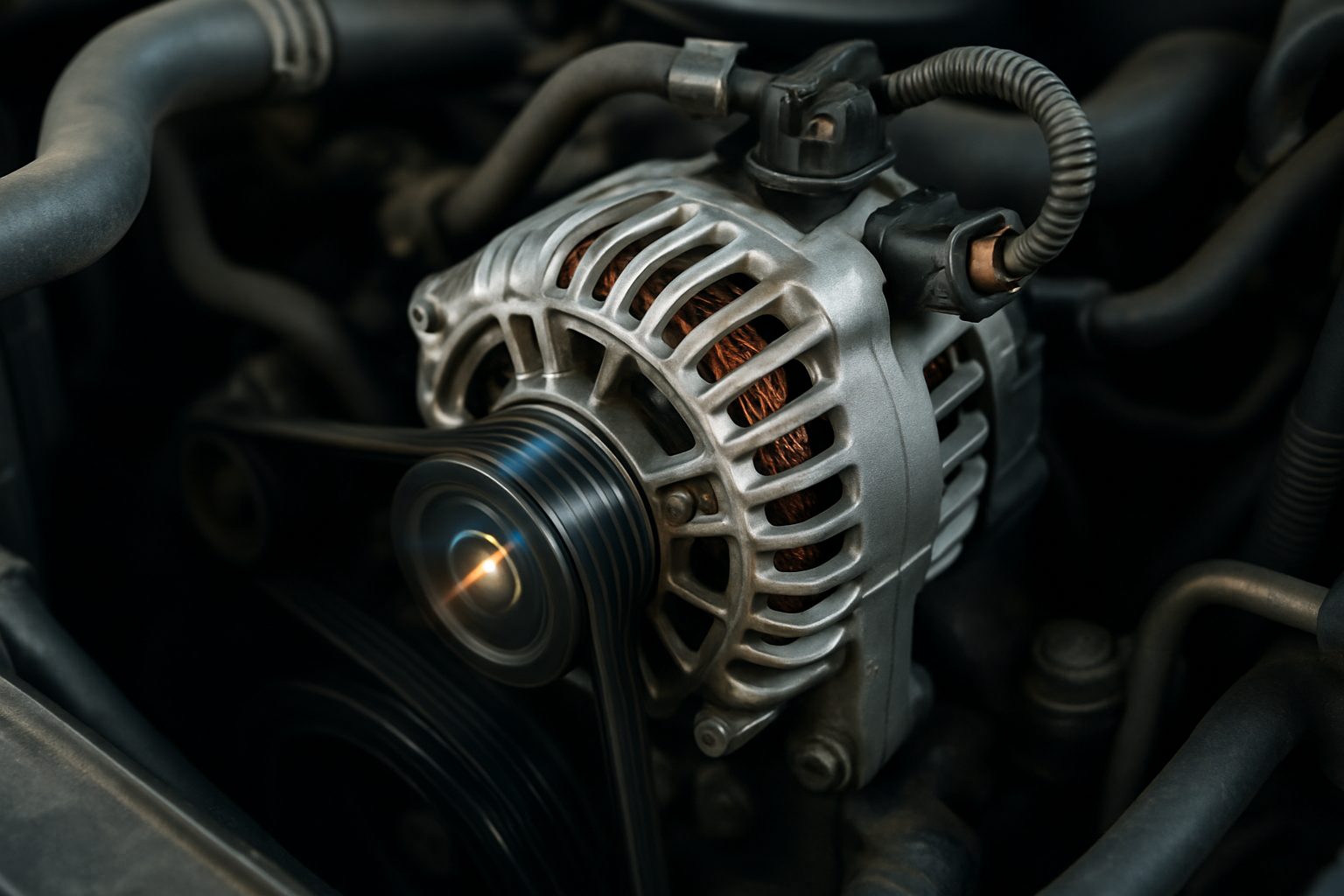
Idling with the trailer lights on, a Sierra draws far more current from its alternator than the same truck at a highway cruise. At idle speed, the alternator has to supply that extra current. The engine computer sets the alternator's output from the battery current sensor along with the battery's estimated temperature and state of charge. Turn on the headlights and the blower, and the target climbs from that low cruise setting to about 14.0 to 14.8 volts. It goes higher still on a cold morning with a battery that needs charge. That swing between those numbers on an ordinary drive is normal charging control on a Sierra.
The battery current sensor sits on a battery cable and is part of that control loop. When the loop has a fault, the system falls back to a fixed default near 13.8 volts. A gauge that sits on one number through every drive is the pattern worth a call, and it puts that sensor and its wiring on our test list along with the alternator.
Why a Weak Alternator Shows Up at Idle
On a job site, the trailer lights dim while the truck idles, and a battery or charging message may appear on the cluster. Trailer lights add steady electrical load whenever they are on, and electric trailer brakes add more each time they are applied. Work lights add more, and a weak alternator cannot keep up with that demand at idle. The alternator spins slowest at idle, so a weak unit's shortfall shows at idle.
You notice it as a battery that starts the day strong and feels weak after hours on a site. Hours of idle with the lights on leave the battery covering what the alternator could not. We test both batteries on a heavy-duty Sierra with dual batteries, since one weak battery drags down the pair.
What Full Output Looks Like on the Scan Tool
Any quick check at the battery terminals shows only the target the engine computer set at that moment, and at a steady cruise with a charged battery that target is the low one. That reading cannot show what the alternator delivers at full command. With a scan tool plugged in, we use the engine computer's output control to command the alternator on, so we read its full output rather than whatever target was set.
Once the alternator is commanded on, we add electrical load and watch the live voltage. Output from a healthy alternator holds steady as the load climbs, while a weak one sags on the screen. We load-test the battery in the same visit, because a battery that cannot hold a charge pulls the whole system down.
The Cables and Ground Straps Carrying the Current
From the alternator, current leaves through the heavy positive cable and returns through the ground straps. Resistance in that path costs voltage before the current reaches the battery. A corroded strap end or a loose terminal anywhere on that path adds resistance between the alternator and the battery.
Voltage drop is the voltage lost inside a cable or connection. We measure it on the positive cable and the ground strap with the system under load, and a high reading places the fault in that cable or connection. A new alternator bolted to a truck with a corroded ground strap still shows low voltage under load, because the loss sits in the strap.
A Charging Test With Your Sierra Under Load
Call Driven Auto Care of San Ramon at (925) 830-4701 to book a charging test for your Dublin Sierra at our San Ramon shop. You'll see the voltage the alternator held with the load on and the drop we measured on each cable. After the repair, we run that same loaded test again.