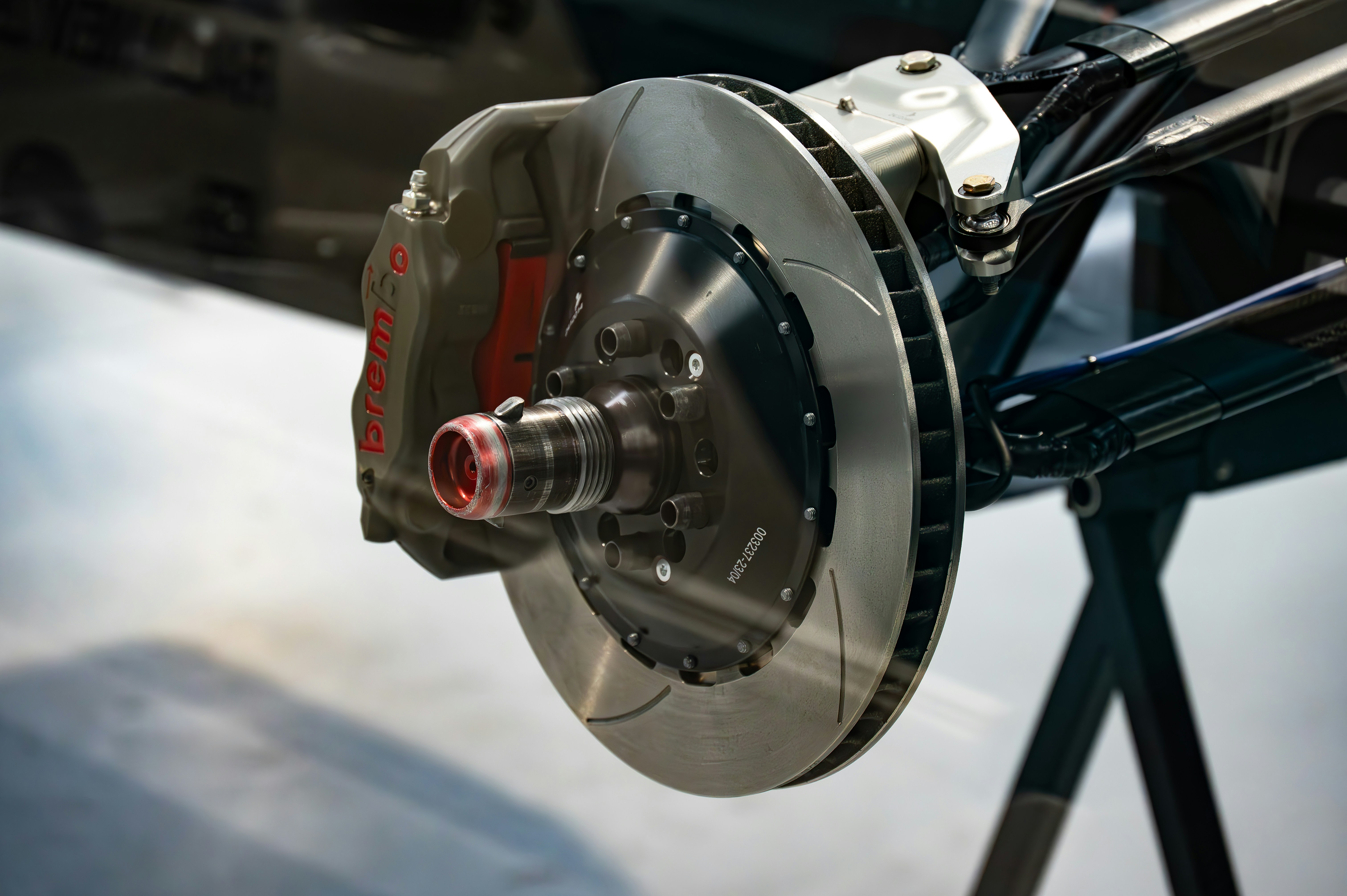
A RAV4 makes two different brake sounds, and the gap between them is the diagnosis: a thin squeal early, and a harsh metal grind once the pad's gone. Between those two, a grind can also turn out to be a noise that has nothing to do with worn brakes at all. When a RAV4 rolls in from Dublin with that grind, the first move at our San Ramon shop is the same every time. We measure and locate the sound before anyone quotes a part.
Squeal or Grind, Which Sound Is It?
Each sound maps to a stage of wear on the brakes. A high squeal is low pads, a metal grind is the backing plate on the rotor, and a first-stop-only moan can be rust rather than wear. The squeal comes from a small wear-indicator tab built to touch the rotor when the pad gets thin, an early heads-up by design. Once that squeal turns to a grind, the friction material is gone and every stop is steel scoring the rotor deeper. So we pull the wheels and measure pad thickness on a gauge and rotor thickness on a micrometer against Toyota's minimum spec, and we base pads-only versus pads-and-rotors on that measurement.
Front Noise or Rear Noise?
Where the noise sits matters as much as the sound itself. A front grind or groan on a RAV4 that still has pad material left can be a known front-brake noise addressed by the correct updated pad kit for that year and rotor size. That's why we locate the noise front versus rear and measure the front rotor size before we order anything, so the fix matches your exact truck. Getting the year and the rotor diameter right is the difference between a kit that quiets the brake and one that never fits.
Does It Grind Only on the First Stops After Sitting?
A rear grind that shows up only on the first stops after the RAV4 has sat overnight, then fades within a block, is often a light film of surface rust on the rotors that sat in the damp. In that case the pads and rotors still measure in spec, and the brakes themselves are fine. We reproduce it on a cold first drive and measure before condemning anything. Cutting or replacing good rotors for a rust film that cleans off in a few stops is the classic wrong repair, and a measurement is what rules it out.
Constant Grind, or a Scrape That Comes and Goes?
Not every scrape is a wear problem on the brakes. A trapped pebble, a bent dust shield, or a heavy rust lip at the rotor edge can grind exactly like worn pads, then clear the moment it's removed. That kind of noise tends to come and go, often after off-pavement driving or a wet week. So before any brake quote, we pull the wheel and find the contact point, check the shield clearance and the rotor edge, and measure the pads and rotor to rule wear in or out.
Is It Safe to Keep Driving on It?
A true metal-on-metal grind is an active-damage state worth a prompt appointment, because every mile scores the rotor deeper and turns a pad job into pads and rotors. A first-stop rust moan that measures fine isn't a safety problem, though we still confirm it by measurement to be sure. One more sound is worth naming only to rule it out. A growl that tracks road speed and barely changes when you brake usually points to a wheel bearing, a different diagnosis from the brakes.
A Brake Read Before a Brake Job
The rule of thumb here is short and worth remembering. A metal grind means the pad is gone and the rotor is cutting next, so it's the one sound you don't wait on. Call our San Ramon shop at (925) 830-4701 and we'll measure the pads at four corners and check rotor runout before we quote a single brake part.