Most cruise-speed shudders get blamed on the engine first. This one starts inside the part you can’t see slipping. You’re holding a steady cruise near 35 mph, and a faint trembling rises through the seat like the tires found rumble strips that aren’t there. Push deeper into the throttle and that shimmy smooths right out. The sensation traces to the automatic behind your 2015 Camry’s engine, and it points straight at the torque-converter clutch.
The Lock-Up Clutch Slips on Purpose
A modern automatic holds its torque-converter clutch in a partial, controlled slip to stretch fuel economy. The clutch rides a thin film of fluid instead of locking solid against the converter face, and that slip is supposed to stay smooth for the life of the lining. When the friction material wears across thousands of heat cycles, the smooth slip degrades into a rapid grab and release. You feel it most during a light, steady cruise right before the next upshift. The tremble fades the moment you load the engine harder.
We Watch Commanded Slip Against Real Slip
The honest way to confirm this happens on the road under the same light throttle that brings the tremble out. A scan tool reads the commanded converter-clutch slip beside what the converter delivers in real time. A healthy lock-up holds that slip number flat across the cruise. A failing one oscillates as the lining grabs and lets go, and we log that oscillation against road speed. The waveform points us at the converter clutch.
The Fluid Test Has No Dipstick Shortcut
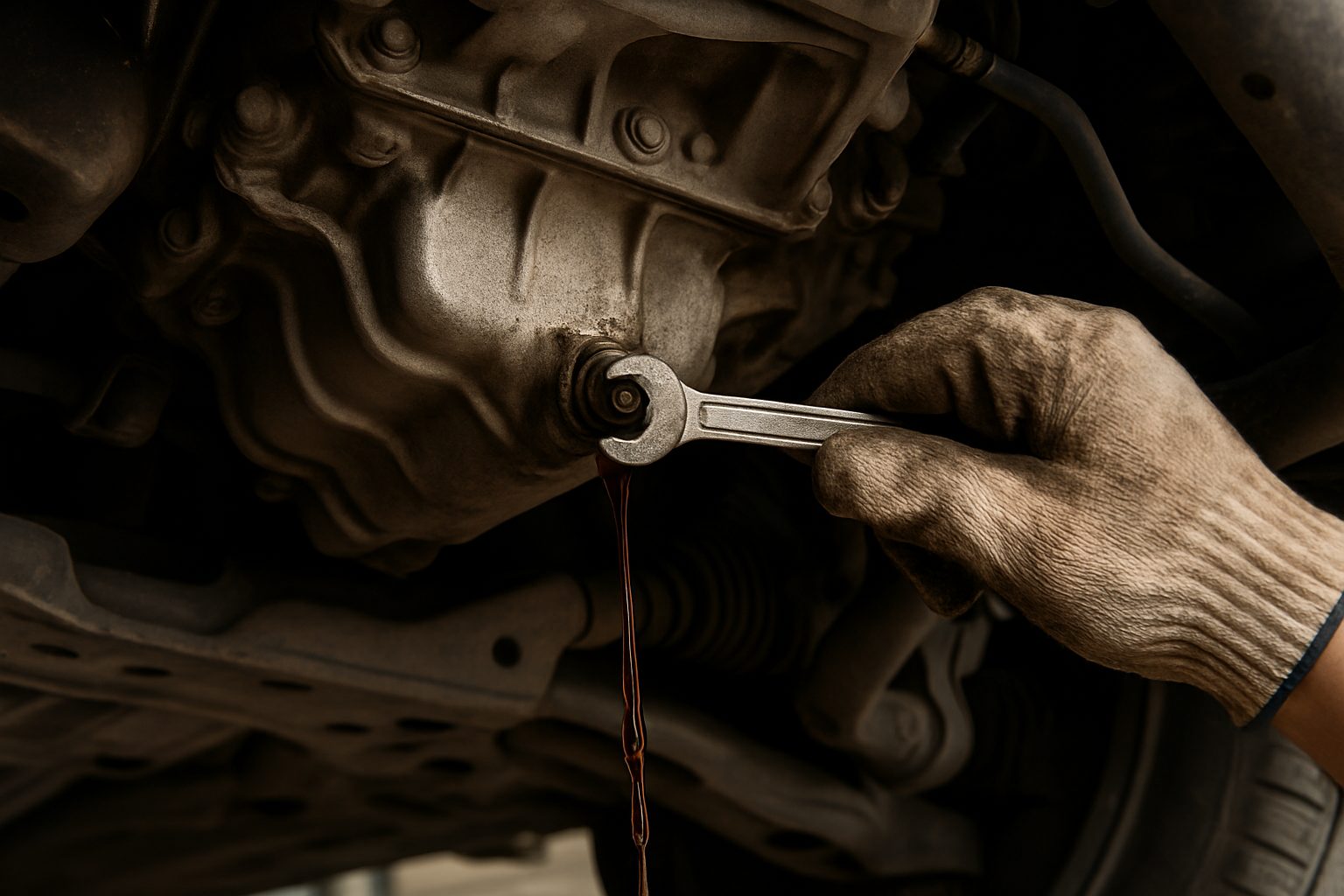
This transmission carries a sealed, long-life fluid and gives you no dipstick, so we bring the unit to its specified temperature and set the level through the fill plug. From there we draw a sample and judge it by hand. Fluid that has oxidized glazes the clutch lining and starves it of grip, and when the sample smells burnt or carries fine clutch material the fluid has already named the fault. Worn control valves can compound it, because their bores bleed off the pressure the clutch needs to hold a clean slip. Setting the level by temperature matters here, since a few tenths of a quart wrong on a sealed unit changes how the clutch behaves.
Engine-Side Causes Feel Identical
A trembling cruise doesn’t have to start in the transmission at all. A single misfire or a tired engine mount can throw the same shimmy through the floor at cruising speed, and chasing the transaxle first wastes your money. We pull freeze-frame data and load the mounts before we ever point at the converter clutch. A weak mount lets normal engine pulse pass straight into the floor, and it reads to your seat like a slipping clutch. Plenty of these cars leave with nothing more than a clean throttle body and a relearn, the transmission innocent the whole time.
A Partial Pan Drop Lets the Shudder Return
The fix that holds is the correct factory-spec ATF paired with an adaptive relearn. A partial pan drop sounds thrifty, yet it leaves most of the old fluid trapped inside the torque converter. That stale fluid mixes right back in and keeps glazing the clutch, so the shudder you paid to cure returns within a few thousand miles. We exchange the fluid so the converter gets the fresh charge it needs. Then the computer relearns its shift pressures against a clean baseline.
Forward From Here, on Your Own Car
Measure the slip and read the fluid, and a fixable clutch won’t snowball into a teardown you didn’t need. When the fluid and a relearn settle the slip, your Camry holds a smooth, quiet cruise again and the converter clutch locks the way Toyota built it to. When the data points to deeper work, you’ll see the numbers that took it there before you commit a dollar. That sequence puts the decision in your hands while the car is still cheap to save. Call Driven Auto Care of San Ramon at (925) 830-4701 and tell us when the trembling shows up.