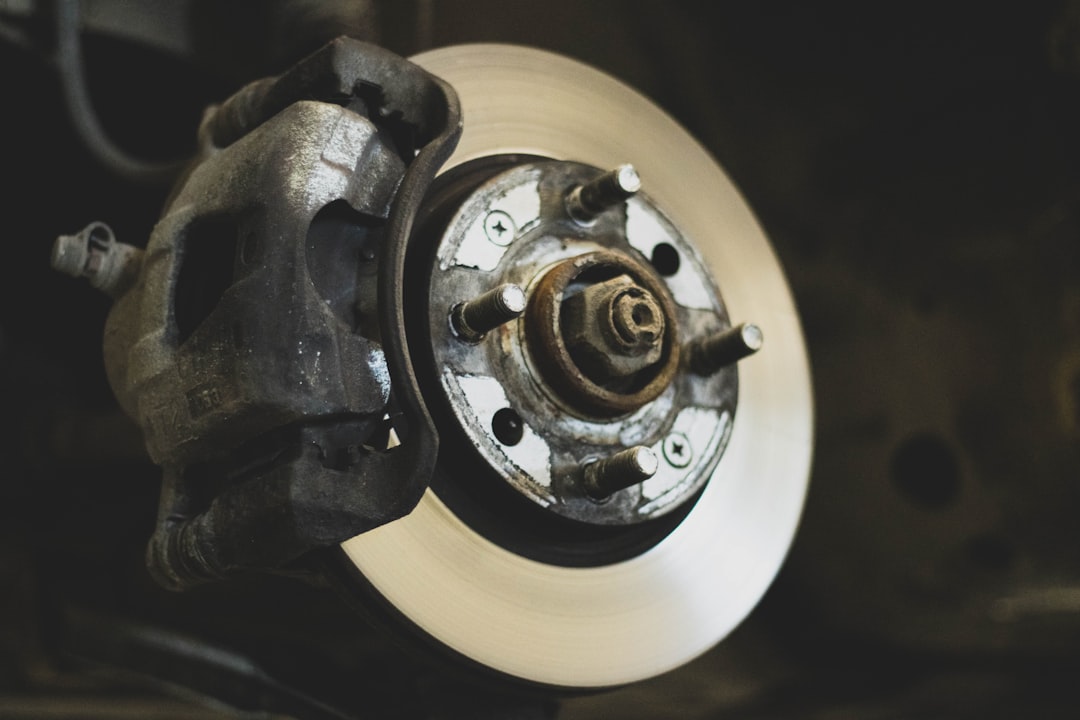
The sound arrives first, before any hand touches the car. You catch it with the windows down, rolling across a quiet Dublin lot at walking speed, a short high chirp lifting off the front wheels. It vanishes the instant your foot touches the brake pedal. On a 10th-generation Accord, that timing is the first clue we chase, because the same brakes can chirp at one corner and scrape at another, each symptom tracing to its own cause. So we read where a noise lives and when it shows up before we pull a single pad.
First We Listen for the Wear-Tab Chirp
Your front pads carry a thin steel wear tab riding close to the rotor face. As the friction material wears with the miles, that tab grazes the spinning disc and sings a light, high note at low speed. The chirp dies the second your foot meets the pedal, because clamping force pins the pad flat and lifts the steel tab clear of the rotor. We pull the wheel and lay a caliper across the pad to read the remaining material against the factory minimum. We check both corners, since the inner and outer pads seldom thin at the same rate.
Then We Set the Rear Brake to Service Mode
The rear of an Accord can change the rules on you. Every 10th-generation Accord carries an electronic parking brake, so a small motor drives the rear piston for the park function in place of an old cable. A car that sits more than it drives can corrode those rear pads against the rotor, and the scrape turns up the moment the wheel rolls. That piston won’t hand-twist back like an older caliper, so the order of operations governs the job. We send the parking brake into maintenance mode through a scan tool, then retract the piston under power, because forcing it cold means fighting the gearset and leaving the brake to drag.
Next We Chase the Speed-Tracking Scrape
One scrape pays no attention to the brake pedal at all. It tracks road speed instead, and that single tell sends us straight to the dust shield behind the rotor. A thin steel shield can fold into the disc after a curb strike or a sloppy tire rotation, and the sound then climbs with speed. We spin the wheel by hand and find the bright witness mark where metal kisses metal, since cornering load nudges the rotor a hair toward the bent shield. When the shield alone is the culprit, we bend it clear and spin again to confirm the contact is gone.
Then We Read the Guide Pins for Uneven Wear
When the inner pad wears far thinner than its outer mate, we look hard at the caliper guide pins. Two pins let the caliper float and spread the load across both pads, and a split boot is where the trouble tends to start. A seized pin hangs the caliper crooked and drags one pad against the rotor, chewing it down early as grit packs the dry bore. We slide each pin by hand to feel for binding, then measure both pads and compare the numbers for the mismatch that gives the seizure away. From there we clean and re-grease the bores, then confirm the caliper floats free again.
Every Noise Has a Corner and a Surface
Each sound on this car leaves a signature, and the corner plus the timing tell us which surface is talking. Picture the wheel off and the loaded disc turning slow under a hand until the scrape shows itself, the witness mark bright where two surfaces meet. That single picture turns a vague complaint into a measured answer and keeps us from ordering a part the car didn’t need. We pinpoint the exact corner and surface, then fix it once and roll your Accord off the lot with nothing left but the sound of tires on pavement. Call (925) 830-4701 from anywhere in Dublin, and Driven Auto Care of San Ramon will trace that chirp or scrape to its corner.