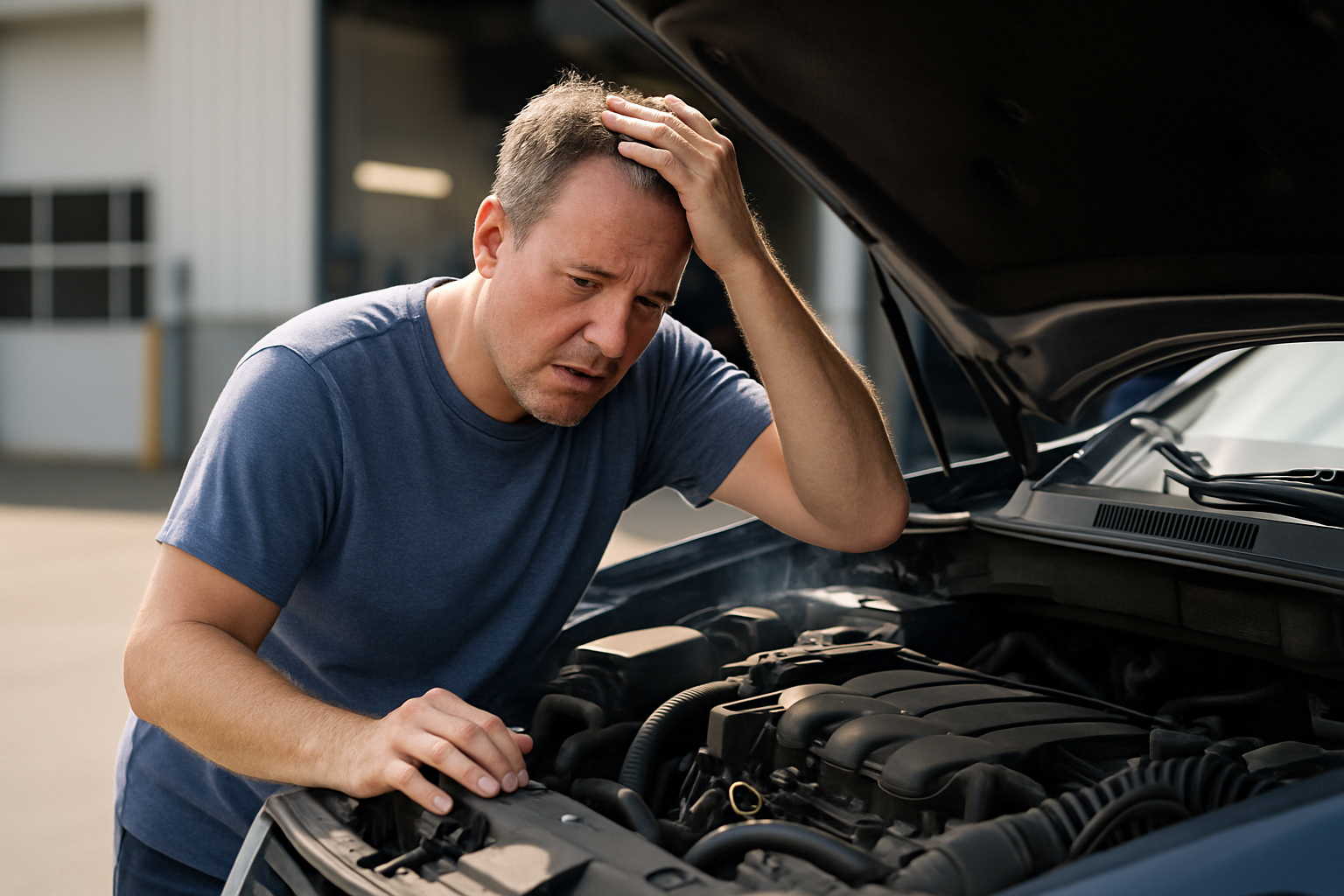
You roll over a Danville speed bump or ease the car down to a stop, and a soft clunk knocks somewhere up front. The sound is hollow, the kind that says a part is shifting when it should sit still. On the C-Class, a knock like that points us toward the front suspension, where one link tends to give before the rest. Plenty of shops chase that noise by ear and start swapping the parts they can reach. We put a load on the system and trace the clunk to the worn part first.
The Thrust Arm Carries the Braking Loads
The thrust arm is the fore-aft link that holds the front wheel against acceleration and braking. Its inner mount is a hydro bushing, a rubber joint with fluid sealed inside to soak up road shock and brake torque. When that rubber splits, the fluid weeps away and the bushing softens, so the arm starts to move under load. That little shift is what reaches your ears as a clunk on turn-in and again as the car settles to a stop. We start here because this link earns the blame more than any other piece up front.
What a Faster Shop Misses on the Eyeball Check
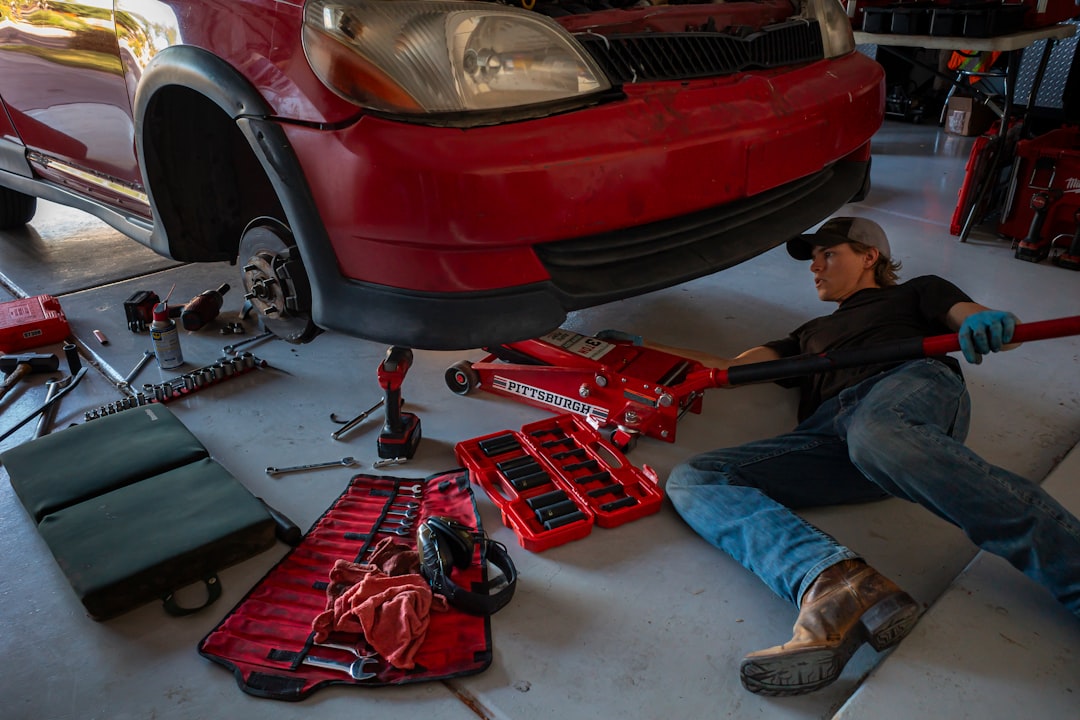
A torn hydro bushing can look healthy to the eye while it fails the moment weight goes through it. A shop in a hurry sees no crack on the rubber and moves on to guess at struts. So we put our hands on the wheel and load it, rocking the tire at the 6 and 12 positions and then at 3 and 9. Next we pry a bar between the thrust arm and the subframe and watch the bushing walk, the bad one shifting under pressure while a sound one stays put. A split boot gets a look too, since it lets grit into the joint and seeds the next failure.
Air Springs Change How We Hunt the Leak
Some C-Class cars ride on air springs, and we confirm which setup sits in front of us before we go further. An air spring can crack at the rolling fold, the spot where the rubber flexes hardest mile after mile. We brush soapy water over the suspect bag and watch for the bubbles that mark a leak, then pull the ride-height values on a scan tool. A bad height sensor can mimic a leak it didn’t cause, so we read the data before pointing at a part. Read the build first, and a healthy strut stays bolted to the car.
Why a Dead Compressor Follows a Leak
When an air compressor quits, a leak somewhere else tends to set the trap. A slow strut leak makes the compressor run far past its normal duty, and the heat from all that overtime cooks it from within. Most shops bolt in a fresh compressor and hand the car back, then watch the new one die on the same leak. We seal every leak first, then fit the compressor and its dryer together, because a saturated dryer feeds moisture straight back into a fresh unit. Hunt the cause first, and the new compressor won’t trail the old one out the door.
Single-Use Bolts Are the Sign of a Real Repair
How the bolts go back tells you whether a suspension job was done right or done fast. Fasteners like these stretch as they tighten, so we fit a new set every time and retire the old ones. We torque them with the car sitting at ride height, which lets the rubber bushings settle into their natural position before you drive off. A bushing clamped at ride height stays centered through its full travel, free of the pre-stress that shortens its life. Torquing it with the wheels hanging in the air is the shortcut that bites later.
A Front End That Sits Quiet Again
Picture the car back on its wheels at ride height, every stretch bolt torqued, the alignment heads reading straight. You roll over the same speed bump that brought you in, and the hollow knock is gone. That silence is the whole job, earned by loading each link until the worn one gave itself away. We isolate the clunk to the bad link and close the job with a four-wheel alignment. Tell us where the noise shows up, call (925) 830-4701, and Driven Auto Care of San Ramon will hand your C-Class back to Danville with the front end tight again.