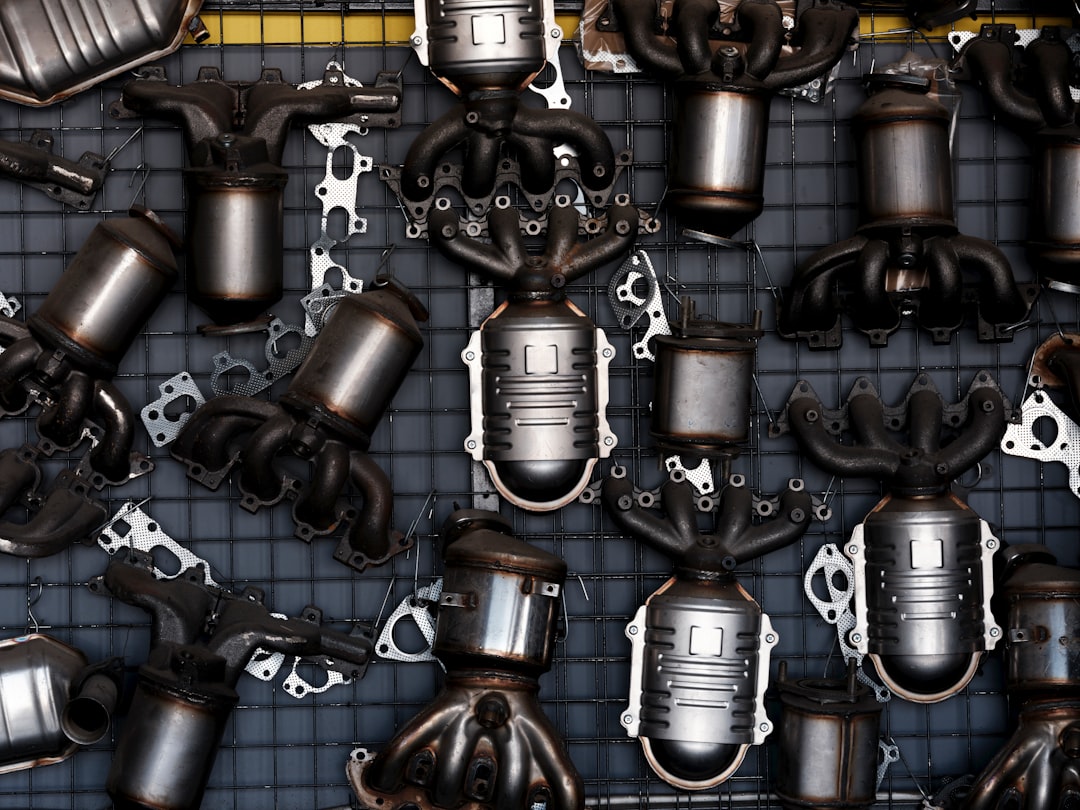
A fresh catalytic converter that throws P0420 again within a few hundred miles is pointing upstream for its cause. On the Audi A4 with the EA888 2.0T, that cause tends to start with oil reaching the exhaust. The light clears, the car drives clean through Danville for a short stretch, and then the catalyst-efficiency code lands back in the cluster. We read that pattern as an arrow aimed past the part you already paid for, so we go looking for the oil before we ever quote another converter.
Oil Reaches the Exhaust Before Age Ever Does
A converter on this engine rarely wears out on a tidy schedule the way a brake pad does. Something keeps feeding it a thin haze of burned oil, and that haze does the real damage over the miles. Worn rings or an overloaded PCV system let a fine oil mist slip into the cylinders, where it rides out with the exhaust. The zinc and phosphorus in the oil’s anti-wear additives then bake onto the catalyst coating and choke it shut. Put a clean cat behind a dirty engine, and the countdown to the next failure starts the same day.
How the Computer Convicts a Converter It Can’t See
Your ECM can’t crack the converter open to look inside, so it grades health by watching two oxygen sensors. The upstream sensor flips fast and constantly while the fuel trim makes its corrections. Behind a healthy converter, the downstream sensor stays lazy and flat, because the cat is buffering the oxygen swings. Once the rear trace turns busy and chases every upstream swing, the computer rules the catalyst dead and sets the code. A worn downstream sensor or a small exhaust leak can forge that same signature, so we clear those suspects with a scope before we condemn the part.
We Rule Out the Cheap Causes First
We won’t replace a converter on a hunch, so we start with the lighter, more likely faults and work up. A worn downstream sensor and a leak ahead of it get checked first, because either one is cheap and either one can fake the code. The PCV system comes next, since a stuck valve siphons oil mist from the crankcase and feeds it to the exhaust. Only once those clear do we treat the burn itself as the real problem. That order keeps an unearned converter off your bill until the data demands it.
Then We Put a Number on the Oil Burn
We find out how much oil this engine is losing instead of guessing at it. We fill the crankcase with a measured charge and add nothing more until the recheck after a set interval. At the retest we measure what’s left and work out the burn rate across those miles. That figure tells us whether fresh seals and a sound PCV system can close the path, or whether the rings are the deeper job underneath. The converter stays on the shelf until a retest shows the oil has stopped reaching the exhaust.
A Cold-Start Rattle Earns Its Own Listen
While the engine sits on the bench, a short rattle at the first cold crank earns a careful listen on the EA888 timing drive. The hydraulic chain tensioner can bleed its oil pressure down overnight, leaving the chain slack for the first moment of cranking. You hear it as a brief clatter that fades the instant oil pressure builds and reloads the tensioner. We chase it with the timing data instead of waiting for it to grow louder. A tensioner is a planned, contained repair, while a chain that jumps a tooth scrambles the valve timing and ruins the engine.
Close the Oil Path, Then Fit the Cat
A converter only lasts behind an engine that’s quit feeding it oil, so we work the chain in that order. We pin down the source of the P0420, seal the oil path through the PCV system and the valve-stem seals, and confirm on a retest that the burn rate has dropped. Only then do we fit a converter into clean exhaust. Skip that order and the new cat poisons on the same schedule as the last one, so you pay for the same code twice and lose months of driving to it. When your A4 keeps lighting a catalyst code around Danville, call Driven Auto Care of San Ramon at (925) 830-4701 and we’ll trace it to the oil before another converter goes on.