 If your Honda Accord has started feeling rougher, noisier, or less settled on the road, the control arms may be part of the problem. At Driven Auto Care of San Ramon, CA, we work on Honda models, including the Accord, and we serve drivers across the East Bay, including Dublin. The shop’s San Ramon location offers suspension diagnosis and repair, ball joint and tie rod replacement, and wheel alignment as regular services.
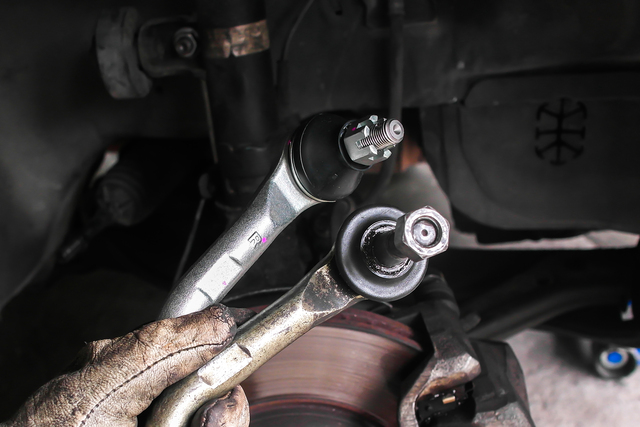
Control arms help connect the suspension to the vehicle frame while allowing the wheels to move up and down over bumps. When the arm itself bends, the bushings wear out, or the ball joint develops play, the suspension no longer holds the wheel in its proper path as smoothly as it should. That change affects more than one small corner of the car. It changes how the Accord absorbs road impacts, tracks straight, and responds during braking and turning. Sources on control arm failure consistently point to worn bushings, joint wear, and even impact damage from potholes or curbs as common causes.
One of the first ride-quality changes many drivers notice is a clunk or knock from the front end. This sound often shows up when driving over bumps, entering driveways, braking, or turning at lower speeds. As bushings wear, they lose their ability to cushion movement, and metal parts begin moving more than they should. MOOG and AutoZone both list front-end clunking over bumps as one of the most common signs of a failing or worn control arm or control arm bushings. On a daily-driven Accord, that noise usually comes with a ride that feels harsher and less composed than normal.
Ride quality also drops when the steering starts feeling loose, vague, or unstable. A worn control arm can cause the wheel to shift out of proper alignment, leading to pulling, wandering, or a need for constant small corrections. Instead of feeling planted, the Accord may feel like it never quite settles where you point it. AutoZone notes unstable steering response and poor handling as major control arm symptoms, while MOOG points to wandering, pulling, and poor straight-line tracking. In plain terms, the car feels less confident, and the driver feels it in every commute.
Vibration is another way control arm issues ruin ride comfort. Worn bushings stop absorbing normal road movement, so more vibration is transmitted to the steering wheel, floor, and seats. If the alignment has shifted too, tire wear may become uneven, which adds even more shimmy and road harshness. AutoZone, MOOG, and CarParts all connect failing control arms with excessive vibration, uneven tire wear, pulling, and abnormal steering feel. Once those problems stack together, the Accord will often feel bouncy, unsettled, and more tiring to drive every day.
The tricky part is this: not every front-end ride complaint comes from the control arms alone. Struts, links, tie rods, ball joints, and alignment problems can create very similar symptoms. Driven Auto Care’s recent suspension content makes this point clearly, noting that control arms and tie rods can mimic other suspension complaints, which is why road testing and inspection matter before parts are replaced. Guessing wrong wastes money fast.
At Driven Auto Care of San Ramon, CA, we start with the symptoms you feel, then inspect the suspension system as a whole. If your Honda Accord rides rough, clunks over bumps, pulls, or shakes more than it used to, call (925) 830-4701 and schedule a visit. We will pinpoint the cause, clearly explain what we find, and help you get your Accord back to a smoother, steadier ride around Dublin and the rest of the East Bay.