 Strut degradation on a BMW 3 Series happens so gradually that your senses recalibrate to the softer ride over months of daily driving, and the car you’re steering today feels normal even though it handles nothing like it did at 30,000 miles. The E90, F30, and G20 generations all use gas-charged dampers designed to control body motion within a tight window, and those dampers lose their ability to resist compression and rebound as internal fluid escapes past the shaft seal over tens of thousands of miles.
Danville BMW owners who drive Diablo Road grades and neighborhood undulations load their struts harder than flat-highway commuters, and Driven Auto Care of San Ramon measures damper performance to determine whether your 3 Series needs new struts or still has service life remaining.
What Fails Inside a BMW Strut
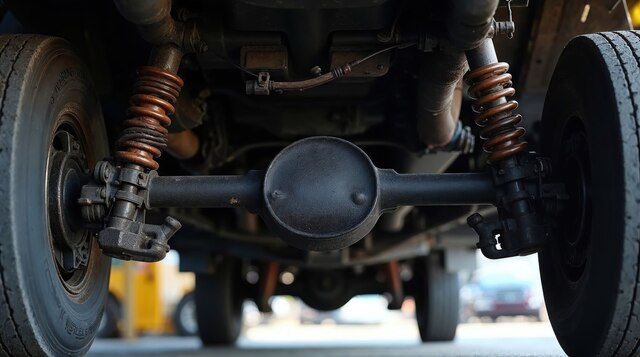
The strut body contains a piston that travels through hydraulic fluid, and valving inside the piston controls how fast the suspension compresses and rebounds in response to road input. A nitrogen gas charge inside a separate chamber keeps pressure on the fluid so the piston can generate consistent resistance across the full range of travel. The shaft seal at the top of the strut body keeps that fluid and gas charge contained, and heat cycling from years of suspension travel hardens the seal material until fluid begins to weep past the shaft. Once the gas charge drops and fluid volume decreases, the piston moves through less resistance and the strut can’t control body motion the way the factory suspension calibration intended.
Symptoms That Build So Slowly You Stop Noticing
The front end dips deeper under moderate braking than it used to, and the car leans further into corners at speeds that felt flat and planted two years ago. Tire tread develops a cupped wear pattern across the contact surface because the wheel bounces against the pavement instead of maintaining steady contact through the damper’s controlled travel. A clunking sound over sharp bumps can develop from the strut mount bearing losing its smooth rotation as the rubber isolator cracks and separates from the mount plate. Each symptom builds on the last, and the combined effect is a 3 Series that feels vague and unsettled on the same Danville roads it used to carve through with precision.
Strut Mounts and Upper Bearings Need Inspection Too
Replacing the strut without evaluating the upper mount wastes an opportunity to address a component that endures the same service life as the damper itself. The strut mount absorbs vertical impact force transmitted through the spring and damper, and its rubber isolator fatigues from the same heat cycling and compression loading that wears the shaft seal. The upper bearing allows the strut assembly to rotate when you turn the steering wheel, and a bearing with rough spots or flat areas creates a binding sensation during low-speed steering maneuvers in parking lots. We inspect both the mount and bearing during every strut replacement and swap them at the same time if wear is present, because accessing these parts later means removing the strut assembly again.
Alignment Completes the Suspension Restoration
New struts change the ride height and suspension geometry by restoring the damper’s original extended length, and that height change shifts camber, caster, and toe angles at all four wheels. We run a four-wheel alignment after every strut replacement at our San Ramon shop and adjust each angle to the BMW factory specification for your generation and suspension package. Danville BMW owners who feel like their 3 Series lost its composure over the past year or two can contact Driven Auto Care of San Ramon at (925) 830-4701 for a suspension evaluation; we’ll measure what the struts are doing now and show you what restoring them brings back to the way your car rides, corners, and stops.