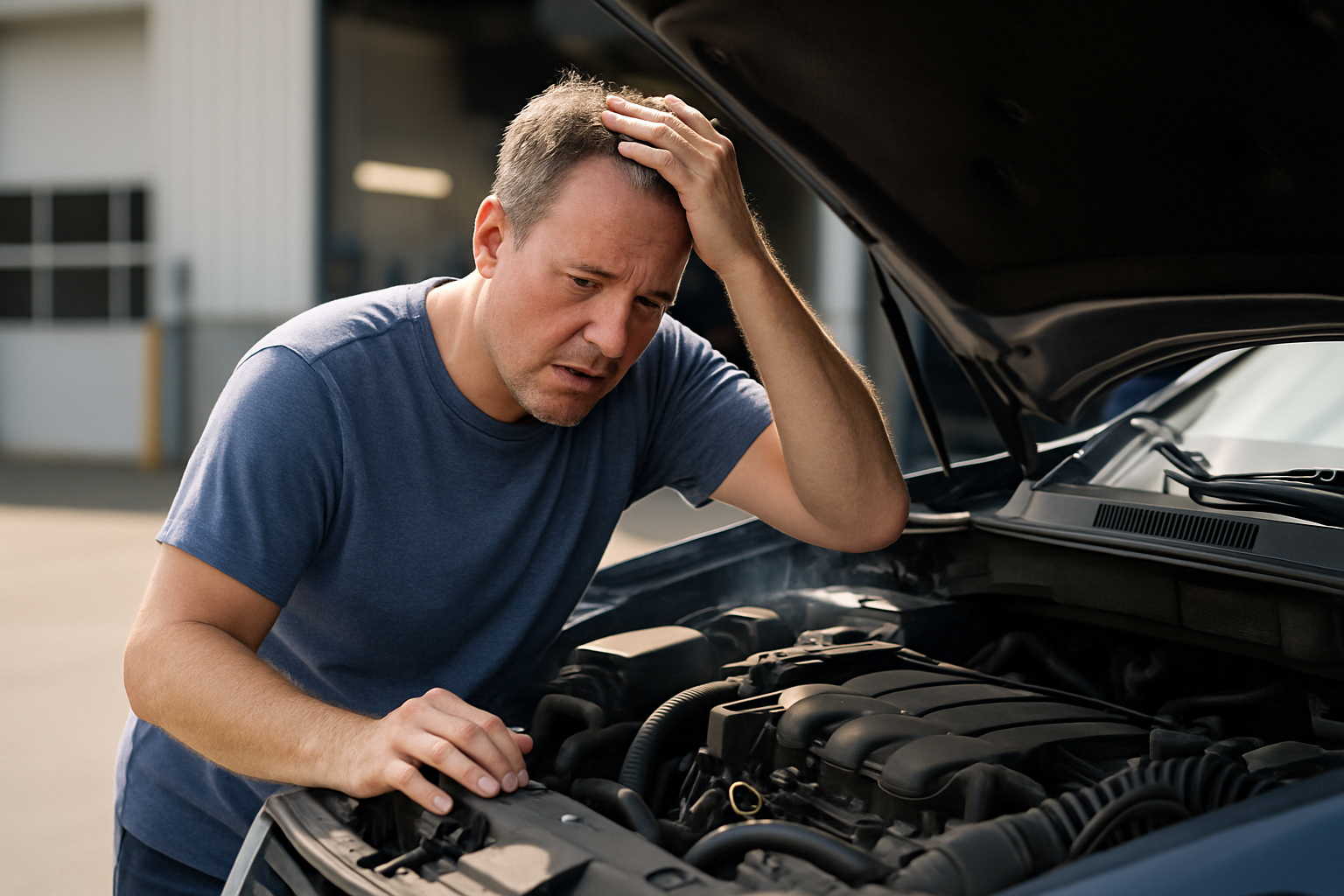
Your Mercedes-Benz GLC cools while traffic moves, then sends warmer air through the vents at the next light. If that change repeats, the AC system needs inspection. Too little airflow across the condenser is one possible cause: moving down the road supplies air that cooling fans must provide when you stop. At Driven Auto Care of San Ramon, we investigate this complaint for Dublin owners. The stopped-and-moving pattern helps identify the conditions to check, even when the cabin feels comfortable again by the time you arrive.
Road Movement Helps The Condenser Release Heat
Near the front of the vehicle, the condenser releases heat carried out of the cabin by refrigerant. Air passes through its fins and carries that heat away. Driving contributes airflow; at a stop, the system relies more on its fans. If fan operation is weak, the temperature at the vents can rise while you wait. Pulling away may improve cooling as road movement supplies more air again. That repeated change makes condenser airflow worth investigating. It still needs confirmation through checks of fan performance and refrigeration conditions before a replacement fan is recommended.
A Fan Has To Reach The Requested Speed
Seeing the fan turn cannot establish whether it is moving enough air. An electrical or control problem can keep it below the speed requested by the system. A motor failure can stop it altogether. Comparing the command with the response helps locate the fault, while power and connection checks reveal an interrupted supply. Repairing a damaged connection may restore operation without a new fan assembly. Keep away from the blades, even when they appear still; cooling fans can start unexpectedly. Our inspection checks their operation while the AC is running under the conditions that produce the warmer vents.
Debris Can Restrict Air Even With A Running Fan
Leaves and accumulated material can block the spaces air needs to pass through at the front heat exchangers. Some debris collects between components, where it is harder to see from outside. A fan can keep spinning against that restriction while too little air reaches the condenser. Bent fins can also narrow the passages. Inspection needs to account for those surfaces before an electrical repair is assumed. Cleaning must protect the delicate fins and nearby components, since forceful pressure can cause damage. We can check the obstructed areas without asking you to reach into the fan space.
Compare A Recurring Pattern After Initial Cooling
A car parked in sunlight begins with a hot interior that takes time to cool. Outside heat also affects how readily the condenser releases heat, increasing demand on the AC. Warm air immediately after startup therefore provides less information than cooling that repeatedly falls away at traffic stops. Notice what happens once the cabin has had time to cool with consistent settings. If each stop brings warmer vents and moving restores them, describe that sequence when you book. That description lets us check cooling after the initial cabin heat has cleared, when the recurring problem becomes apparent.
Refrigerant Problems Can Accompany Poor Airflow
A leak or incorrect refrigerant quantity can reduce cooling alongside a fan or airflow fault. Pressure readings need to be interpreted with the charge and outside conditions in mind. Adding refrigerant without checking those conditions can leave the original problem unresolved. Our AC service includes leak diagnosis and restoring the specified charge when needed. Compressor operation also affects the pressures, so the inspection has to consider the refrigeration system as a whole. Testing while the vehicle is parked helps recreate the complaint you feel in traffic and shows whether the repair has addressed that stopped condition.
Keep Your GLC Comfortable Through The Stops
Call (925) 830-4701 to schedule Mercedes-Benz GLC AC service at Driven Auto Care of San Ramon. We serve Dublin drivers from our San Ramon location. Let us know that cooling changes when traffic stops. We can check the airflow and AC operation under that condition, then explain what needs repair to restore cooling.