 A milky brown film on your oil fill cap is one of the worst things a GM truck owner can discover on a Saturday morning. That residue means coolant is mixing with engine oil somewhere inside the block, and the engine is circulating a fluid that can’t protect bearings or lubricate cylinder walls the way clean oil does. Silverado, Sierra, Tahoe, and Yukon owners in San Ramon see this problem surface on the 4.8L and 5.3L V8 engines from 1999 through 2013, and Driven Auto Care of San Ramon traces the leak to its source before we pull a single bolt.
Where Does Coolant Enter the Oil on a Gen III/IV V8?
The intake manifold gasket on these engines sits between the manifold and the cylinder heads, and it seals both coolant passages and oil return channels at the same time. GM used Dex-Cool coolant in these trucks, and that coolant reacts with the original gasket material over the years of heat cycling. The gasket erodes from the coolant side inward until it opens a path between the coolant jacket and the intake port or crankcase. Coolant seeps through that eroded channel and contaminates the oil, the combustion chamber, or both.
Why Does a Coolant Leak Trigger a Misfire Code?
Coolant entering a combustion chamber displaces the air-fuel mixture that the cylinder needs for a clean burn. The spark plug fires into a diluted charge, and the cylinder produces less power than its neighbors. Your engine management system detects the imbalance and stores a P0300-series misfire code, and you see the check engine light on your dashboard. The misfire and the coolant loss look like two separate problems from the driver’s seat, but they share the same failed gasket underneath the intake manifold.
How We Confirm the Gasket Failure Without Guessing
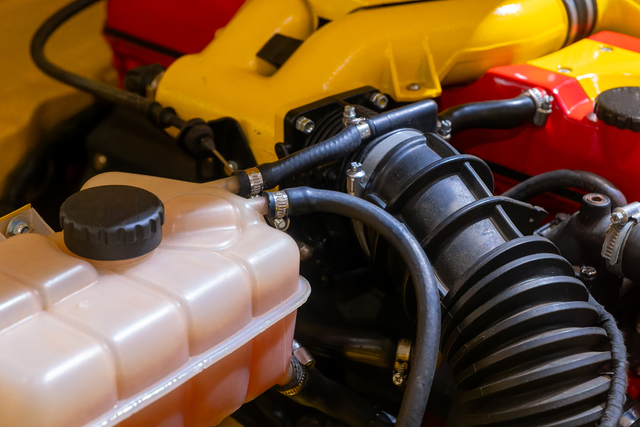
We pressure test the cooling system first and watch for a pressure drop that confirms coolant is leaving the closed loop. A combustion gas block test checks the coolant in the radiator neck for exhaust gases; if the test fluid changes color, combustion pressure is pushing into the cooling system through a breached gasket. We inspect the oil for coolant contamination and pull the spark plugs to check for steam-cleaned electrodes on the affected cylinders. Each test narrows the failure location before we commit to disassembly.
What About Newer GM Trucks With the EcoTec3 Engine?
The 2014 and newer Silverado and Sierra models run the EcoTec3 version of the 5.3L V8, and that engine doesn’t share the same intake manifold gasket weakness. Coolant leaks on the EcoTec3 concentrate at the water pump and thermostat housing instead, and those external leaks are visible on the front of the engine before they cause internal damage. We pressure test these newer trucks the same way and catch the leak source at the external seal or housing before coolant reaches places it shouldn’t.
Driven Auto Care Gets Your GM Truck Running Clean
San Ramon GM truck and SUV owners count on these engines for commutes, hauling, and family road trips, and a coolant leak that contaminates the oil puts all of that at risk. We measure, test, and confirm the failure source on every Chevrolet and GMC that comes through our shop, and we run a compression check across all cylinders after the gasket repair to make sure each one seals within factory tolerance. Grab your phone and dial (925) 830-4701 to schedule a cooling system evaluation at Driven Auto Care of San Ramon. The sooner we pressure-test it, the sooner you’re back on the road with confidence in your engine.