You leave home with cold air, then feel lukewarm air after your E-Class sits in the afternoon sun. The fan may still push plenty of air through the center vents. We handle that contrast at Fremont Foreign Auto in Fremont, CA, because strong airflow cannot guarantee that the refrigerant circuit is removing enough heat.
Strong Air Can Still Reach You Warm
The blower moves cabin air, while the refrigerant circuit removes heat from that air. A strong breeze at the vents shows that the blower still works. It says nothing about whether the refrigerant charge, compressor, condenser, or controls are doing their jobs.
We ask when the air warms and whether the fan strength changes. Cooling that fades after a sunny parking period faces a heavier cabin load. Cooling that weakens during a longer afternoon drive gives us a different timing pattern. Your morning and afternoon comparison helps us recreate the condition you actually feel.
The Refrigerant Amount Must Match Your E-Class
Too much or too little refrigerant can raise vent temperature. We check the amount against the specification for your particular E-Class. The model line includes different refrigerants, compressors, sensors, and component arrangements. Vehicle-specific information keeps one generation's specification away from another generation's system.
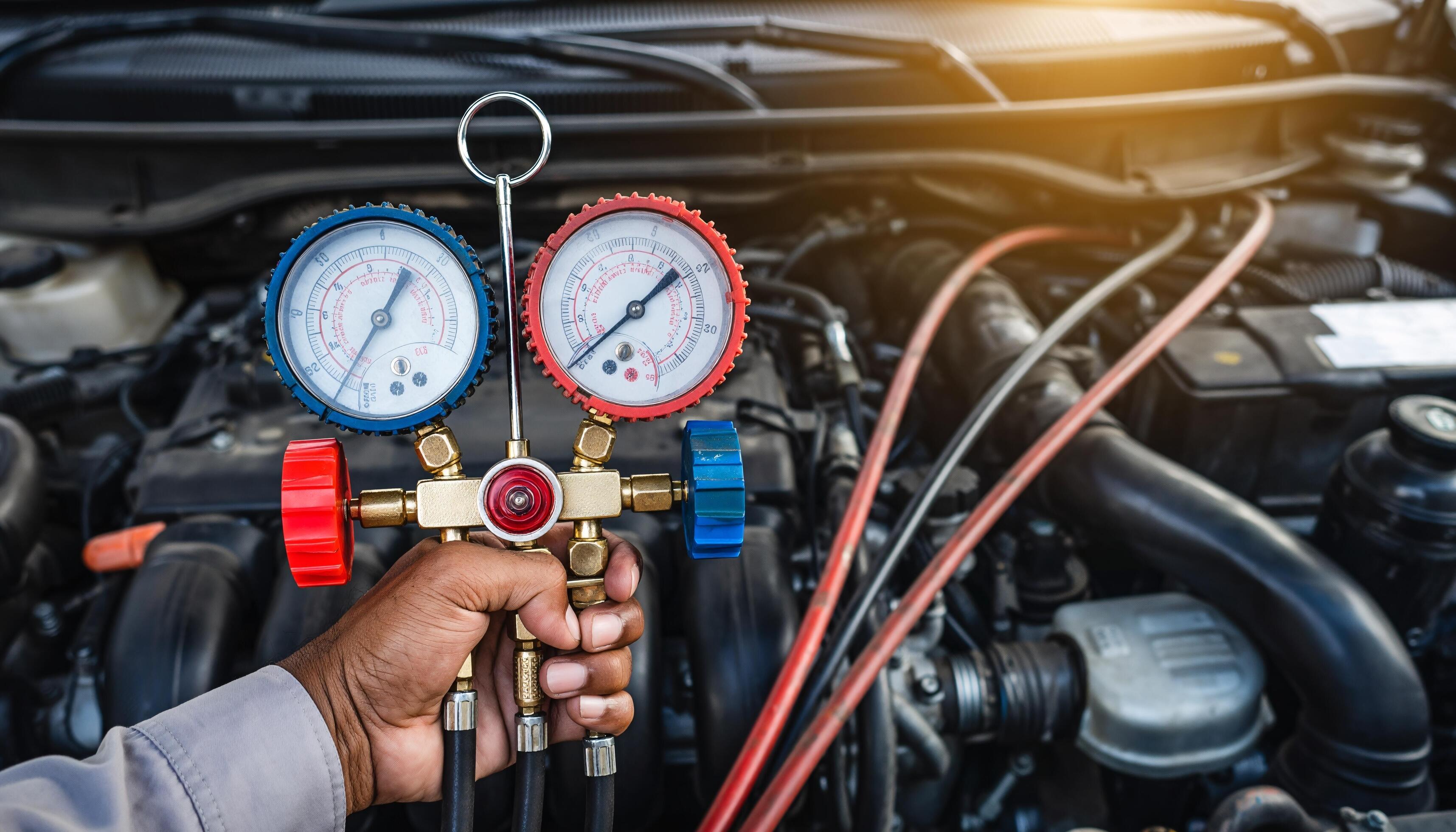
We also compare vent temperature with pressure on both the low and high sides. Those readings show whether the circuit is creating the pressure relationship needed for cooling. They give us a clearer answer than warm air alone can provide.
Lost Refrigerant Leaves a Place to Find
Refrigerant stays inside a sealed automotive air-conditioning system during normal operation. When the system has lost refrigerant, adding more cannot repair the opening where it escaped. We look around service ports, line connections, hose couplings, and damaged or corroded areas. We also check for leakage near the evaporator drain when the other areas remain dry.
Finding the wet or stained area changes the repair from a refill into a leak repair. We can then restore the correct amount after addressing the actual loss path. That order helps the repaired system keep its charge through the next hot drive.
The Condenser Needs Moving Air
The condenser releases cabin heat into the outside air. Restricted airflow across its surface raises pressure on the high side while reducing cooling performance. Hot afternoon air makes that heat-transfer job more demanding than cool morning air.
The condenser must release more heat into air that is already hot. That extra burden makes reduced cooling reserve easier for you to notice. A cabin that has been sitting in direct sun adds another large heat load. The system must cool the hot cabin surfaces while also cooling incoming air. A marginal charge or airflow restriction becomes much easier for you to feel during that demanding first part of the drive.
We inspect airflow through the condenser when your E-Class cools poorly during peak heat. Leaves, damage, or another airflow restriction can produce a cabin symptom that feels like compressor trouble. The pressure pattern and airflow check show whether the system can release heat outside.
Your Timing Leads to the Right Repair
A 2016 W212 or S212 E-Class combines active cooling with air dehumidification. Other E-Class generations can use different climate controls and component layouts. Our first check uses the exact vehicle and the settings present when cooling faded.
Please remember whether the blower stayed strong and whether cooling changed after parking or during driving. Bring the climate settings you used during the warm-air episode. At Fremont Foreign Auto, we use that simple timeline to check charge, leakage, condenser airflow, and compressor operation under matching conditions. Schedule your Fremont E-Class air-conditioning visit by calling Fremont Foreign Auto at (510) 793-6067.