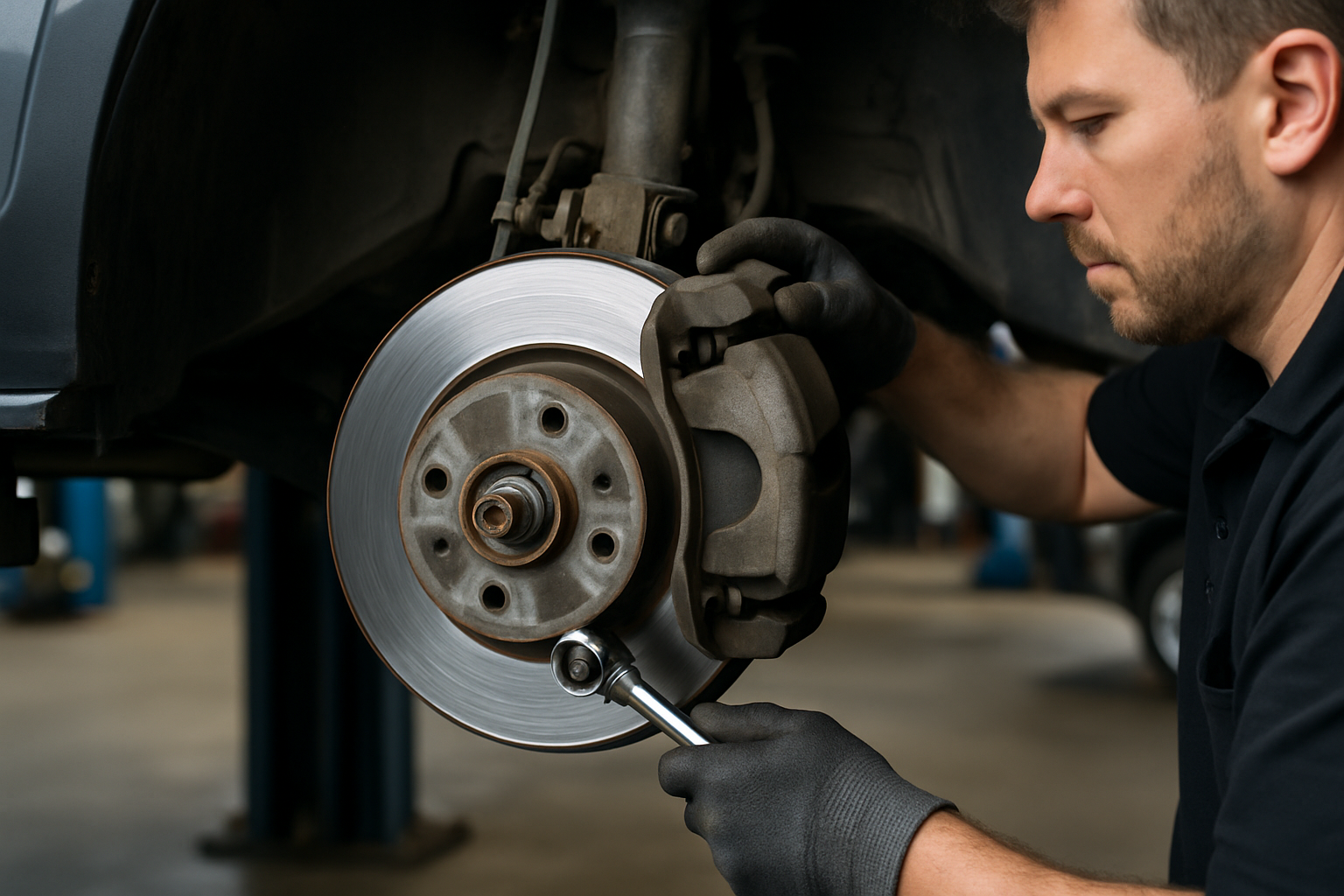
You watch the temperature gauge climb during Fremont traffic, and a sweet coolant smell reaches the cabin before you find a safe place to stop. That combination means your Mercedes-Benz ML350 needs cooling-system attention, but several faults can create the same result. Here in Fremont, our team at Fremont Foreign Auto starts with a safe shutdown and the engine installed in your vehicle. On a 2005 through 2008 W164 ML350 4MATIC, the M272 3.5-liter V6 places the coolant pump inside the serpentine belt route, which makes the belt drive part of our inspection.
Leave Traffic Safely When the ML350 Overheats
Leave traffic safely and shut down the engine when you see steam, reduced power, or a gauge in the hot zone. Arrange towing for an ML350 that remains hot, loses coolant quickly, or has uncertain circulation. Continuing to drive can add heat while the cooling system cannot control it. We let the engine and coolant cool before opening or pressure-testing anything.
A stable vehicle with a small seep or new front-engine noise still needs prompt attention. Tell us what the display showed and whether you saw coolant after parking. We use those details to recreate the condition while keeping several cooling causes in view.
The ML350 Badge Covers Different Engine Layouts
Mercedes-Benz used the ML350 name across different generations and engine families. Before planning a pump repair, we match the model year, VIN, and engine. The cited W164 ML350 4MATIC used the M272 V6 from 2005 through 2008. Its accessory belt runs around the coolant-pump pulley, so we inspect that drive with the pump.
Later ML350 configurations require their own parts and service information. We never carry an M272 layout over to another engine because the badge alone cannot select a pump. Matching the engine establishes the correct physical arrangement before we inspect the leak, bearing, and nearby components.
A Pump Needs Its Own Finding
Low coolant from another leak can reduce circulation and raise engine temperature. A thermostat fault or restricted radiator can create similar overheating without a failed pump. We trace fresh coolant to its source instead of using the puddle position as an answer. We also listen across the front drive because a bearing sound needs a specific source.
Active leakage from a mechanical pump weep path can justify replacement after we trace the fluid there. Bearing noise alone stays on our test list until we locate its source. When the pump bearing is both noisy and leaking, we replace the pump. If those findings are absent, we continue checking the remaining cooling-system causes. That order keeps a new pump from leaving the original fault in place.
Nearby Parts Enter the Plan One at a Time
A proper pump repair includes an inspection of the coolant and belt drive. Contaminated coolant can change the required coolant service. Belt damage or improper tension can change the work around an M272 pump. We examine the tensioner, idlers, hoses, thermostat, and radiator for their own conditions.
We do not add those parts as a standard bundle. A damaged hose needs its own visible fault, and a thermostat needs a result that points to poor temperature control. A restricted radiator also requires its own finding. We require a clear mechanical reason for every item on the repair plan.
Final Checks Connect the Repair to the Warning
After replacing a verified pump, we look again around its seal and connections for fresh coolant. We then recreate the conditions that produced the original complaint and watch the engine temperature. A dry repair area and controlled temperature must match the warning, leak, or noise that brought the ML350 in.
Bring us the temperature display, any coolant location, and any front-drive noise you heard. Call Fremont Foreign Auto at (510) 793-6067, and we will inspect your ML350 before defining the pump repair and every nearby part it truly needs.