 In our Fremont shop, we often see belt degradation in 2005 through 2012 Ford Focus vehicles with the 2.0L Duratec engine and the 2001 through 2011 Escape models using the 2.3L variant. These engines use traditional dry rubber timing belts that wear down from heat exposure, internal tension, and oil seepage near the upper cylinder head gaskets. Once belt tension drops or tooth engagement degrades, timing synchronization becomes unstable and rapidly fails. In these models, no external signal exists to indicate that the belt is failing internally, so the only defense against catastrophic engine damage is time-based service and system inspection.
The Misleading Promise of Wet Belts in Newer Ford EcoBoost Engines
Ford began installing oil-immersed or “wet” timing belts in small-displacement EcoBoost engines such as the 1.0L and 1.5L starting around 2013, which created new risks despite marketing claims of extended durability. These belts are located inside the engine and constantly exposed to motor oil, which means any drop in oil quality, viscosity loss, or sludge formation directly accelerates belt wear and delamination. In Fremont, we’ve inspected 2016 Fiesta and Fusion models where belt material had already begun breaking down and releasing rubber fragments into the oil sump before reaching 100,000 miles. Once contamination reaches the oil pickup tube or pump, your engine faces the risk of lubrication loss long before any belt failure is externally detectable.
Symptoms Don’t Shout, They Whisper, Until Your Engine Is Lost
Unlike serpentine belts or accessory drives that produce noise or vibration when degrading, timing belts fail without warning and rarely produce audible signs before failure. In models like the 2010 Fusion 2.5L or the 2012 Focus, early symptoms can include irregular idling, hesitation during light acceleration, or an occasional rough start after sitting overnight. These symptoms are easy to misattribute to fuel delivery or spark issues, but in many cases, they stem from belt stretch and slight misalignment between the crankshaft and camshaft. Once a belt jumps even a single tooth, the result is combustion misfire and internal valve collision, which results in severe mechanical breakdown and vehicle immobilization.
Why Our Belt Service Focuses on the Entire Timing System, Not Just the Belt
At Fremont Foreign Auto, we do not treat timing belt replacement like a simple part swap; we inspect the entire belt-driven system for hidden mechanical liabilities. Our technicians check for crank seal leaks, evaluate tensioner spring response, and verify pulley bearing integrity with manual spin and digital runout analysis. In high-mileage Ford Escapes or Focus vehicles, we often replace the water pump concurrently with the belt, since that component sits within the timing path and can cause accelerated failure if bearing play or coolant seepage is detected. This approach ensures the entire timing circuit remains intact and stable, reducing the risk of premature failure caused by unseen weak points.
The False Security of DIY Belt Kits or Delayed Maintenance
Timing belts must be installed under exact conditions that ensure pulley timing, belt tension preload, and phase alignment between camshaft and crankshaft are precise; there is zero margin for error in modern Ford interference engines. In Fremont, we frequently repair the aftermath of do-it-yourself kits that lack cam locking tools, updated tensioners, or engine-specific calibration instructions. Even one misaligned tooth on a 2.0L Duratec or 1.6L EcoBoost engine can cause total failure under load, since the valve train cannot survive out-of-phase combustion at highway RPM. Belt failure in these cases doesn’t mean “try again”—it means rebuild or replace.
A Belt You Never See Controls Everything That Matters
The timing belt in your Ford is not visible during daily driving or routine oil changes, yet it controls the most critical elements of your engine’s function. Whether you drive a dry belt-driven 2006 Ford Focus or a wet-belt-equipped 2017 Fusion, this one part determines whether your valves open safely or collide with pistons at thousands of revolutions per minute. In Fremont, we’ve prevented hundreds of engine failures by recommending inspection before the service interval ends, especially in models that exceed 90,000 miles and have seen urban stop-and-go driving patterns. Once a timing belt fails, it doesn’t just stop your drive—it rewrites your vehicle’s future.
Our Fremont Team Detects What Other Shops Miss
Most general mechanics inspect timing belts only when customers report symptoms or during other major service appointments, but by that point, internal wear may already have started. At Fremont Foreign Auto, we inspect the full timing system for mechanical irregularities, including phase deviation, belt tension loss, and low-speed idle instability. We use live diagnostic scanning and oil pressure testing in wet belt systems to confirm whether your engine’s internal mechanics remain intact or are nearing failure thresholds. If your Ford is showing early signs of roughness or is simply approaching high mileage, we encourage immediate inspection to catch issues before the belt fails and the engine suffers irreversible damage.
If You Wait, It’s Too Late to Prevent the Damage
You cannot see your timing belt, and by the time you hear or feel its failure, the damage has already been done. Fremont Foreign Auto inspects, tests, and replaces Ford timing belts with the same attention to detail we apply to full engine protection. If you live in Fremont and drive a Ford approaching 90,000 miles or more, call (510) 793-6067 now and schedule a full inspection. We protect your engine from the part most likely to destroy it in total silence.
In our Fremont shop, we often see belt degradation in 2005 through 2012 Ford Focus vehicles with the 2.0L Duratec engine and the 2001 through 2011 Escape models using the 2.3L variant. These engines use traditional dry rubber timing belts that wear down from heat exposure, internal tension, and oil seepage near the upper cylinder head gaskets. Once belt tension drops or tooth engagement degrades, timing synchronization becomes unstable and rapidly fails. In these models, no external signal exists to indicate that the belt is failing internally, so the only defense against catastrophic engine damage is time-based service and system inspection.
The Misleading Promise of Wet Belts in Newer Ford EcoBoost Engines
Ford began installing oil-immersed or “wet” timing belts in small-displacement EcoBoost engines such as the 1.0L and 1.5L starting around 2013, which created new risks despite marketing claims of extended durability. These belts are located inside the engine and constantly exposed to motor oil, which means any drop in oil quality, viscosity loss, or sludge formation directly accelerates belt wear and delamination. In Fremont, we’ve inspected 2016 Fiesta and Fusion models where belt material had already begun breaking down and releasing rubber fragments into the oil sump before reaching 100,000 miles. Once contamination reaches the oil pickup tube or pump, your engine faces the risk of lubrication loss long before any belt failure is externally detectable.
Symptoms Don’t Shout, They Whisper, Until Your Engine Is Lost
Unlike serpentine belts or accessory drives that produce noise or vibration when degrading, timing belts fail without warning and rarely produce audible signs before failure. In models like the 2010 Fusion 2.5L or the 2012 Focus, early symptoms can include irregular idling, hesitation during light acceleration, or an occasional rough start after sitting overnight. These symptoms are easy to misattribute to fuel delivery or spark issues, but in many cases, they stem from belt stretch and slight misalignment between the crankshaft and camshaft. Once a belt jumps even a single tooth, the result is combustion misfire and internal valve collision, which results in severe mechanical breakdown and vehicle immobilization.
Why Our Belt Service Focuses on the Entire Timing System, Not Just the Belt
At Fremont Foreign Auto, we do not treat timing belt replacement like a simple part swap; we inspect the entire belt-driven system for hidden mechanical liabilities. Our technicians check for crank seal leaks, evaluate tensioner spring response, and verify pulley bearing integrity with manual spin and digital runout analysis. In high-mileage Ford Escapes or Focus vehicles, we often replace the water pump concurrently with the belt, since that component sits within the timing path and can cause accelerated failure if bearing play or coolant seepage is detected. This approach ensures the entire timing circuit remains intact and stable, reducing the risk of premature failure caused by unseen weak points.
The False Security of DIY Belt Kits or Delayed Maintenance
Timing belts must be installed under exact conditions that ensure pulley timing, belt tension preload, and phase alignment between camshaft and crankshaft are precise; there is zero margin for error in modern Ford interference engines. In Fremont, we frequently repair the aftermath of do-it-yourself kits that lack cam locking tools, updated tensioners, or engine-specific calibration instructions. Even one misaligned tooth on a 2.0L Duratec or 1.6L EcoBoost engine can cause total failure under load, since the valve train cannot survive out-of-phase combustion at highway RPM. Belt failure in these cases doesn’t mean “try again”—it means rebuild or replace.
A Belt You Never See Controls Everything That Matters
The timing belt in your Ford is not visible during daily driving or routine oil changes, yet it controls the most critical elements of your engine’s function. Whether you drive a dry belt-driven 2006 Ford Focus or a wet-belt-equipped 2017 Fusion, this one part determines whether your valves open safely or collide with pistons at thousands of revolutions per minute. In Fremont, we’ve prevented hundreds of engine failures by recommending inspection before the service interval ends, especially in models that exceed 90,000 miles and have seen urban stop-and-go driving patterns. Once a timing belt fails, it doesn’t just stop your drive—it rewrites your vehicle’s future.
Our Fremont Team Detects What Other Shops Miss
Most general mechanics inspect timing belts only when customers report symptoms or during other major service appointments, but by that point, internal wear may already have started. At Fremont Foreign Auto, we inspect the full timing system for mechanical irregularities, including phase deviation, belt tension loss, and low-speed idle instability. We use live diagnostic scanning and oil pressure testing in wet belt systems to confirm whether your engine’s internal mechanics remain intact or are nearing failure thresholds. If your Ford is showing early signs of roughness or is simply approaching high mileage, we encourage immediate inspection to catch issues before the belt fails and the engine suffers irreversible damage.
If You Wait, It’s Too Late to Prevent the Damage
You cannot see your timing belt, and by the time you hear or feel its failure, the damage has already been done. Fremont Foreign Auto inspects, tests, and replaces Ford timing belts with the same attention to detail we apply to full engine protection. If you live in Fremont and drive a Ford approaching 90,000 miles or more, call (510) 793-6067 now and schedule a full inspection. We protect your engine from the part most likely to destroy it in total silence.
Fremont, CA - Common Ford Timing Belt Problems Fixed at Our Auto Repair Shop
SYNOPSIS: At Fremont Foreign Auto in Fremont, CA, we inspect and fix Ford timing belt issues with deep technical precision, helping drivers avoid catastrophic engine failure before it happens.
Ford Timing Belts Fail Silently, Catch Them First
BY: Eduardo Porta, Fremont Foreign Auto
Ford timing belts are silent killers that don’t squeak, warn, or hesitate before snapping under pressure. When that failure occurs, your engine’s internal rhythm is instantly lost, which sends pistons crashing into valves and destroying critical components without warning. Most Ford models manufactured after the early 2000s use interference engines, which means this type of failure does not cause inconvenience—it causes irreversible internal damage. You won’t get a check engine light or a dashboard warning to protect you from it either. You will get silence, a stalled vehicle, and a long road to repair that was entirely avoidable with inspection and preventive service.
These Ford Models Are Most Vulnerable to Timing Belt Failure
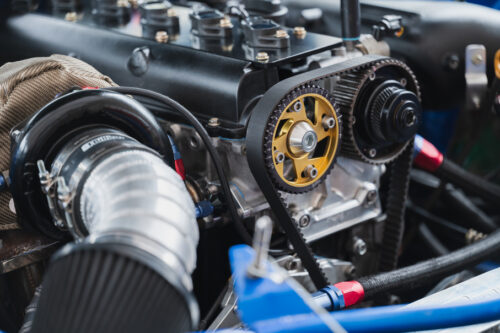
In our Fremont shop, we often see belt degradation in 2005 through 2012 Ford Focus vehicles with the 2.0L Duratec engine and the 2001 through 2011 Escape models using the 2.3L variant. These engines use traditional dry rubber timing belts that wear down from heat exposure, internal tension, and oil seepage near the upper cylinder head gaskets. Once belt tension drops or tooth engagement degrades, timing synchronization becomes unstable and rapidly fails. In these models, no external signal exists to indicate that the belt is failing internally, so the only defense against catastrophic engine damage is time-based service and system inspection.
The Misleading Promise of Wet Belts in Newer Ford EcoBoost Engines
Ford began installing oil-immersed or “wet” timing belts in small-displacement EcoBoost engines such as the 1.0L and 1.5L starting around 2013, which created new risks despite marketing claims of extended durability. These belts are located inside the engine and constantly exposed to motor oil, which means any drop in oil quality, viscosity loss, or sludge formation directly accelerates belt wear and delamination. In Fremont, we’ve inspected 2016 Fiesta and Fusion models where belt material had already begun breaking down and releasing rubber fragments into the oil sump before reaching 100,000 miles. Once contamination reaches the oil pickup tube or pump, your engine faces the risk of lubrication loss long before any belt failure is externally detectable.
Symptoms Don’t Shout, They Whisper, Until Your Engine Is Lost
Unlike serpentine belts or accessory drives that produce noise or vibration when degrading, timing belts fail without warning and rarely produce audible signs before failure. In models like the 2010 Fusion 2.5L or the 2012 Focus, early symptoms can include irregular idling, hesitation during light acceleration, or an occasional rough start after sitting overnight. These symptoms are easy to misattribute to fuel delivery or spark issues, but in many cases, they stem from belt stretch and slight misalignment between the crankshaft and camshaft. Once a belt jumps even a single tooth, the result is combustion misfire and internal valve collision, which results in severe mechanical breakdown and vehicle immobilization.
Why Our Belt Service Focuses on the Entire Timing System, Not Just the Belt
At Fremont Foreign Auto, we do not treat timing belt replacement like a simple part swap; we inspect the entire belt-driven system for hidden mechanical liabilities. Our technicians check for crank seal leaks, evaluate tensioner spring response, and verify pulley bearing integrity with manual spin and digital runout analysis. In high-mileage Ford Escapes or Focus vehicles, we often replace the water pump concurrently with the belt, since that component sits within the timing path and can cause accelerated failure if bearing play or coolant seepage is detected. This approach ensures the entire timing circuit remains intact and stable, reducing the risk of premature failure caused by unseen weak points.
The False Security of DIY Belt Kits or Delayed Maintenance
Timing belts must be installed under exact conditions that ensure pulley timing, belt tension preload, and phase alignment between camshaft and crankshaft are precise; there is zero margin for error in modern Ford interference engines. In Fremont, we frequently repair the aftermath of do-it-yourself kits that lack cam locking tools, updated tensioners, or engine-specific calibration instructions. Even one misaligned tooth on a 2.0L Duratec or 1.6L EcoBoost engine can cause total failure under load, since the valve train cannot survive out-of-phase combustion at highway RPM. Belt failure in these cases doesn’t mean “try again”—it means rebuild or replace.
A Belt You Never See Controls Everything That Matters
The timing belt in your Ford is not visible during daily driving or routine oil changes, yet it controls the most critical elements of your engine’s function. Whether you drive a dry belt-driven 2006 Ford Focus or a wet-belt-equipped 2017 Fusion, this one part determines whether your valves open safely or collide with pistons at thousands of revolutions per minute. In Fremont, we’ve prevented hundreds of engine failures by recommending inspection before the service interval ends, especially in models that exceed 90,000 miles and have seen urban stop-and-go driving patterns. Once a timing belt fails, it doesn’t just stop your drive—it rewrites your vehicle’s future.
Our Fremont Team Detects What Other Shops Miss
Most general mechanics inspect timing belts only when customers report symptoms or during other major service appointments, but by that point, internal wear may already have started. At Fremont Foreign Auto, we inspect the full timing system for mechanical irregularities, including phase deviation, belt tension loss, and low-speed idle instability. We use live diagnostic scanning and oil pressure testing in wet belt systems to confirm whether your engine’s internal mechanics remain intact or are nearing failure thresholds. If your Ford is showing early signs of roughness or is simply approaching high mileage, we encourage immediate inspection to catch issues before the belt fails and the engine suffers irreversible damage.
If You Wait, It’s Too Late to Prevent the Damage
You cannot see your timing belt, and by the time you hear or feel its failure, the damage has already been done. Fremont Foreign Auto inspects, tests, and replaces Ford timing belts with the same attention to detail we apply to full engine protection. If you live in Fremont and drive a Ford approaching 90,000 miles or more, call (510) 793-6067 now and schedule a full inspection. We protect your engine from the part most likely to destroy it in total silence.
In our Fremont shop, we often see belt degradation in 2005 through 2012 Ford Focus vehicles with the 2.0L Duratec engine and the 2001 through 2011 Escape models using the 2.3L variant. These engines use traditional dry rubber timing belts that wear down from heat exposure, internal tension, and oil seepage near the upper cylinder head gaskets. Once belt tension drops or tooth engagement degrades, timing synchronization becomes unstable and rapidly fails. In these models, no external signal exists to indicate that the belt is failing internally, so the only defense against catastrophic engine damage is time-based service and system inspection.
The Misleading Promise of Wet Belts in Newer Ford EcoBoost Engines
Ford began installing oil-immersed or “wet” timing belts in small-displacement EcoBoost engines such as the 1.0L and 1.5L starting around 2013, which created new risks despite marketing claims of extended durability. These belts are located inside the engine and constantly exposed to motor oil, which means any drop in oil quality, viscosity loss, or sludge formation directly accelerates belt wear and delamination. In Fremont, we’ve inspected 2016 Fiesta and Fusion models where belt material had already begun breaking down and releasing rubber fragments into the oil sump before reaching 100,000 miles. Once contamination reaches the oil pickup tube or pump, your engine faces the risk of lubrication loss long before any belt failure is externally detectable.
Symptoms Don’t Shout, They Whisper, Until Your Engine Is Lost
Unlike serpentine belts or accessory drives that produce noise or vibration when degrading, timing belts fail without warning and rarely produce audible signs before failure. In models like the 2010 Fusion 2.5L or the 2012 Focus, early symptoms can include irregular idling, hesitation during light acceleration, or an occasional rough start after sitting overnight. These symptoms are easy to misattribute to fuel delivery or spark issues, but in many cases, they stem from belt stretch and slight misalignment between the crankshaft and camshaft. Once a belt jumps even a single tooth, the result is combustion misfire and internal valve collision, which results in severe mechanical breakdown and vehicle immobilization.
Why Our Belt Service Focuses on the Entire Timing System, Not Just the Belt
At Fremont Foreign Auto, we do not treat timing belt replacement like a simple part swap; we inspect the entire belt-driven system for hidden mechanical liabilities. Our technicians check for crank seal leaks, evaluate tensioner spring response, and verify pulley bearing integrity with manual spin and digital runout analysis. In high-mileage Ford Escapes or Focus vehicles, we often replace the water pump concurrently with the belt, since that component sits within the timing path and can cause accelerated failure if bearing play or coolant seepage is detected. This approach ensures the entire timing circuit remains intact and stable, reducing the risk of premature failure caused by unseen weak points.
The False Security of DIY Belt Kits or Delayed Maintenance
Timing belts must be installed under exact conditions that ensure pulley timing, belt tension preload, and phase alignment between camshaft and crankshaft are precise; there is zero margin for error in modern Ford interference engines. In Fremont, we frequently repair the aftermath of do-it-yourself kits that lack cam locking tools, updated tensioners, or engine-specific calibration instructions. Even one misaligned tooth on a 2.0L Duratec or 1.6L EcoBoost engine can cause total failure under load, since the valve train cannot survive out-of-phase combustion at highway RPM. Belt failure in these cases doesn’t mean “try again”—it means rebuild or replace.
A Belt You Never See Controls Everything That Matters
The timing belt in your Ford is not visible during daily driving or routine oil changes, yet it controls the most critical elements of your engine’s function. Whether you drive a dry belt-driven 2006 Ford Focus or a wet-belt-equipped 2017 Fusion, this one part determines whether your valves open safely or collide with pistons at thousands of revolutions per minute. In Fremont, we’ve prevented hundreds of engine failures by recommending inspection before the service interval ends, especially in models that exceed 90,000 miles and have seen urban stop-and-go driving patterns. Once a timing belt fails, it doesn’t just stop your drive—it rewrites your vehicle’s future.
Our Fremont Team Detects What Other Shops Miss
Most general mechanics inspect timing belts only when customers report symptoms or during other major service appointments, but by that point, internal wear may already have started. At Fremont Foreign Auto, we inspect the full timing system for mechanical irregularities, including phase deviation, belt tension loss, and low-speed idle instability. We use live diagnostic scanning and oil pressure testing in wet belt systems to confirm whether your engine’s internal mechanics remain intact or are nearing failure thresholds. If your Ford is showing early signs of roughness or is simply approaching high mileage, we encourage immediate inspection to catch issues before the belt fails and the engine suffers irreversible damage.
If You Wait, It’s Too Late to Prevent the Damage
You cannot see your timing belt, and by the time you hear or feel its failure, the damage has already been done. Fremont Foreign Auto inspects, tests, and replaces Ford timing belts with the same attention to detail we apply to full engine protection. If you live in Fremont and drive a Ford approaching 90,000 miles or more, call (510) 793-6067 now and schedule a full inspection. We protect your engine from the part most likely to destroy it in total silence.