 The Land Rover/Range Rover is one of the most iconic British vehicles, known for being a rugged and capable off-roader. While it is not alone in conquering dense jungles and vast deserts, only a few can do it in luxury. However, Land Rovers are surprisingly civilized on paved surfaces thanks to an adaptive air suspension, and they were the first manufacturer to incorporate this feature into their vehicles in 1992. For all the marvels and benefits of an air suspension, they are not without problems, especially when the miles start racking up.
Common Air Suspension Problems
While an air suspension can better adapt to changing road conditions and deliver a smoother ride than a traditional coil spring setup, they are complex and expensive to repair. Likewise, they are made up of more components like a compressor, air lines, ride height sensors, and inflatable shocks. Obviously, this means more things that can go wrong, and like most things associated with Land Rovers/Range Rovers, nothing is cheap. For example, replacing an air compressor will run about $1,000 and well over that for a shock.
When do Air Suspension Problems Begin to Appear?
It depends on several factors, such as climate, road conditions, and driving habits. The problem we see most frequently is leaking air shocks, which are common after 80,000 miles. It usually happens from the inflatable bladder, as the flexible materials dry out, crack, or rot over time, allowing air to escape. The same applies to the hoses between the shocks and compressor, although they are less costly to replace. A compressor can last 100,000 or more miles, but not unusual for it to give out before then, especially if there is a leak, as it will be running constantly. Failures with the control module and ride height sensor are less common, and aside from physical damage, they should last for the life of the vehicle.
What are my Options?
The first option is to repair the problem, but it is no guarantee that issues will not surface later. As all four shocks are subject to the same conditions, chances are if one fails at 100,000 miles, the others are probably not far behind. This potentially means a few thousand dollars worth of repairs in short order, thus having to weigh the costs and benefits of maintaining the air suspension on your Land Rover/Range Rover.
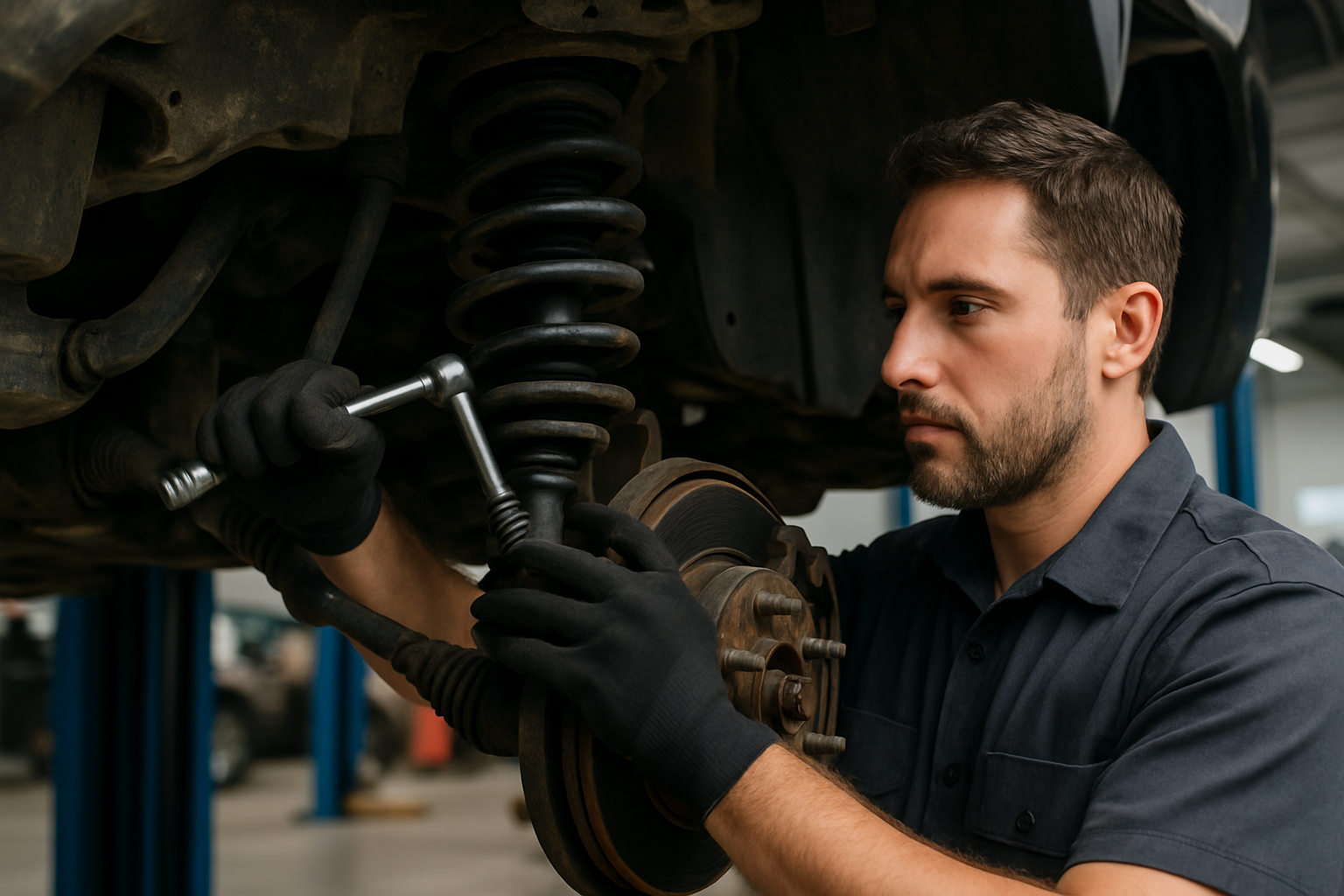
Another option is ditching it all together for a more reliable coil spring setup. This is cheaper than you might think and can be done for about the same price as replacing a single air shock. Our shop recommends the Arnott Air Suspension Products conversion kit, a direct bolt-in replacement with no cutting or welding required. It is designed in the USA and features custom-tuned shocks and springs that match the factory ride and handling characteristics. No more worrying about when the air suspension warning light will turn or how much the next suspension repair will cost.
The Land Rover/Range Rover is one of the most iconic British vehicles, known for being a rugged and capable off-roader. While it is not alone in conquering dense jungles and vast deserts, only a few can do it in luxury. However, Land Rovers are surprisingly civilized on paved surfaces thanks to an adaptive air suspension, and they were the first manufacturer to incorporate this feature into their vehicles in 1992. For all the marvels and benefits of an air suspension, they are not without problems, especially when the miles start racking up.
Common Air Suspension Problems
While an air suspension can better adapt to changing road conditions and deliver a smoother ride than a traditional coil spring setup, they are complex and expensive to repair. Likewise, they are made up of more components like a compressor, air lines, ride height sensors, and inflatable shocks. Obviously, this means more things that can go wrong, and like most things associated with Land Rovers/Range Rovers, nothing is cheap. For example, replacing an air compressor will run about $1,000 and well over that for a shock.
When do Air Suspension Problems Begin to Appear?
It depends on several factors, such as climate, road conditions, and driving habits. The problem we see most frequently is leaking air shocks, which are common after 80,000 miles. It usually happens from the inflatable bladder, as the flexible materials dry out, crack, or rot over time, allowing air to escape. The same applies to the hoses between the shocks and compressor, although they are less costly to replace. A compressor can last 100,000 or more miles, but not unusual for it to give out before then, especially if there is a leak, as it will be running constantly. Failures with the control module and ride height sensor are less common, and aside from physical damage, they should last for the life of the vehicle.
What are my Options?
The first option is to repair the problem, but it is no guarantee that issues will not surface later. As all four shocks are subject to the same conditions, chances are if one fails at 100,000 miles, the others are probably not far behind. This potentially means a few thousand dollars worth of repairs in short order, thus having to weigh the costs and benefits of maintaining the air suspension on your Land Rover/Range Rover.
Another option is ditching it all together for a more reliable coil spring setup. This is cheaper than you might think and can be done for about the same price as replacing a single air shock. Our shop recommends the Arnott Air Suspension Products conversion kit, a direct bolt-in replacement with no cutting or welding required. It is designed in the USA and features custom-tuned shocks and springs that match the factory ride and handling characteristics. No more worrying about when the air suspension warning light will turn or how much the next suspension repair will cost.
Union City, CA - Coil Spring Conversion Kits for Land Rovers from a Repair Shop
SYNOPSIS: Land Rovers/Range Rovers are luxurious and capable off-road vehicles with an air suspension that delivers a smooth ride on the highway. However, it is expensive to maintain and repair.
Alternatives to expensive air suspension repairs
BY: Eduardo Porta, Fremont Foreign Auto
The Land Rover/Range Rover is one of the most iconic British vehicles, known for being a rugged and capable off-roader. While it is not alone in conquering dense jungles and vast deserts, only a few can do it in luxury. However, Land Rovers are surprisingly civilized on paved surfaces thanks to an adaptive air suspension, and they were the first manufacturer to incorporate this feature into their vehicles in 1992. For all the marvels and benefits of an air suspension, they are not without problems, especially when the miles start racking up.
Common Air Suspension Problems
While an air suspension can better adapt to changing road conditions and deliver a smoother ride than a traditional coil spring setup, they are complex and expensive to repair. Likewise, they are made up of more components like a compressor, air lines, ride height sensors, and inflatable shocks. Obviously, this means more things that can go wrong, and like most things associated with Land Rovers/Range Rovers, nothing is cheap. For example, replacing an air compressor will run about $1,000 and well over that for a shock.
When do Air Suspension Problems Begin to Appear?
It depends on several factors, such as climate, road conditions, and driving habits. The problem we see most frequently is leaking air shocks, which are common after 80,000 miles. It usually happens from the inflatable bladder, as the flexible materials dry out, crack, or rot over time, allowing air to escape. The same applies to the hoses between the shocks and compressor, although they are less costly to replace. A compressor can last 100,000 or more miles, but not unusual for it to give out before then, especially if there is a leak, as it will be running constantly. Failures with the control module and ride height sensor are less common, and aside from physical damage, they should last for the life of the vehicle.
What are my Options?
The first option is to repair the problem, but it is no guarantee that issues will not surface later. As all four shocks are subject to the same conditions, chances are if one fails at 100,000 miles, the others are probably not far behind. This potentially means a few thousand dollars worth of repairs in short order, thus having to weigh the costs and benefits of maintaining the air suspension on your Land Rover/Range Rover.
Another option is ditching it all together for a more reliable coil spring setup. This is cheaper than you might think and can be done for about the same price as replacing a single air shock. Our shop recommends the Arnott Air Suspension Products conversion kit, a direct bolt-in replacement with no cutting or welding required. It is designed in the USA and features custom-tuned shocks and springs that match the factory ride and handling characteristics. No more worrying about when the air suspension warning light will turn or how much the next suspension repair will cost.