 No matter what your vehicle is, it’ll need new brake pads at some point. All of the stopping and starting of everyday driving is enough to wear out a set of brake pads at around the 40,000-mile marker.
What Are Brake Pads and Why Do They Need Replacing?
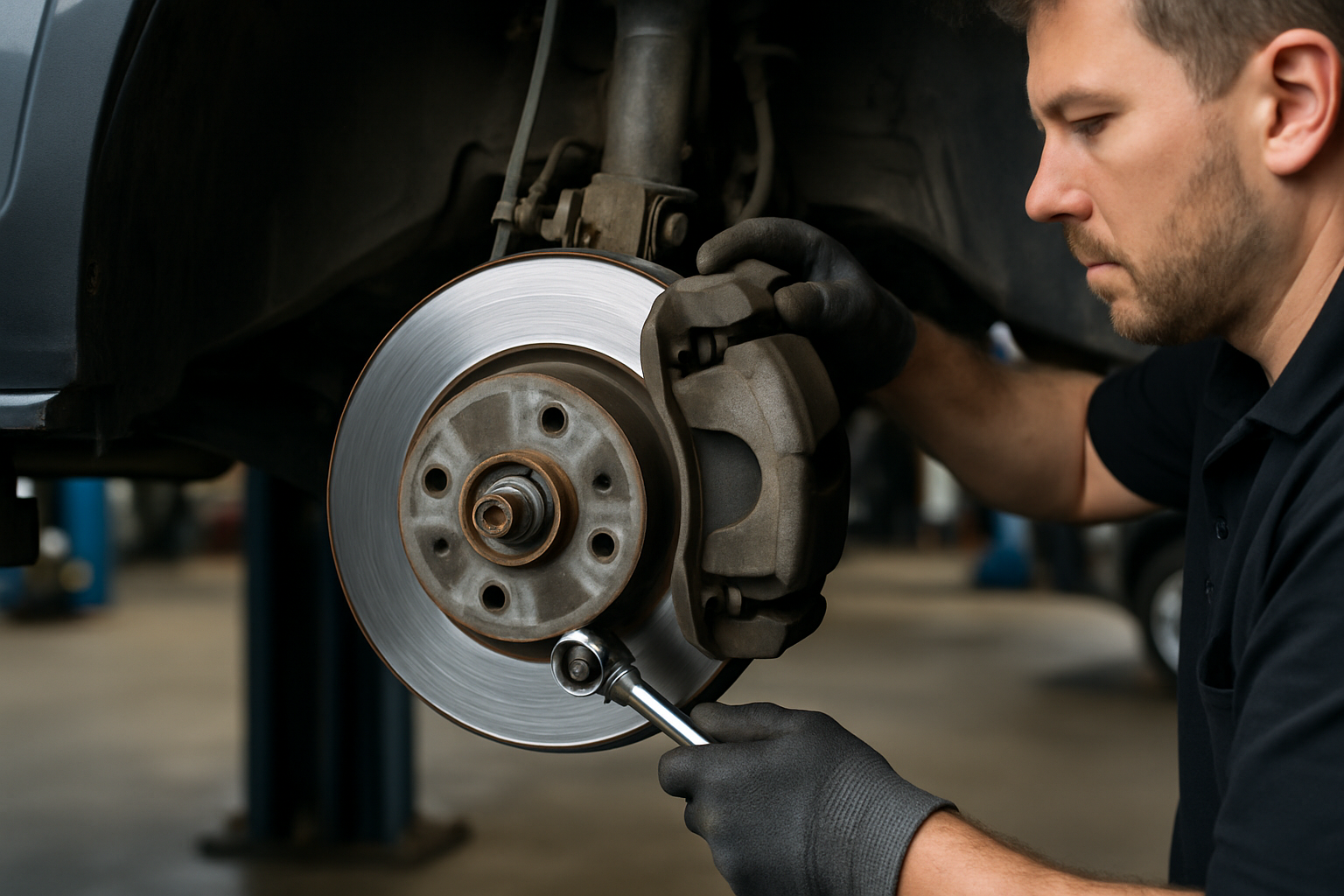
Brake pads are small metal pads on either side of the exterior of your brake shoe. When you apply the brakes on your car, the pads on either side are compressed, causing the shoe to stop your tire from turning. These pads are one of the most important components of a brake—without them, the brakes would simply not function, and your car wouldn’t stop when you needed it to.
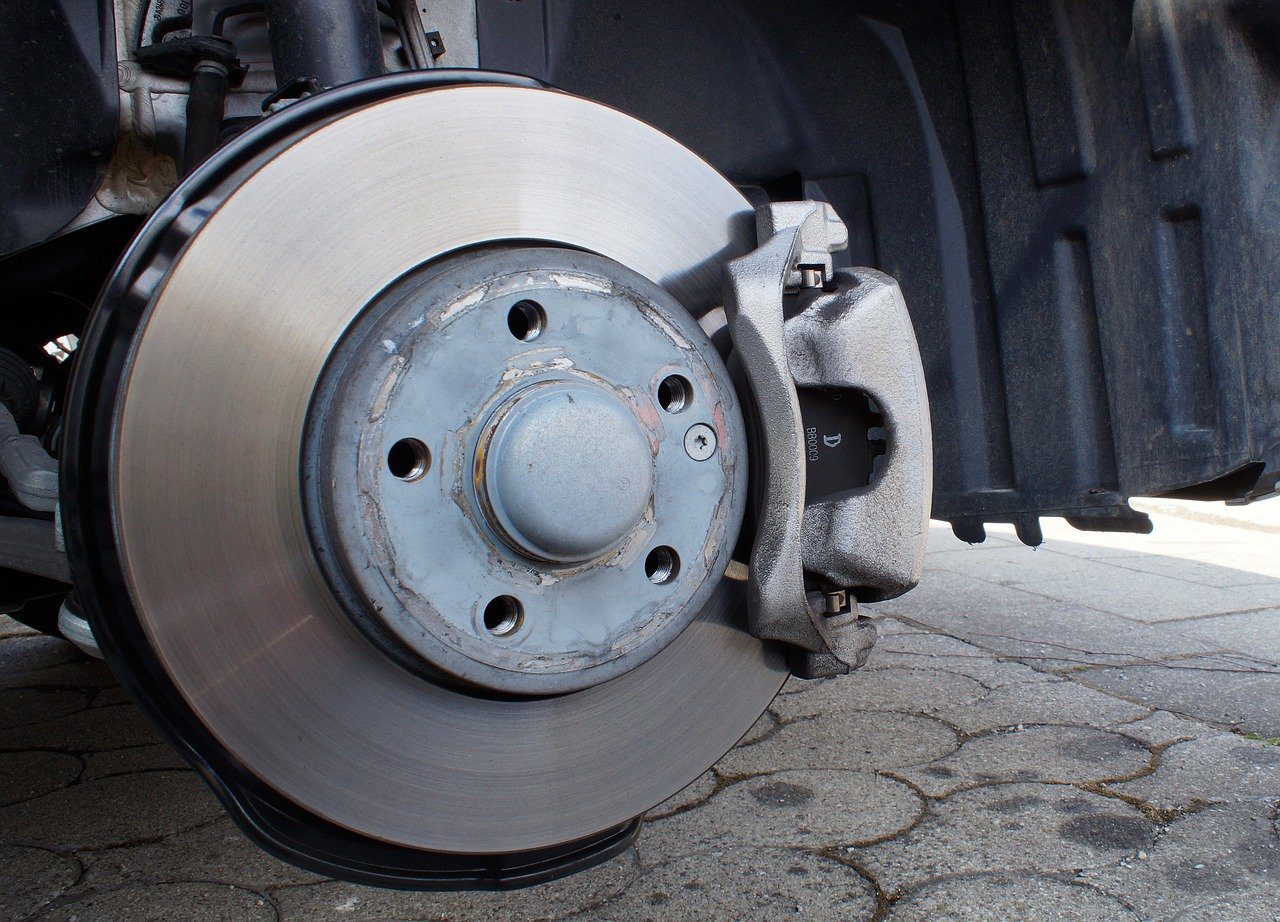
Brake pads come in many different types, and there is a critical difference between brake pads found on cars with disc brakes and cars with drum brakes. In general, cars with disc brakes (and their pads) provide greater stopping power—they can stop faster in a shorter distance than those with the more traditional drum brakes. Your vehicle will likely come with the recommended type of pad from the manufacturer.
For example, your full-size truck has larger and heftier brake pads than your friend’s Mini, as it has to be able to stop a far larger (and heavier) vehicle on-a-dime.
Over time, usually over a period of two years, or 40,000 miles (65,000 km), these pads can wear out. There are many factors that contribute to this, such as weather conditions, materials, and so on. If you’re driving a lot and using your brakes a lot, then your pads will generally wear out faster. Further, if you’re driving in wintry conditions, the salt and snow on the roads will likely cause your pads to wear out faster than average. Not that we have to worry about that here in California, generally speaking.
Whatever your driving habits, it’s a good idea to check your brake pads for rust and other signs of degradation once every 5,000 miles, or maybe once every quarter, if you’d rather operate by the lunar calendar. Obviously, if you’re putting a lot of miles on your vehicle, then check your brake pads more often. Not all of your vehicle’s brake pads wear down at the same rate, so you should check each axle, and if you’re unsure, bring it to us at Fremont Foreign Auto and we’ll perform the check for you.
Fremont Foreign Auto is happy to perform your brake pad change for you, we’ll make sure that we have the correct brake pad for your vehicle, and we can even recommend an extra set for you to take home. You may—if you’re so mechanically inclined—be able to change the brake pads yourself. You should still bring it into us for an inspection, however.
No matter what your vehicle is, it’ll need new brake pads at some point. All of the stopping and starting of everyday driving is enough to wear out a set of brake pads at around the 40,000-mile marker.
What Are Brake Pads and Why Do They Need Replacing?
Brake pads are small metal pads on either side of the exterior of your brake shoe. When you apply the brakes on your car, the pads on either side are compressed, causing the shoe to stop your tire from turning. These pads are one of the most important components of a brake—without them, the brakes would simply not function, and your car wouldn’t stop when you needed it to.
Brake pads come in many different types, and there is a critical difference between brake pads found on cars with disc brakes and cars with drum brakes. In general, cars with disc brakes (and their pads) provide greater stopping power—they can stop faster in a shorter distance than those with the more traditional drum brakes. Your vehicle will likely come with the recommended type of pad from the manufacturer.
For example, your full-size truck has larger and heftier brake pads than your friend’s Mini, as it has to be able to stop a far larger (and heavier) vehicle on-a-dime.
Over time, usually over a period of two years, or 40,000 miles (65,000 km), these pads can wear out. There are many factors that contribute to this, such as weather conditions, materials, and so on. If you’re driving a lot and using your brakes a lot, then your pads will generally wear out faster. Further, if you’re driving in wintry conditions, the salt and snow on the roads will likely cause your pads to wear out faster than average. Not that we have to worry about that here in California, generally speaking.
Whatever your driving habits, it’s a good idea to check your brake pads for rust and other signs of degradation once every 5,000 miles, or maybe once every quarter, if you’d rather operate by the lunar calendar. Obviously, if you’re putting a lot of miles on your vehicle, then check your brake pads more often. Not all of your vehicle’s brake pads wear down at the same rate, so you should check each axle, and if you’re unsure, bring it to us at Fremont Foreign Auto and we’ll perform the check for you.
Fremont Foreign Auto is happy to perform your brake pad change for you, we’ll make sure that we have the correct brake pad for your vehicle, and we can even recommend an extra set for you to take home. You may—if you’re so mechanically inclined—be able to change the brake pads yourself. You should still bring it into us for an inspection, however.
Fremont, CA - Our Auto Repair Shop Offers Brake Pad Replacement Services
SYNOPSIS: Fremont Foreign Auto specializes in the maintenance and repair of foreign vehicles in Fremont, California. Our staff has extensive knowledge of most foreign-made vehicles that have been prominent in the American auto market in recent decades and some
Quality brake pad swaps keep your ride stopping safely
BY: Eduardo Porta, Fremont Foreign Auto
Fremont Foreign Auto specializes in the maintenance and repair of foreign vehicles in Fremont, California. Our staff has extensive knowledge of most foreign-made vehicles that have been prominent in the American auto market in recent decades and some ‘foreign’ vehicles that are even manufactured in the United States, such as the BMW M3. Fremont Foreign Auto offers all kinds of services for all vehicles, foreign or otherwise, including the very necessary brake pad replacement service.
No matter what your vehicle is, it’ll need new brake pads at some point. All of the stopping and starting of everyday driving is enough to wear out a set of brake pads at around the 40,000-mile marker.
What Are Brake Pads and Why Do They Need Replacing?
Brake pads are small metal pads on either side of the exterior of your brake shoe. When you apply the brakes on your car, the pads on either side are compressed, causing the shoe to stop your tire from turning. These pads are one of the most important components of a brake—without them, the brakes would simply not function, and your car wouldn’t stop when you needed it to.
Brake pads come in many different types, and there is a critical difference between brake pads found on cars with disc brakes and cars with drum brakes. In general, cars with disc brakes (and their pads) provide greater stopping power—they can stop faster in a shorter distance than those with the more traditional drum brakes. Your vehicle will likely come with the recommended type of pad from the manufacturer.
For example, your full-size truck has larger and heftier brake pads than your friend’s Mini, as it has to be able to stop a far larger (and heavier) vehicle on-a-dime.
Over time, usually over a period of two years, or 40,000 miles (65,000 km), these pads can wear out. There are many factors that contribute to this, such as weather conditions, materials, and so on. If you’re driving a lot and using your brakes a lot, then your pads will generally wear out faster. Further, if you’re driving in wintry conditions, the salt and snow on the roads will likely cause your pads to wear out faster than average. Not that we have to worry about that here in California, generally speaking.
Whatever your driving habits, it’s a good idea to check your brake pads for rust and other signs of degradation once every 5,000 miles, or maybe once every quarter, if you’d rather operate by the lunar calendar. Obviously, if you’re putting a lot of miles on your vehicle, then check your brake pads more often. Not all of your vehicle’s brake pads wear down at the same rate, so you should check each axle, and if you’re unsure, bring it to us at Fremont Foreign Auto and we’ll perform the check for you.
Fremont Foreign Auto is happy to perform your brake pad change for you, we’ll make sure that we have the correct brake pad for your vehicle, and we can even recommend an extra set for you to take home. You may—if you’re so mechanically inclined—be able to change the brake pads yourself. You should still bring it into us for an inspection, however.
No matter what your vehicle is, it’ll need new brake pads at some point. All of the stopping and starting of everyday driving is enough to wear out a set of brake pads at around the 40,000-mile marker.
What Are Brake Pads and Why Do They Need Replacing?
Brake pads are small metal pads on either side of the exterior of your brake shoe. When you apply the brakes on your car, the pads on either side are compressed, causing the shoe to stop your tire from turning. These pads are one of the most important components of a brake—without them, the brakes would simply not function, and your car wouldn’t stop when you needed it to.
Brake pads come in many different types, and there is a critical difference between brake pads found on cars with disc brakes and cars with drum brakes. In general, cars with disc brakes (and their pads) provide greater stopping power—they can stop faster in a shorter distance than those with the more traditional drum brakes. Your vehicle will likely come with the recommended type of pad from the manufacturer.
For example, your full-size truck has larger and heftier brake pads than your friend’s Mini, as it has to be able to stop a far larger (and heavier) vehicle on-a-dime.
Over time, usually over a period of two years, or 40,000 miles (65,000 km), these pads can wear out. There are many factors that contribute to this, such as weather conditions, materials, and so on. If you’re driving a lot and using your brakes a lot, then your pads will generally wear out faster. Further, if you’re driving in wintry conditions, the salt and snow on the roads will likely cause your pads to wear out faster than average. Not that we have to worry about that here in California, generally speaking.
Whatever your driving habits, it’s a good idea to check your brake pads for rust and other signs of degradation once every 5,000 miles, or maybe once every quarter, if you’d rather operate by the lunar calendar. Obviously, if you’re putting a lot of miles on your vehicle, then check your brake pads more often. Not all of your vehicle’s brake pads wear down at the same rate, so you should check each axle, and if you’re unsure, bring it to us at Fremont Foreign Auto and we’ll perform the check for you.
Fremont Foreign Auto is happy to perform your brake pad change for you, we’ll make sure that we have the correct brake pad for your vehicle, and we can even recommend an extra set for you to take home. You may—if you’re so mechanically inclined—be able to change the brake pads yourself. You should still bring it into us for an inspection, however.